


Harry WONG
 LU sharing.jpg)
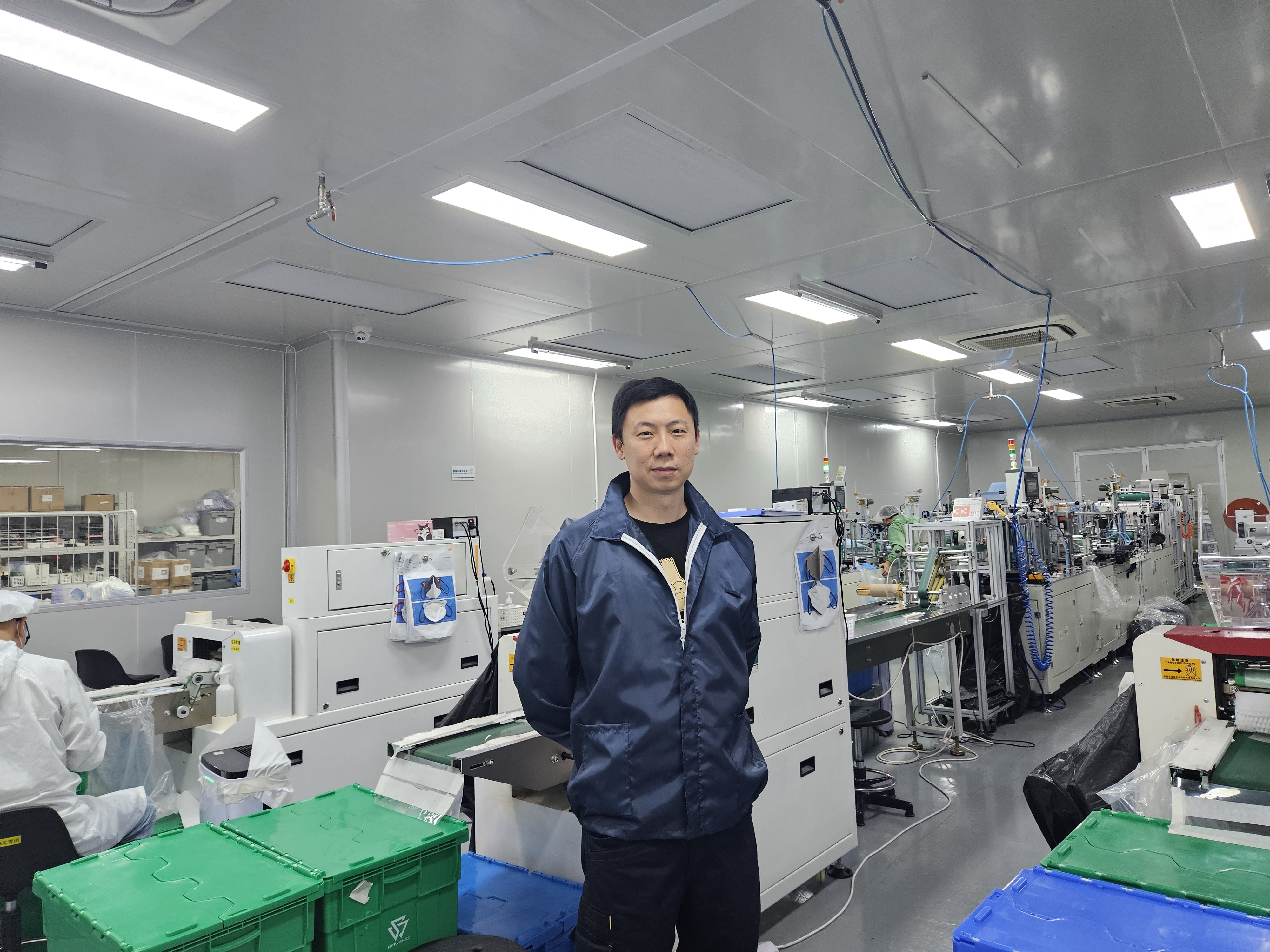
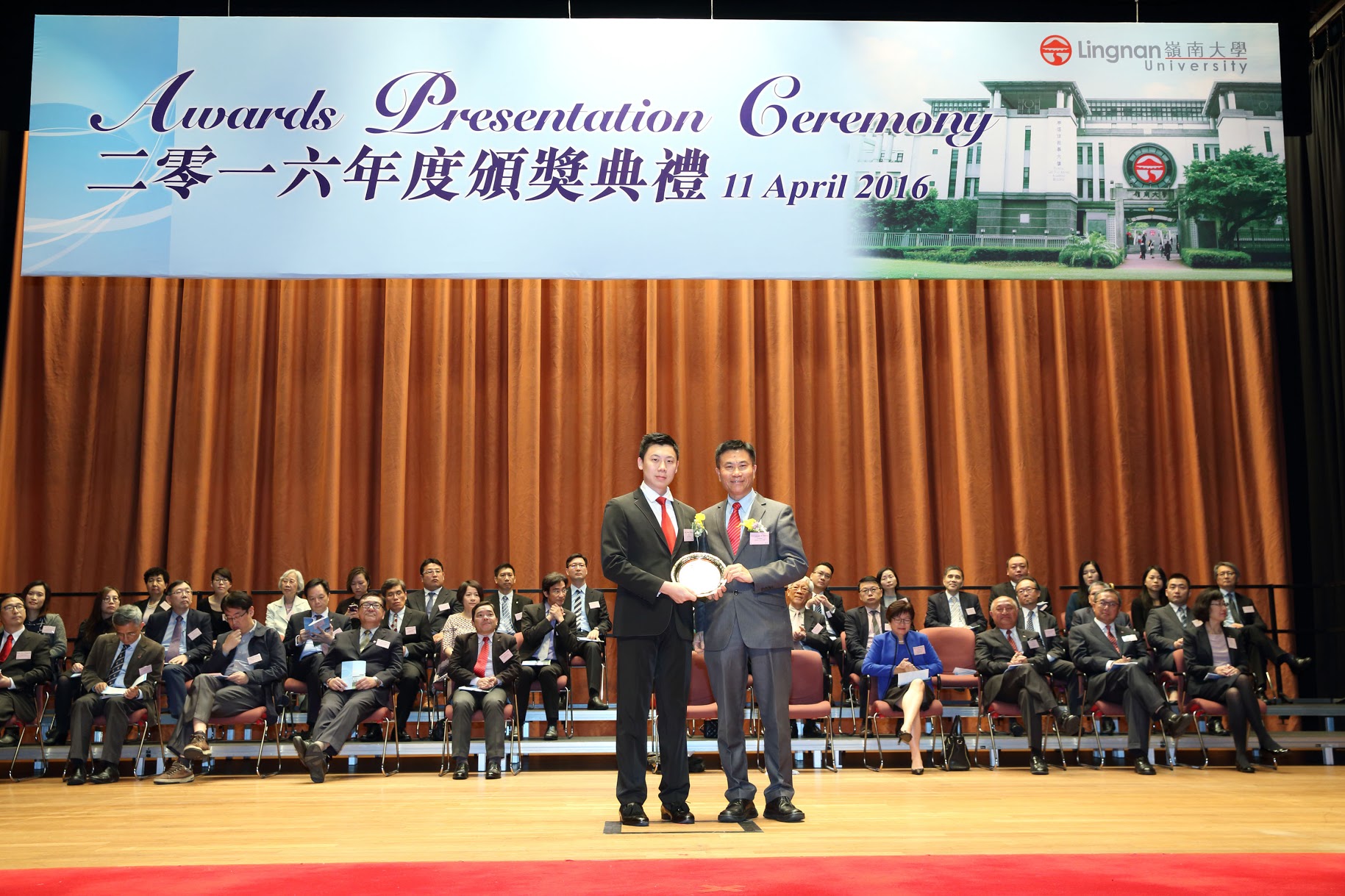
| In recent years, new quality productive forces have become an important topic in Hong Kong, with the development of the innovative technology industry taking center stage. In this issue of our Lingnanian stories, we invited Mr WONG Yuet Yeung (Harry) for an interview. Harry recognized the potential over a decade ago and has since founded several companies in innovative technology and manufacturing. Harry is best known for co-founding “SAVEWO” during the COVID-19 pandemic, which is one of the few local brands in Hong Kong that integrates research and development, production, and packaging, and consistently ranking as the best-selling masks in Hong Kong. The Alumni Relations Team specially visited his 100,000-square-foot factory to delve into Harry's experiences at Lingnan and explore his entrepreneurial journey from childhood to the present. Harry is a graduate of Lingnan University, having completed a BBA in Marketing in 2003. He recalls his humble beginnings and the concept of earning a living from a young age, starting to hand out flyers on the streets around the age of ten. By middle school, he was already trading stamps and coins, gaining valuable insights into business transactions. As he considered his post-graduation path, Harry recognized as early as Form 4 that Lingnan could offer him a wealth of diverse opportunities. He also believed that three years of living in the dormitory would enrich his learning experience, which is why he chose Lingnan University as his first choice for university application and worked hard to gain admission. During his studies, Harry encountered two influential teachers: Professor CUI Geng and Professor LUI Hon-Kwong from the Department of Marketing and International Business. Harry noted, “What I remember most about Professor CUI is his sharing of knowledge regarding mainland brands in his research. Previously, these brands rarely appeared in the Hong Kong market, and it was during this time that I first encountered the brand ‘Li-Ning’; and then there’s Professor LUI, who taught marketing in a very relatable way and introduced me to the existence of a credit card known as the ‘black card’.” While attending university, Harry continued to take on various jobs to support himself and maintain financial independence. While most of his classmates chose tutoring jobs, Harry leveraged the writing skills and knowledge he had accumulated since Form 5 by writing articles for several newspapers and magazines. At his peak, he wrote six technology-related columns simultaneously and worked as a freelancer in the marketing and public relations departments of two companies. Apart from local opportunities, he even travelled to Las Vegas to assist with a large electronics exhibition and through the university’s internship programme, he interned at a large pharmaceutical company’s factory in Mainland China. Harry's diverse work experiences, combined with his lifelong passion for reading various newspapers, have shaped his understanding of the market and business operations. Since high school, he developed a habit of reading economic publications, and during university, he focused on annual reports of listed companies. These insights have provided him with a multifaceted perspective on market trends and business risks, significantly aided him in expanding and developing his information technology-related businesses. In addition to taking on part-time jobs, Harry was highly active in participating in a wide range of on- and off-campus activities. He often referenced the term “generalist”, which implies broad knowledge and various talents, and he consistently applied this concept to his approach to learning. During his studies, he took part in the Chinese debate team and student organizations, and frequently attended seminars at various tertiary institutions to expand his knowledge beyond his field of study. Moreover, he was deeply motivated by a desire to “care for and serve society.” Throughout his three years at university, he collaborated with numerous social welfare organizations and voluntarily organized events focused on disability support and elderly care services. His extensive commitment to social service earned him the “Outstanding Service Award for Tertiary Students” in his third year of university. Reflecting on these experiences later, Harry realized that he had dedicated an average of 50 days per year to various exhibitions, lectures, and extracurricular activities. After graduation, driven by his aspiration to serve society, Harry applied for the Master of Social Work programme at the Polytechnic University and the W.T. Chan Fellowship, established by the Lingnan Foundation, with the goal of becoming a professional social worker. Although these plans did not come to fruition, Harry remained undeterred. With his wealth of experience, he understood that volunteer activities often lack participants. Inspired by this realization, he established a social welfare platform called the “Joint Institute Service Network” two years after graduation. He recruited a total of 18 students from various tertiary institutions to serve as committee members, creating a system where students could easily learn about and sign up for volunteer opportunities organized by different social welfare organizations, aiming to infuse the sector with more youthful energy. To ensure the platform’s success, Harry and the committee members held weekly meetings to discuss strategies and refine arrangements. However, as time went on, the committee members graduated and entered the workforce. With Harry, who had graduated years earlier, finding it increasingly challenging to maintain the connection between himself and the student community, the platform eventually ceased operations after three years. This experience led Harry to shift his focus entirely to business, concentrating on building his own ventures.
In 2003, when SARS swept across Hong Kong, industries across the board were severely impacted, and securing a job as a fresh graduate felt like an impossible task. In contrast, fresh out of university, Harry leveraged his extensive resume to successfully obtain a well-paying job as a public relations manager. Shortly after starting, he chose to leave the job when faced with his boss’s demand for a “seven days a week, no breaks” work schedule, and began focusing on developing his own business. Reflecting on that time, Harry recalled, “I had a connection with Lingnan University. One night, I went back to Lingnan to ‘stay over’ (crashing in a dorm), but after spending the night, I felt something wasn’t right, so I decided to start my own company.” Simultaneously, Harry also founded another company “Sing Sharp”. Recognizing that traditional vocal training with professional teachers can be prohibitively expensive, Harry launched the world’s first singing tutorial app that uses AI dialogue models to analyze vocal pitch and range. By introducing artificial intelligence to enable users to learn singing on their smartphones at a lower cost, Harry made it more accessible and personalized for a broader audience. Currently, “Sing Sharp” has surpassed 2 million downloads across both Android and iOS platforms. In 2024, the company collaborated with professors at Lingnan University and Hong Kong Metropolitan University to publish a research paper titled “RAG for Vocal Training Question-Answering Based on Domain Knowledge Base,” exploring how large language models combined with external retrieval mechanisms can enhance AI's potential and user experience in vocal training. Over the past decade, these two companies have relied on revenue from Harry’s other businesses to sustain their operations. Despite the challenges, Harry has remained committed to their development, viewing them as investments in future societal trends and a way to stay ahead of the curve. He emphasized, “To succeed in entrepreneurship, the most important thing is to avoid being easily copied or replaced. You must identify future opportunities earlier than others and be unafraid of failure to gain a competitive edge. By the time market demand begins to rise, it’s often too late, as you’ll face a surge of competitors emerging simultaneously.” Additionally, Harry firmly believes that borrowing can become a weakness for a company’s growth. As a result, he has always relied on existing businesses to support new ventures, steadfastly avoiding loans to fund his projects. Beyond his business ventures, Harry remains committed to caring for and serving the community. For instance, when he founded “CodeFree Soft,” he simultaneously offered tutorials to IVE students with the intention to equip them with additional skills, enhancing their competitiveness in both public and private sectors after graduation and increasing their potential salary levels. Besides, to further promote the development potential of Hong Kong’s younger generation, he sponsors the Hong Kong Intercollegiate Debating Competition every year, and provides funding for Mr WONG Chak-lam, a local tennis player who has achieved a double Grand Slam and recently became the first from Hong Kong to reach the Round of 32 at the ATP 1000 Masters, helping him pursue his dreams and achieve new heights for Hong Kong. Apart from that, Harry has never forgotten to give back to his alma mater. Over the years, he has sponsored various activities at Lingnan University, including providing scholarships for the debate team he once participated in. He also returned to campus to share his experiences, hoping to pass on his insights and inspire the next generation, contributing to enriching the learning experiences of future students at Lingnan and supporting their development after graduation. Posted on June 13, 2025 |