Exploring the World and Giving Back: Turning Dreams into Reality
The world is vast, and Mr Ken LEE, a graduate of Lingnan University's Bachelor of Social Sciences in China and Asian Pacific Affairs (CAPA), has always been curious about it. Although his family was not well-off and opportunities to travel were scant, he found joy in poring over maps and collecting stamps from around the globe. This deep-seated fascination with the world motivated him to set a clear goal during his high school years: to leave Hong Kong after graduation and explore broader horizons. As he approached graduation, Ken was inspired to pursue a career in poverty alleviation and social welfare in Mainland China. Over the years, his passion for social work has only grown stronger. Today, Ken serves as the Chief Executive Officer of the Wu Zhi Qiao (Bridge to China) Charitable Foundation, focusing on countryside conservation. He aims to encourage more local youth to get involved, working together to protect our living, working and ecological environments.
Embracing Opportunities and Enriching Campus Life During his three years at Lingnan University, Ken's university life was both fulfilling and dynamic. He lived in hostel, participated in overseas exchange programs, founded a new student society and actively engaged in various campus activities. Ken describes Lingnan as a place rich in resources, offering students numerous opportunities to broaden their horizons. "At that time, my allowance was limited, but most of the opportunities provided by Lingnan were free. All I needed to do was sign up, fill out a form and attend interviews on time. The chances of being selected were quite high." Ken recalls. For example, he participated in a Hong Kong Jockey Club funded program to intern in Chongqing. He was also among the first batch of students to take part in the sister school exchange program between Lingnan University and Tunghai University in Taiwan, where he spent a semester. Also, he joined the 4th China Synergy Program for Outstanding Youth, which took him to the Great Hall of the People in Beijing to listen to a speech by then Vice Premier Qian Qichen.
Ken stresses the invaluable nature of these experiences and encourages students to utilize the resources available at the university. "We are just as capable as students from other universities. Participating in various activities has shown me that Lingnan students are not inferior to others; they simply need more opportunities to showcase their talents. The more you step out and engage, the more you will realize that you are just as outstanding as students from other universities, and your confidence will naturally grow."
In addition to actively participating in various activities, Ken and several friends who were from Hall C bonded over their frequent takeout orders. Their shared passion for food led them to establish the "Meal Meal Club". Ken recalls, "We reached out to various restaurants to collaborate and secured discounts for our students. By presenting their membership card, they could enjoy 10-20% off at participating eateries. We even organized our first electric cooking competition at Wing On Plaza, inviting several professors to judge the dishes. Looking back, it was an incredibly fun and memorable experience!" A Mission to Uplift Lives in Mainland China after Graduation Ken Lee’s first encounter with service work happened during his freshman year at university through Project X. This program allowed him to mentor and accompany teenagers in various developmental activities as a peer. He recalls being paired with a boy who was cautioned under the Police Superintendent's Discretion Scheme, an experience that taught him how to interact with youngsters from challenging backgrounds. Ken shares, "The key to building trust is companionship." He called the boy every week to check on his and gradually built a trusting relationship by being a friend. To further bridge the gap, he even went to his living place and invited him to play basketball. Ken admits that this experience was significant for him as it was his first time engaging in service work, making him realize the value of helping others.
At the same time, his Bachelor’s degree in China and Asia Pacific Studies strengthened his determination to pursue social work. "During my studies, I learned about the significant disparity between the rich and poor in Mainland China. While the coastal areas developed rapidly, many inland regions remained impoverished. I felt that having received an education, I should contribute to society. People often talk about first-tier cities like Beijing and Shanghai, but the underdeveloped inland areas are frequently overlooked. I wondered if we, as graduates could do something for these places."
Embarking on Poverty Alleviation in Ningxia After graduating from Lingnan University in 2003, Ken aspired to join an international non-governmental organisation (INGOs) operating in Mainland China. However, after two rounds of unsuccessful job applications, he decided to change his strategy. Determined to gain relevant experience, he secured a position as a Management Trainee at a textile factory in Dongguan.
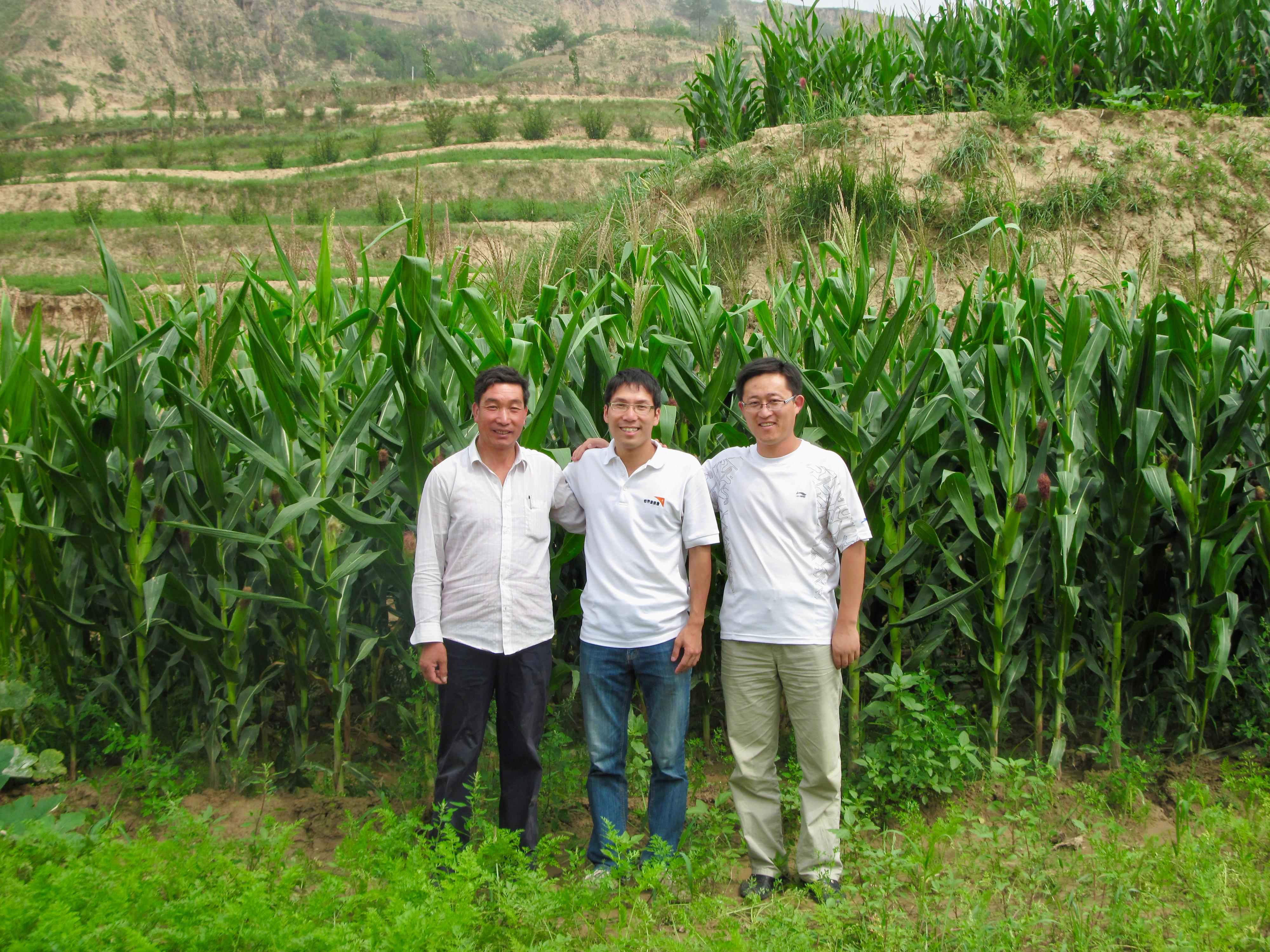
In 2005, leveraging his work experience in the Mainland China, Ken applied again and successfully joined World Vision International - China. Just three days into his new role, he was on a plane traveling to Xi'an to meethis supervisor, and then go to Pengyang County in the Ningxia Hui Autonomous Region. Shortly after their arrival, his supervisor returned to Xi’an, leaving Ken to face the challenges alone. “At the time, I was only 24 or 25 years old, and as the Project-in-Charge, I was responsible for managing around HKD 5 million annually. These funds donated from Hong Kong were used to implement comprehensive poverty alleviation projects.” Ken explained. The funds were allocated across various sectors including agriculture, livestock, economic development, training, nutrition and health, education and infrastructure. These projects served the residents of several villages in Pengyang County. As a newcomer, Ken faced numerous challenges. His Mandarin was not fluent and he couldn't understand the local dialect, also he had to lead about 15 local colleagues which all older than him. Step by step, he learned from his colleagues and gradually adapted to his new environment, marking the beginning of his more than 20-year career in social work.
Ken shares that the living environment in Pengyang County is extremely harsh. Due to the prolonged drought, water resources are severely scarce, making it difficult to grow crops. The United Nations even mentioned the area as "uninhabitable for humans." Despite these challenges, he found joy in his surroundings, even stating that he had grown happier over time. He mentions that the county is very small, and it takes only 10 minutes to walk from one end to the other. His small pleasures come from a tiny supermarket that almost had everything for daily life. One of his most unforgettable experiences is the severe winter, where temperatures can drop to as low as -25 degrees Celsius, causing water pipes to freeze. There were times when he couldn't take a shower for 21 consecutive days. Despite these hardships, Ken finds great satisfaction in interacting with the local farmers. "They have lived on this land for generations, demonstrating incredible wisdom. When you listen to their stories and understand how they adapt to such harsh conditions, you become humbler. You can draw inspiration from their wisdom and learn how to help them in their own ways. I believe this is very important." Ken reflects.
Joining Wu Zhi Qiao: Committed to Countryside Conservation After the Wenchuan earthquake in 2008, Ken volunteered to join the local relief and reconstruction efforts. Through the prosthetics and rehabilitation project, he met many children who needed prosthetic limbs and rehabilitation. Their resilience deeply moved him, and he found great meaning in his work, knowing he was making a real difference in their lives. After completing the reconstruction work, Ken moved to Guangzhou to participate in new development projects. Later, due to family reasons, he returned to Hong Kong. In addition to his experience on the mainland, Ken has held various positions in NGOs, gaining a wealth of experience in the field.
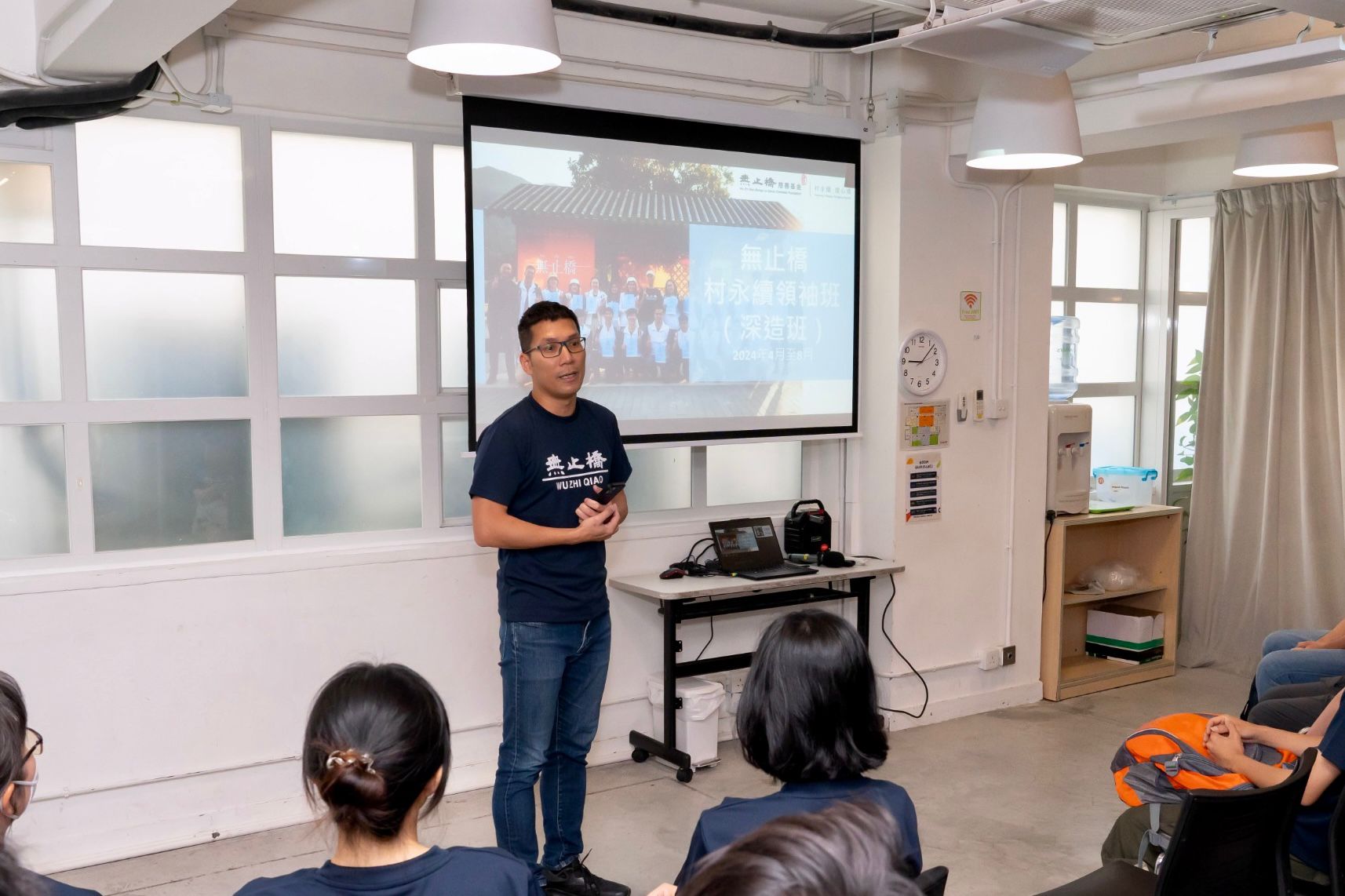
Two years ago, Ken Lee joined the Wu Zhi Qiao (Bridge to China) Charitable Foundation as its Chief Executive Officer. The foundation initially focused on leading young people from Hong Kong and Mainland China to remote areas to build footbridges, improving villagers' lives and fostering connections between youths from both regions. However, with the outbreak of the pandemic in 2021, their projects in Mainland China came to a halt. The foundation then shifted its focus to rural conservation efforts in Hong Kong, aiming to revitalize entire villages through infrastructure development and the preservation of historical and cultural heritage, and the ecological environment. Ken emphasizes two key aspects of countryside conservation: "Firstly, rural history is an integral part of Hong Kong's history, which needs to be documented and preserved. Secondly, conservation is closely linked to survival, production and living. Restoring village ecosystems helps combat climate change, while reviving farmland, like the experimental plot in Lai Chi Wo, preserves agricultural knowledge and supports local food production. Moreover, rural conservation embodies the concept of sustainable living, integrating history, culture and ecology to maintain our way of life."
Ken shared that Wu Zhi Qiao collaborates with several local universities, including Lingnan University to implement service-learning programs. They have selected four villages—Mui Tsz Lam, Lai Chi Wo, Yung Shue Au, and Kuk Po—as project sites, leading students to these lesser-known countryside areas. Ken hopes this platform will achieve a triple win: students can serve the community and deeply learn about village culture, while the villages benefit from the students' contributions, fostering a connection between Hong Kong students and local countryside.
Last year, they led Lingnan University students to conduct field studies in four Hakka villages in Sha Tau Kok, where they took photos and organized a photography exhibition. "The students explored the villages, learning about their history, culture and ecology through our introductions. They documented the village landscapes with photographs and shared their experiences with other students, raising awareness about Hong Kong's rich rural heritage beyond the cityscape. The villagers warmly welcomed the students, appreciating their attention to local culture, and the students were highly engaged." Ken is impressed by the dedication and creativity of the students who planned interactive elements for the exhibition, making it more engaging. He admires their initiative and innovative ideas, which significantly enhanced the project.
Inspiring Change with the "4Cs": A Message to Students Ken has worked in the social welfare sector for many years, he frequently engages with youngsters and inspires them using his "4Cs" formula. He shares this formula with Lingnan students to encourage them to drive both social and personal change.
He explains that the first "C" stands for compassion. In social work, empathy and compassion are crucial. True compassion should be egalitarian, without any sense of superiority or inferiority. The second "C" is curiosity. Ken believes that maintaining a sense of curiosity about one's work leads to continuous exploration, learning and improvement. The third "C" represents creativity. It is indispensable when it comes to problem-solving. The last "C" is collaboration. Working effectively with others is a key ingredient for success. To be conclude, these four "Cs" combine to form an even greater "C"—social-change and self-change. Ken believes that regardless of one's field, possessing these "4Cs" can drive societal progress while also fostering personal growth.