



Article by Wong Sum Yee|Instructed by Prof Emilie Yeh
Hong Kong has a long history of film screening activities. Since the first public screening at the City Hall in 1897, film screenings had been held in various venues such as hotels, open-air venues, shops, and theatres. Although it is fair to say that by 1907 Chinese and foreign audiences were already familiar with film as a new medium, it was not until that year that the Victoria Cinematograph, the first cinema in Hong Kong, was opened for the purpose of screening films.
Unprecedented Screening Facilities
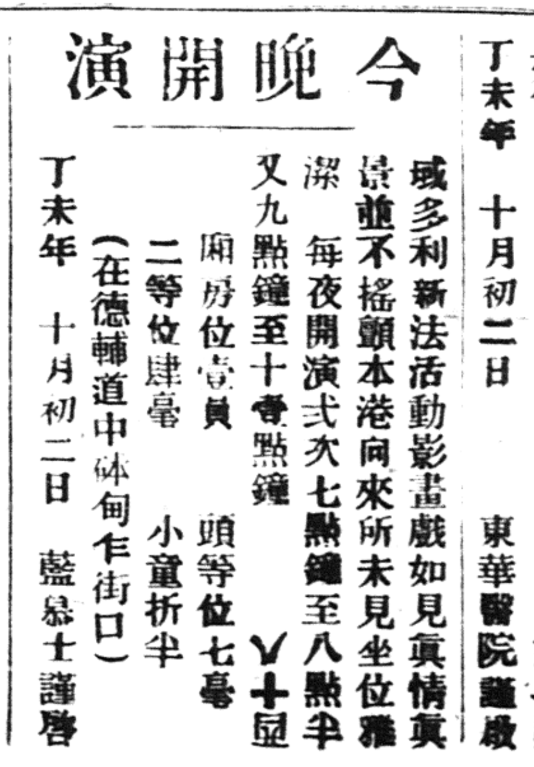
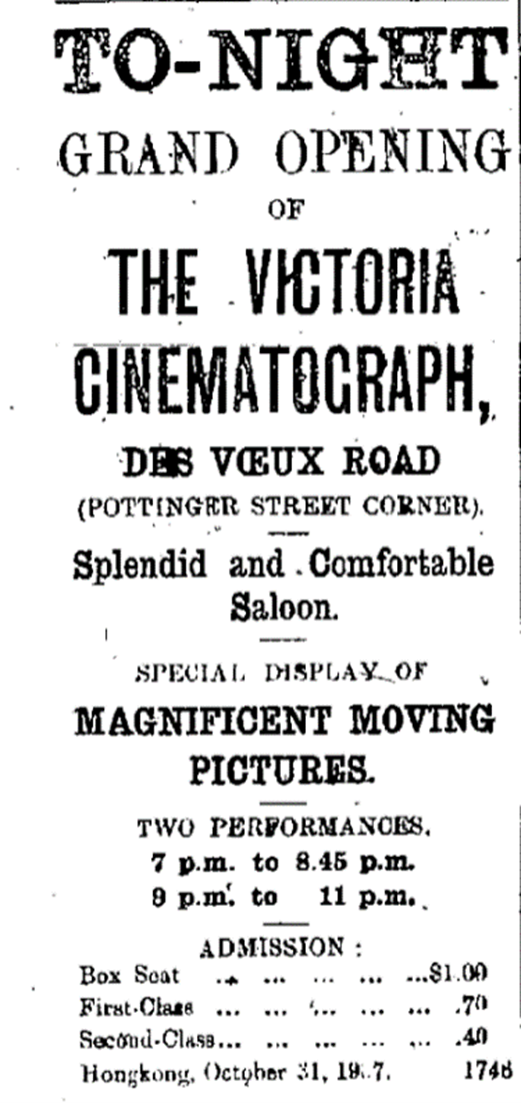
The Victoria Cinematograph was established by Spanish businessman Antonio Ramos on 31st October 1907 on Des Voeux Road Central, at the junction of Pottinger Street (currently Wing On House). The opening day advertisement in the Chinese Mail showed that the screening programme on the first day was divided into two sessions at 7pm and 9pm, each lasting about two hours. The interior was spacious and comfortable, with electric lighting.[1] Seats were divided into three categories: $1 for box seats, 70 cents for first class and 40 cents for second class (Fig. 1).
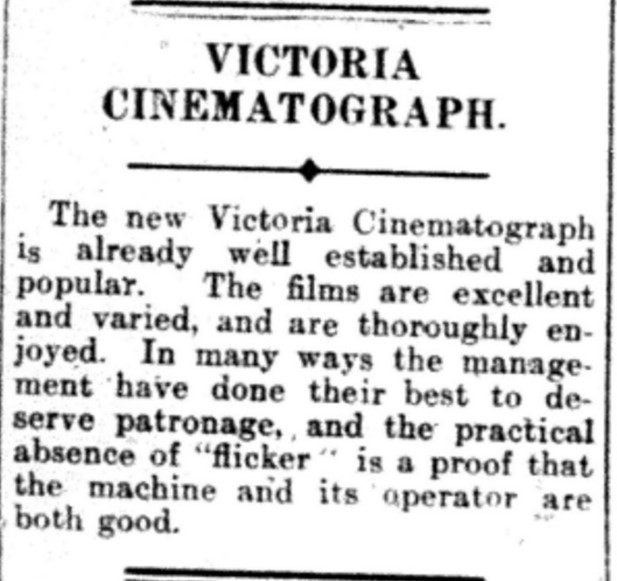
Past film screenings often had technical problems involving shaky images[2], but the press reported that the Victoria’s screenings showed no shakiness and the projectors and film technicians were praised (Fig. 2), indicating that the Victoria had already set high demands on its equipment from the very beginning of its operation.
The Short-lived Old Cinema
From its opening to 1910, the Victoria continued to place advertisements in both Chinese and English[3]. Not only did this demonstrate that Ramos took publicity seriously, but it also showed that the Victoria did not just target a single ethnic group like other cinemas[4], but that it welcomed both Chinese and foreign audiences. After the news in March 1910 announcing that the Victoria would move to the opposite side of the Central Market[5], no further advertisements for the Victoria were published. Until 25th May 1911, news regarding the re-opening of the Victoria Theatre after its reconstruction in its original location was again announced in the press (Fig. 3).
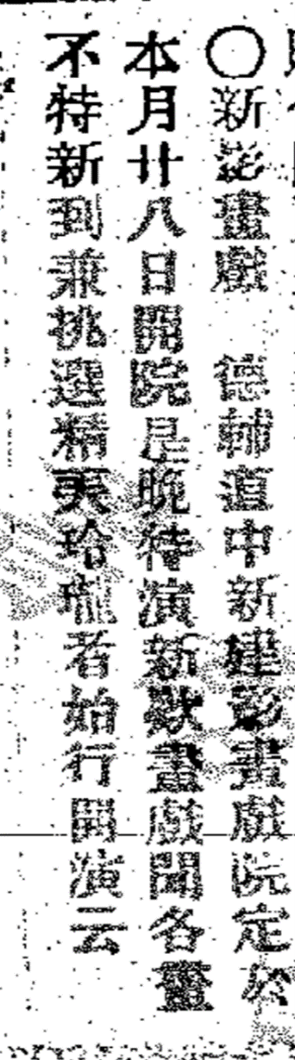

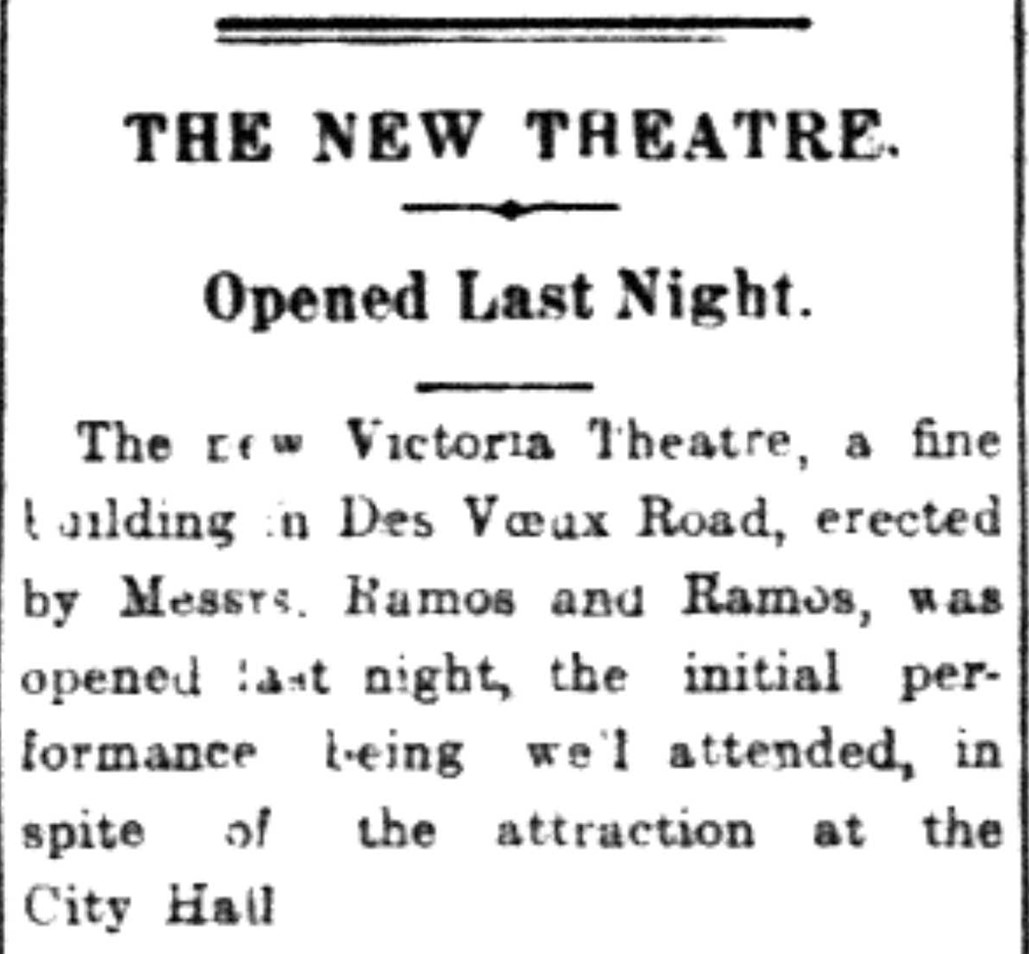
Figure 3 (left): News of the opening of the new cinematograph, (Victoria) (Chinese Mail, 25th May 1911); (right) The new Victoria Theatre remains in Des Voeux Road Central (South China Morning Post, 27th May 1911)
The short lifespan of the old Victoria Theatre suggests that, despite its decent facilities and environment, it should be quite a small, simple construction that would allow it to be demolished within a short period of time. The timber-built Hong Kong Theatre, constructed around the same period as the Victoria[6], was also quickly replaced two years later by the Empire Cinematograph Theatre, the “twin brother” of the Victoria[7].
The Birth of the Grand Cinema
In 1909, Ramos won a tender for the government land opposite Central Market[8], and the construction of the Empire Cinematograph Theatre began in December. The following year, on 4th April, the Empire Cinematograph Theatre opened. A news report on that day described the interior decoration of the Empire in detail: a six-box hall with a seating capacity of 800, concrete floors, walls made of steel and brick, and a roof supported by steel frames. The cinema’s projectors were separated by steel fireproof compartments, and fans were installed to ensure good ventilation, indicating that fire protection measures were comprehensive.[9]
Similar facilities were used in the new Victoria Cinematograph, which opened on 26th May 1911. The fact that Ramos commissioned Palmer and Turner, then a leading architectural firm having worked on various prestigious projects in Hong Kong and Asia, to design the two cinemas clearly shows that he was well aware of the importance of visual presentation[10]. Both cinemas were described as having “modern and sophisticated interior decoration”[11] and both attracted large audiences on their opening day (Fig. 4), indicating a high degree of popularity.
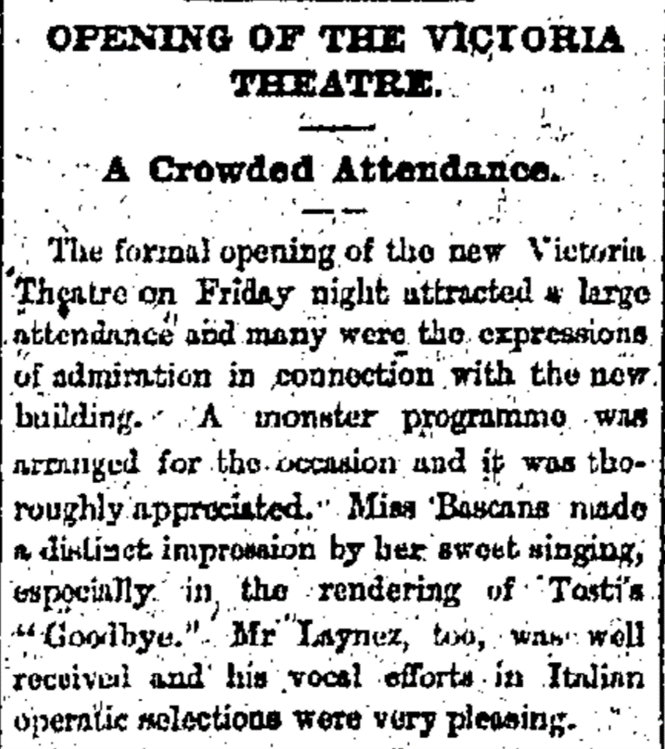
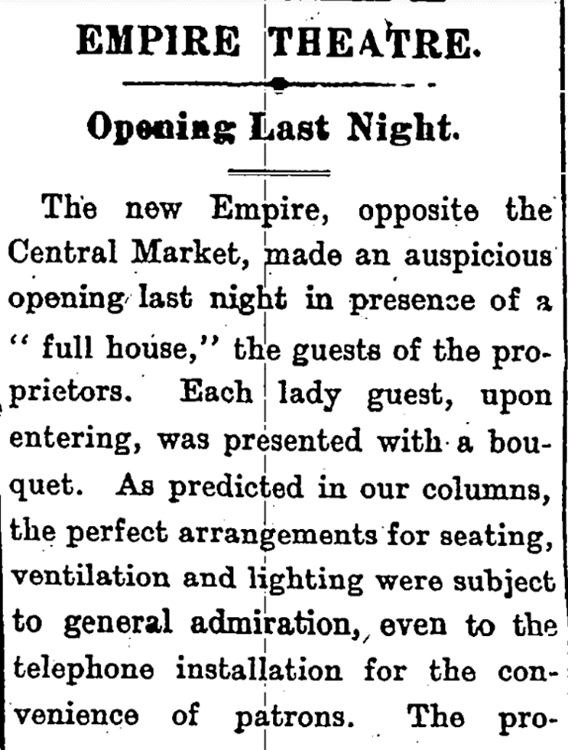
Figure 4: (Left) News of the opening of the Empire Cinematograph Theatre (South China Morning Post, 5th April 1910); (right) News of the opening of the Victoria Theatre (Chinese Mail, 27th May 1911)
The Marketing Strategy of the King of Cinemas
The fact that the two cinemas had made their mark in history was largely thanks to their founder, Ramos. Although not much is known about Ramos, his marketing strategies suggest that the cinema proprietor had a certain amount of business sense.
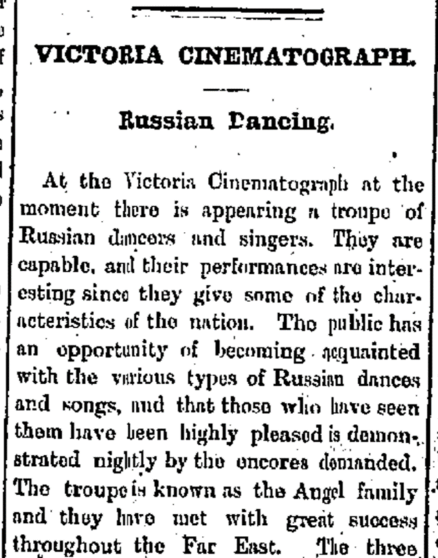
In addition to the extensive publicity and welcoming of audiences of all races, another feature of the Victoria and the Empire is the entertainment performances that accompanied the film screening. This is in fact related to Ramos’s company being specialised in show business. With a wide network covering Shanghai, Macau, Australia, Manila, and Tianjin[12], Ramos’ company offered not only film screenings but also singing, dancing and acrobatic shows. The Victoria featured singing and dancing as well as film screenings, and just as it opened there were singing and dancing programmes to entertain the audience.[13] These programmes ranged from a variety of shows, such as Russian singing and dancing shows (Fig. 5). This mix of performances and film screenings was maintained after the reconstruction[14] to provide a comprehensive entertainment experience for the audience.
Apart from the programmes, the location of the cinema was also taken into consideration. The waterfront open space where the Empire was located was once an open-air cinema, and later the Hong Kong Theatre, making it a familiar screening venue for audiences. Furthermore, the contrast between the glamorous design of the Empire and the modest open-air cinema was a gimmick and a visual attraction.
The two cinemas were demolished in 1919 and 1920 respectively due to unsuccessful contract renewals.[15] Looking back at the history of film screenings in Hong Kong, the Victoria and the Empire were carefully planned to provide a quality experience in terms of projection equipment, interior decoration, and programme content, pioneering the development of quality cinema and an indispensable venue for entertainment.
References
Yeh, Y.Y. (2023). More than law and order: Film regulations and the control of Chinese theatres in colonial Hong Kong. Screen, 64(1), 38-57. https://academic.oup.com/screen/article/64/1/38/7082847.
殷慧嘉:〈香港的早期電影院:1900-1920〉,《走出上海:早期電影的另類景觀》。北京:北京大學出版社,2016,頁193-237。
Centre for Film and Creative Industries: “A Historical Archive of Film Exhibition and Reception in Hong Kong (1897-1925)”. Hong Kong: Lingnan University, 2023, retrieved from: https://digital.library.ln.edu.hk/en/projects/flim/intro
[1] News article “The Victoria Cinematograph”, Chinese Mail, 31st October, 1907, p.4.
[2] News article “Film screening to watch”,Chinese Mail, 11nd November, 1907, p.3.
[3] Advertisement “Showing tonight”, Chinese Mail, 7th January 1908, p.3;advertisement “Victoria Cinematograph”, South China Morning Post, 30th September 1908, p.3.
[4] For example, the hotel Cafe Wisemann in Wyndham Street serves mainly foreign audiences, while the theatres mostly serve Chinese audiences.
[5] News article “HongKong Cinematographs”, South China Morning Post, 22nd March 1910, p.5.
[6] “Local News”, South China Morning Post, 2nd April 1910, P.2.
[7] As cited above.
[8] News article “Land Competition: Government Gains Big Profit”, South China Morning Post, 30th September 1909, p.6.
[9] News article “The Empire: New Cinematograph Theatre”, South China Morning Post, 4th April 1910, p.11.
[10] As cited above; see HKU Library for details ”Palmer & Turner Collection”, https://digitalrepository.lib.hku.hk/pnt
[11] As cited above; News article “Victoria Theatre: New Place of Amusement Opens To-morrow”, The Hong Kong Telegraph, 25th May 1911, p.1.
[12] Yeh, Y.Y. (2023). More than law and order: Film regulations and the control of Chinese theatres in colonial Hong Kong. Screen, 64(1), 45.
[13] Advertisement “Victoria Cinematograph”, South China Morning Post, 15th December 1908, p.3.
[14] News article “Victoria Theatre: Duncan Company’s Farewell Performance Tonight”, The Hong Kong Telegraph, 3rd November 1914, p.5.
[15] News article “A New Cinema: On Empire Theatre Site”, The Hong Kong Telegraph, 29th January 1919, p.5;”The Victoria Theatre: To be Demolished April 1st”, South China Morning Post, 28th February 1920, p.12.