

25th Anniversary of Department of Cultural Studies
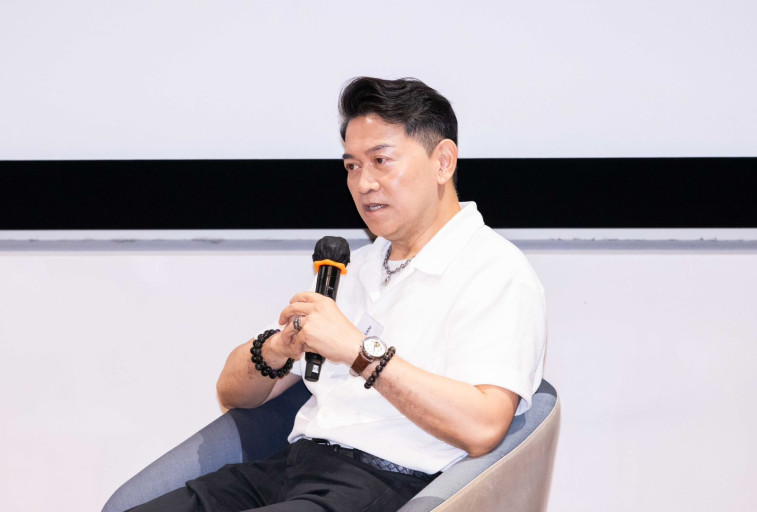
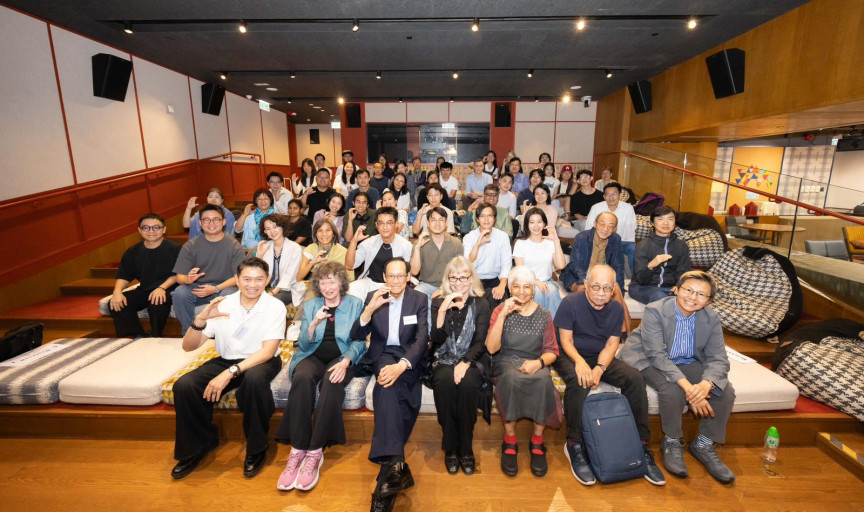
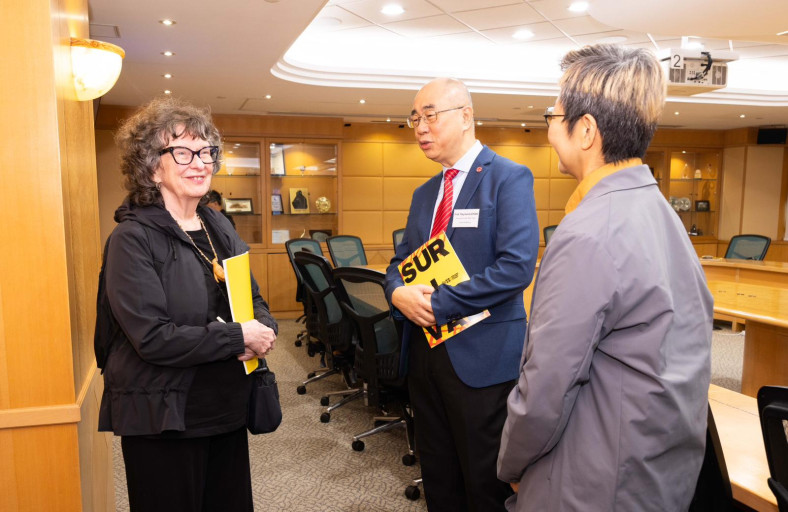
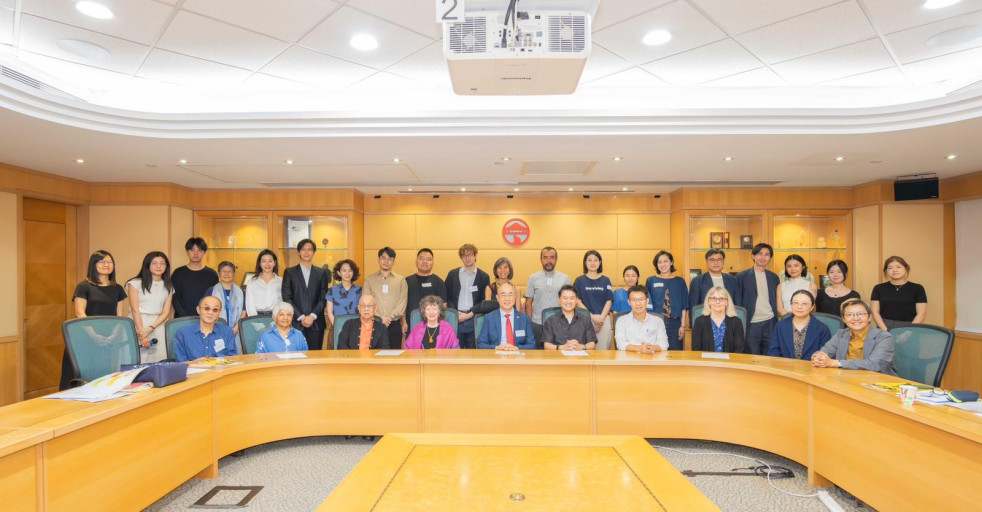
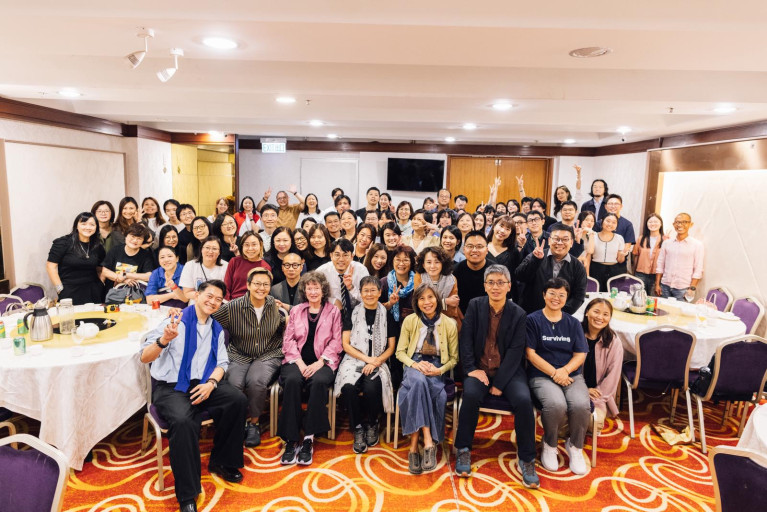
2025 marks the 25th anniversary of the Department of Cultural Studies at Lingnan University and the BA in Cultural Studies (Honours) programme, alongside the 20th anniversary of the Master of Cultural Studies (MCS) programme. To commemorate these milestones, the Department will host a series of events from April to May 2026, celebrating the Department’s contributions to research, teaching, and community engagement, as well as its responses to shifting paradigms in Hong Kong, neighbouring regions, and the wider world.
The anniversary programme is conceived of as both a moment of reflection and a forward-looking intervention. It brings together local and international scholars, partner communities, organisations, alumni, and long-standing collaborators to reflect on the trajectories of Cultural Studies in Hong Kong and its engagement with interdisciplinary scholarship. At the same time, it seeks to open up space for collective thinking about new approaches to emerging social, cultural, and political phenomena, and to imagine possible futures amid the challenges of the present.
When I first joined Cultural Studies in 2018, a mentor mentioned to me that I am in the right place, the queerest department in Hong Kong academia. He was not referring to the queerness that we only associate with in teaching gender and sexualities. He was referring to a broader understanding of queerness as taking a stand to be different, to intentionally position oneself outside of the mainstream, to look at marginality as where one can gain perspective in life. I was baffled by his assertion then. By 2026, I understand where he is coming from. The Department of Cultural Studies at Lingnan University where I call my intellectual home is queerly unique.
Twenty-five years on, our research continues to engage with issues that reflect our values. We still ask sharp questions surrounding power and knowledge, culture and representations, class and mobility, race and ethnicities, gender and sexualities. Our pedagogies in the classroom reflect our commitment to raise issues that are often underrepresented and stigmatized, and to engage students in making change in the world, one step at a time. Cultural studies, with its roots in adult education, believes in emancipation of various meanings and directions.
As the only Cultural Studies department as named, we have a mission. We did not only survive the last twenty-five years, we are witnesses to the transformation of Hong Kong society and its position in the world. Our observations, critique and theorizations are embedded in the research we do, the courses we teach and the communities we engage with. Even though the composition of students, faculty members and administration staff in the Department has changed drastically, we are very much committed to continue being the public-facing department as we have always been, staying critical in our perspectives, pushing limits in our intellectual work and carving out alternative community spaces.
When I first returned to Hong Kong as a doctoral student in 2003, I actually audited as many Master of Cultural Studies courses as I could. Little did I know that I will be part of the Lingnan’s Cultural Studies community many years later. I think of it as a sign of life coming full circle.
Please join us to celebrate our 25th anniversary and give us your most updated contact information (perhaps give us your family tree, too) because we are here to stay. We want to make sure that you come back for our next and next and next anniversaries.
Prof. Denise Tse-Shang Tang
Head of the Department
Within cultural studies, the concept of the commons—and the active practice of commoning—is a primary reason the field remains so urgent. Traditionally, "the commons" refers to shared resources like land or air, but cultural studies expands this to include collective knowledge, digital spaces, and social connectivity. It argues that culture isn’t something to be owned by corporations or restricted by elites; it is a living common produced by everyone as a mode of production, highlighted by Antonio Negri.
The focus on commoning shifts the perspective from "what we own" to ”how we share.” In a world dominated by privatization and "paywalls," commoning highlights how communities reclaim public spaces and create alternative cultures. This might look like open-source software, community gardens, or grassroots art movements. These acts of social cooperation shed light on the philosophy of praxis, right now, and on the ground.
To us, commoning is how we survive Cultural Studies and celebrate the 25th anniversary of our Department in a timely moment.
Prof. Pun Ngai
Chair Professor
‘Surviving’ is not a keyword in the well-known Keywords in Cultural Studies. Choosing it as the title for this anniversary event therefore prompted debate around questions of subjectivity, identity, and representation. Comments and questions quickly followed: Too nostalgic? Too pessimistic? Too passive? What does it mean to organise this anniversary at such a crossroads? For whom? What began as an act of naming soon became a process of soul-searching—at times nerve-wracking—as we navigated between marking milestones, celebrating achievements, and situating these moments within the multiple challenges and paradigmatic shifts of the past two decades.
Nostalgia was certainly not our aim. Rather, acknowledging the distant past, the near past, and the recent past provides us with bearings to assess the present, so that we may better address the challenges of the future.
I was fortunate to have witnessed the ‘birth’ of the BA in Cultural Studies in 2000, having returned to Hong Kong and joined Lingnan in 1998. Organising this 25th anniversary event therefore feels, in many ways, like recounting the story of my own academic career being (re)situated in Hong Kong. While I may appear to have stayed in place, over the past twenty-five years Cultural Studies at Lingnan has continually transformed—across curriculum, research directions, and staff profiles—alongside an even more rapidly changing Hong Kong.
These twenty-five years mark the establishment of the first, and to date, the only, undergraduate programme, and the first postgraduate programme in Cultural Studies, as well as a dedicated academic department, within Hong Kong’s tertiary education sector. They also reflect how the Department’s founding members and scholar-advocates responded to critical junctures through action research, translating engagement into scholarship that spoke directly to cultural debates in Hong Kong. From these efforts emerged the conceptual, methodological, and pedagogical foundations upon which successive generations of faculty and administrative colleagues have continued to work—through intervention and engagement with like-minded communities.
Over the years, our undergraduate and postgraduate programmes have also nurtured generations of Cultural Studies alumni who have carried local interpretations of Cultural Studies values into diverse areas of social life. In doing so, they extend the spirit of earlier traditions, sowing seeds across different communities and offering new meanings of ‘commoning’ in Hong Kong. Equally important are the partnerships we have built through practice, and the conviviality with the friends and community groups who have continually inspired and informed our work.
Etymologically, the Latin root vive is associated—via French—with meanings of liveliness, activity, and movement. Inspired by Stuart Hall’s notion of becoming, Surviving Cultural Studies, to me, signifies not endurance alone but an active and generative stance: standing firmly in the present, with gratitude and humility for the people and resources that have enabled our work, while remaining prepared to face challenges ahead, both locally and globally. Perhaps more importantly, the practice of surviving enables us to cultivate the capacity to hope—and to translate that hope into our teaching, partnerships, and engagement with society.
Prof. Lisa Leung
Convenor of the 25th Anniversary Organising Committee
As part of the anniversary programme, the Department will host three Distinguished Lectures honouring internationally impactful Cultural Studies scholars. These lectures are standalone public events that foreground the intellectual and practical capacities of Cultural Studies in engaging contemporary global challenges. Through their lectures, the speakers will offer critical insights into how Cultural Studies approaches can respond to the current global and local challenges, demonstrating the continued relevance of Cultural Studies scholarship in analysing power, culture, and social transformation, while offering ways for thinking about responsibility, possibility, and hope in uncertain times.
The three Distinguished Lectures will be held at Kino Cinema, Eaton Hotel, and will take place on the following dates:
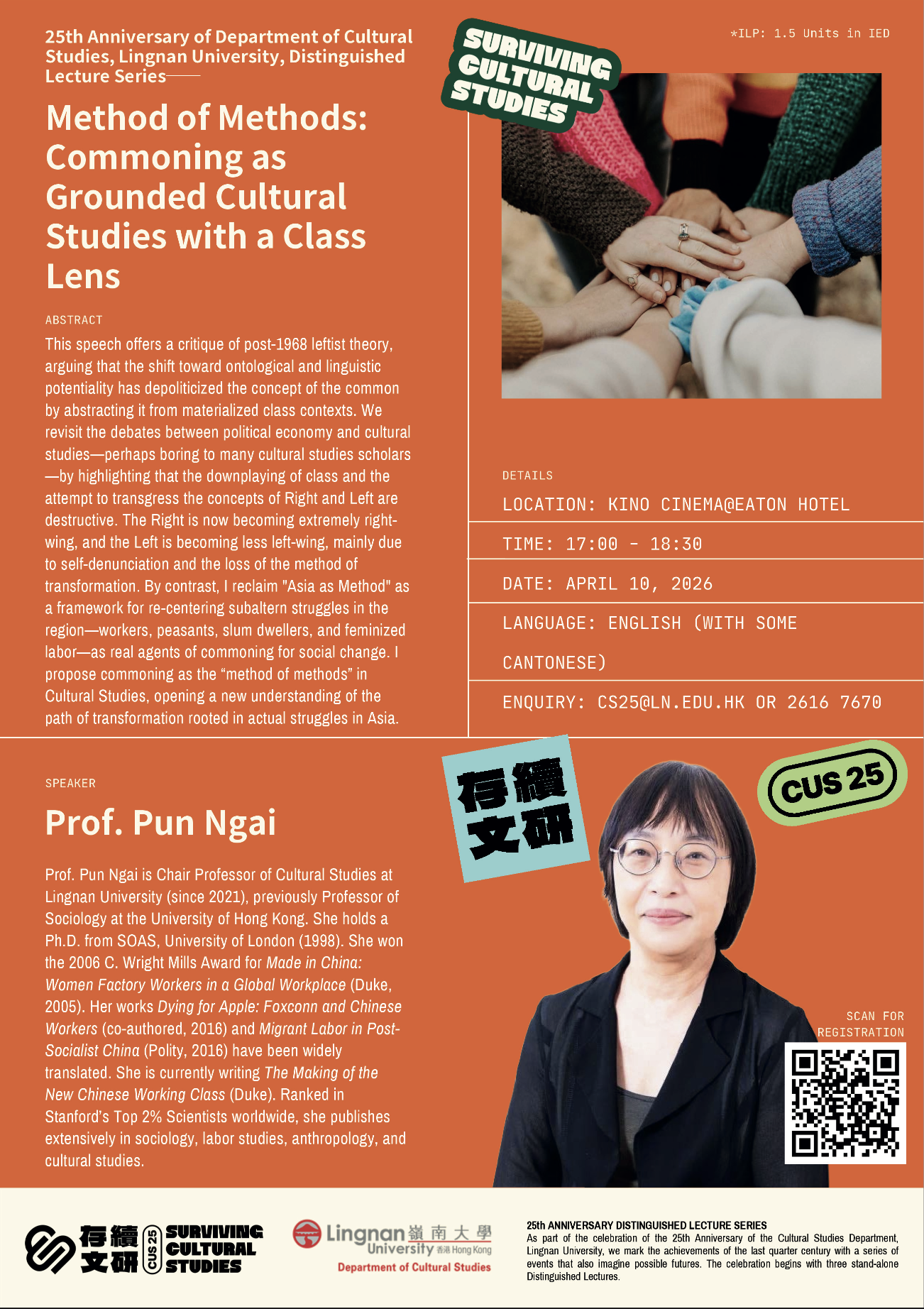
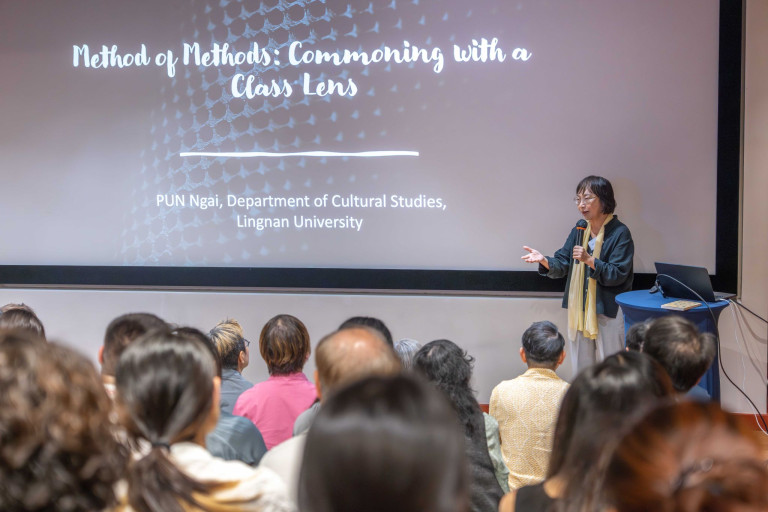
1. Distinguished Lecture – “The Method of Methods: Commoning as Grounded Cultural Studies with a Class Lens”
Prof Pun Ngai, Chair Professor, Cultural Studies, Lingnan University, Hong Kong
Venue: Kino Cinema, Eaton Hotel | Date: April 10, 2026 | Time: 17:00-18:30
Abstract:
This speech offers a critique of post-1968 leftist theory, arguing that the shift toward ontological and linguistic potentiality has depoliticized the concept of the common by abstracting it from materialized class contexts. We revisit the debates between political economy and cultural studies—perhaps boring to many cultural studies scholars —by highlighting that the downplaying of class and the attempt to transgress the concepts of Right and Left are destructive. The Right is now becoming extremely right-wing, and the Left is becoming less left-wing, mainly due to self-denunciation and the loss of the method of transformation. By contrast, I reclaim "Asia as Method" as a framework for re-centering subaltern struggles in the region—workers, peasants, slum dwellers, and feminized labor—as real agents of commoning for social change. I propose commoning as the “method of methods” in Cultural Studies, opening a new understanding of the path of transformation rooted in actual struggles in Asia.
Bio:
Before joining Lingnan University as Chair Professor in 2021, Prof. PUN Ngai was a Professor of Sociology at the University of Hong Kong. Pun Ngai received her Ph.D. from the University of London, SOAS, in 1998. She won the 2006 C. Wright Mills Award for her first book, Made in China: Women Factory Workers in a Global Workplace (Duke University Press, 2005). Made in China is widely used as required reading in major universities in America, Europe, and Asia. Together with Dying for Apple: Foxconn and Chinese Workers (co-authored with Jenny Chan and Mark Selden, 2016), these two texts have been translated into German, French, Italian, Spanish, Polish, and Chinese. She is the sole author of Migrant Labor in Post-Socialist China (Polity Press, 2016). Currently she is working on the new book, The Making of new Chinese Working Class for the Duke University Press. She is also the editor of seven volumes of books in both English and Chinese. Two of her Chinese books were also awarded the Hong Kong Book Prize in 2007 and 2011 as the top ten popular books widely read in Hong Kong and Mainland China. She was a Top 2% Scientist in the World ranked by Stanford University. She has published extensively and cross-disciplinary in top-tier journals in Cultural Studies, China Studies, Labor Studies, Anthropology, and Sociology.
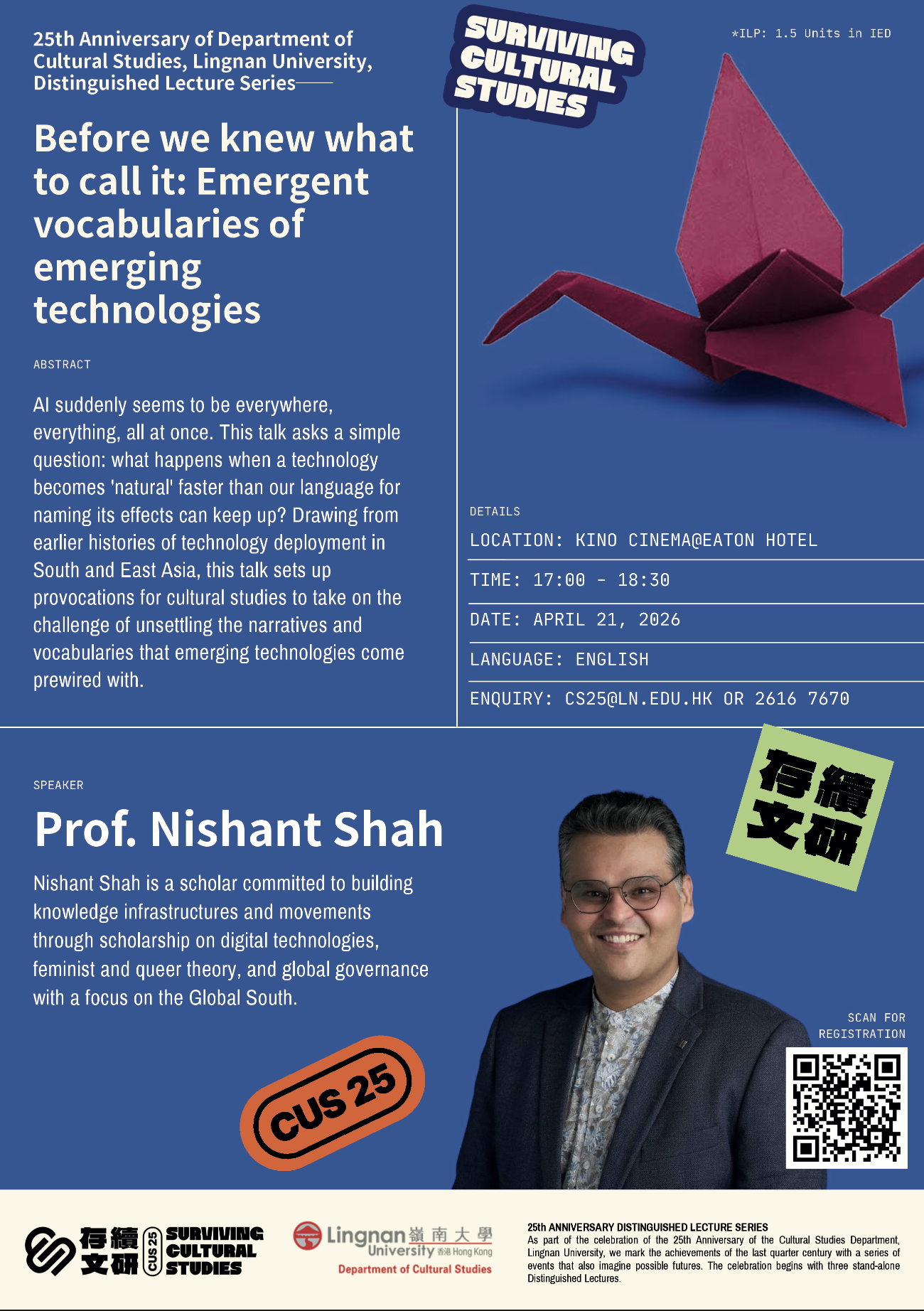
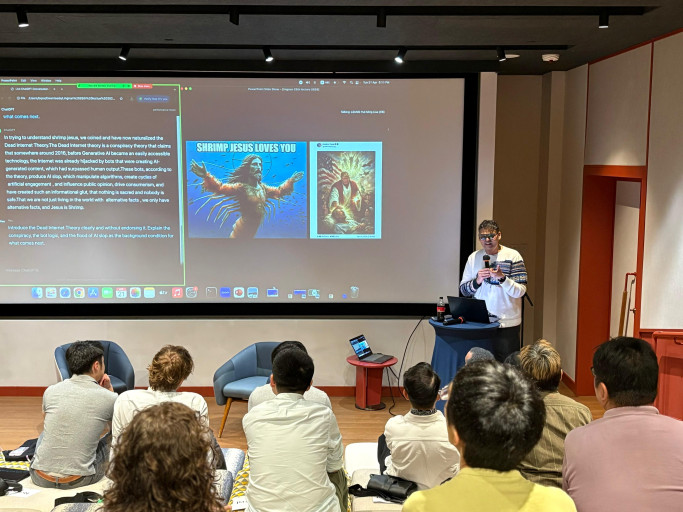
2. Distinguished Lecture – Prof Nishant Shah, Associate Professor of Global Media and Culture, Chinese University of Hong Kong
Title: Before we knew what to call it: Emergent vocabularies of emerging technologies
Venue: Kino Cinema, Eaton Hotel | Date: April 21, 2026 | Time: 17:00-18:30
Abstract:
AI suddenly seems to be everywhere, everything, all at once. It almost feels difficult to remember the time when we did not struggle, negotiate, navigate, and co-habit with AI technologies and applications. This talk asks a simple question: what happens when a technology becomes 'natural' faster than our language for naming its effects can keep up?
Drawing on the work of the Generative AI Network (:GAIN), a Majority World collaboration examining AI futures through histories of encountering digital technologies, I show how rapid adoption produces a gap between lived experience and available vocabulary. Many people can sense new forms of extraction, exclusion, surveillance, and exhaustion, but struggle to describe them in ways that travel across policy, law, journalism, and everyday conversation. Meanwhile, corporate narratives of “innovation” and “disruption” provide ready-made terms that often soften or hide what is being lived.
To widen our narrative strategies, I return to earlier moments in South and East Asia when “new” technologies were absorbed into everyday infrastructures, before we had settled names for their harms. Those histories help us see the urgency of naming, framing, and narrating emerging technologies, to support safe-guards and regulation. I set up a provocation for cultural studies to take on the project of engaging with these emerging technologies through alternative framings, creative vocabularies, and narratives grounded in experience and reality of those who are the most disproportionately impacted by the normalisation of these technologies.
Bio:
Nishant Shah is Assoc. Professor of Global Media & Culture at the Chinese University of Hong Kong, where he leads the Digital Narratives Studio and directs the MA in Global Communication. He is a Faculty Associate at the Berkman Klein Center for Internet & Society at Harvard. His work spans digital technologies, feminist and queer theory, and global governance, with a focus on the Global South. He leads the Generative AI Network (:GAIN) (with Dakila & IDRC) and the Possible AIs Speculative Technology Institute (with CREA), and serves as a knowledge partner to the Feminist Internet Research Network (with APC) and the Take a Pause Fund (with Oxfam-Novib).

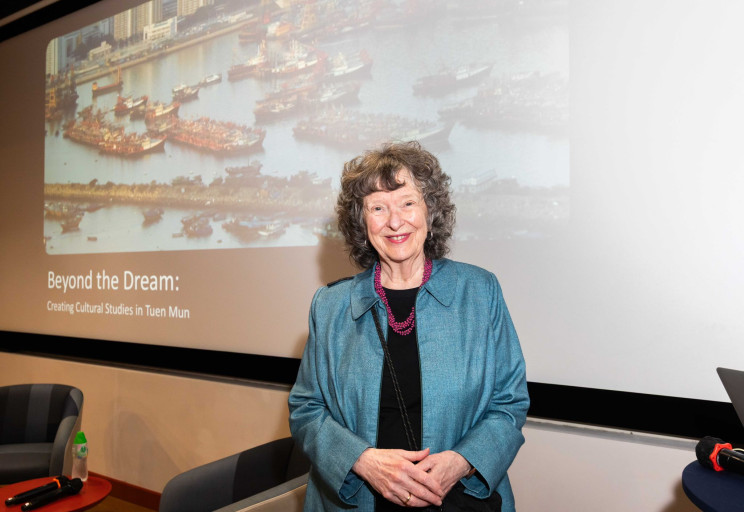
3. Distinguished Lecture – Prof Meaghan Morris, Professor Emerita, Gender and Cultural Studies, University of Sydney, Australia
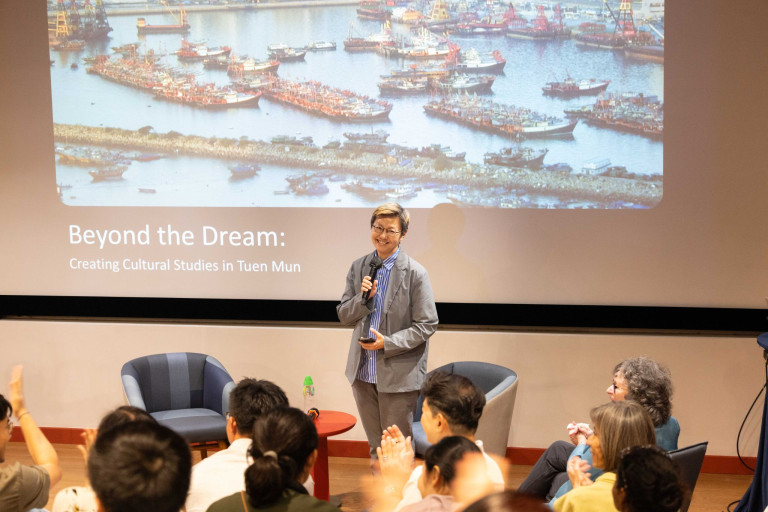
Title: Beyond the Dream: Creating Cultural Studies in Tuen Mun
Venue: Kino Cinema, Eaton Hotel | Date: May 7, 2026 | Time: 17:00-18:30
Abstract:
When I came for my Chair Professor interview at Lingan University in 1999, I had a vague dream of helping to create the first B.A. Cultural Studies in the Chinese world. Fresh from Sydney, I was immediately terrified by the reality of the Tuen Mun highway on a murky day and prayed in the taxi that I would not get the job. I had no idea that I would come to love the Department so much that I would stay involved for 16 years and practice Cultural Studies in ways I could not have imagined elsewhere. Institutional life is often reduced to policy turns and plans, but even these are jostled by the fantasies and dreams that we bring to confronting the real and the ideal in everyday working life. For this 25th anniversary talk I will consider some things I have learned about that relationship from doing Cultural Studies in Tuen Mun.
Bio:
Meaghan Morris is Professor Emerita of Gender and Cultural Studies at the University of Sydney, and former Chair Professor of Cultural Studies at Lingnan University (2000–2013). She was the founding Chair of the Association for Cultural Studies (2004–2008) and the Inter-Asia Cultural Studies Society (2012–2015). A Fellow of both the Australian Academy of the Humanities and the Hong Kong Academy of the Humanities, she received the Stuart Hall Award for Lifetime Achievement in Cultural Studies in 2016. Her books include The Pirate’s Fiancée: Feminism, Reading, Postmodernism (1988), Too Soon Too Late: History in Popular Culture (1998), and Identity Anecdotes: Translation and Media Culture (2006). She has co-edited Hong Kong Connections: Transnational Imagination in Action Cinema (2005), New Keywords: A Revised Vocabulary of Culture and Society (2005), and The Year’s Work in Showgirls Studies (2024).
ILP: 1.5 units in Intellectual and Entrepreneurship Development (IED)
*Applicable to Lingnan UG students
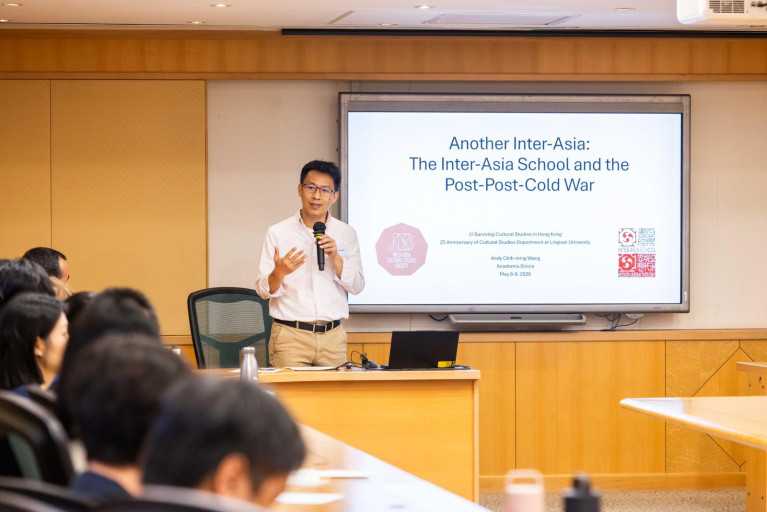
Keynote Speech 1 - “Another Inter-Asia: The Inter-Asia School and the Post-Post-Cold War” – Prof. Chih-Ming Wang , Professor, Academia Sinica, Taiwan
Venue: Paul S. Lam Conference Center, Lingnan Main Campus, Tuen Mun | Date: May 8, 2026 | Time: 10:00
The term “Inter-Asia” is associated with two institutions: the IACS Journal, launched in 2000, has been running for 25 years and now publishing 6 issues per year, and the IACS Society, established in 2004, has grown into a full-fledged academic organization that runs a conference and a summer school, and presents a dissertation award every two years. While the journal and the Society operate as two separate entities, together they embody the IACS scholarship that makes headways in English.
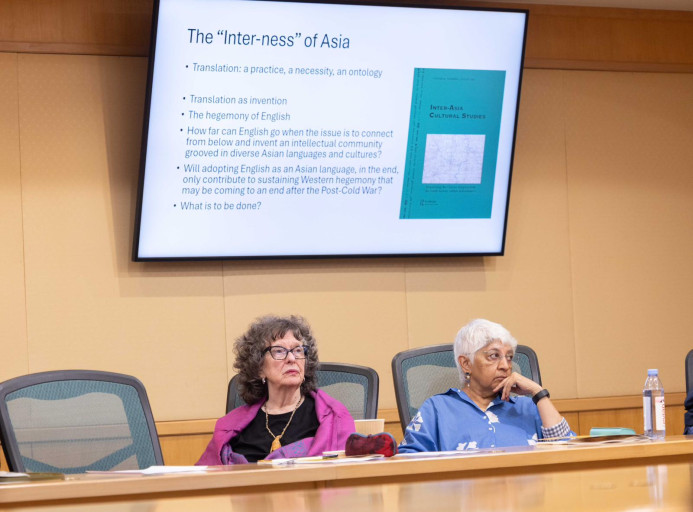
This talk, however, will turn to another Inter-Asia imagination that materialized from 2012 to 2018 in the form of the Inter-Asia School. Though now defunct, the Inter-Asia School once consisted of nine operation offices across Asia, including Hong Kong and Singapore, aiming to facilitate the translation and publication of intellectual thoughts organic to the development of Asian societies and to organize forums and activities to enhance mutual understanding among young scholars in Asia. Regarding itself as an “international institution based on the civil societies across Asia,” the Inter-Asia School Intersected with the West Heavens project—a dialogue on arts and thoughts between India and China—and the Critical Journal Conference initiated by the Korean publisher and journal Changbi (Creation and Criticism) to form a critical intellectual circle in Asia, as well as the IACS journal. Since 2012, it prompted a number of projects in Chinese, including the publication of three Chinese-language journals in the Chinese Mainland, Hong Kong and Taiwan, two volumes on modern Malaysian history and thought, and three conferences, plus annual lectures, on modern Asian thoughts. Though short lived, it is another inter-Asia endeavor that has left a mark in history. But what forced an end to it? What its short history may entail about surviving—and the survival of—cultural studies?
This talk traces the emergence and closure of the Inter-Asia School and reflects on the period from 2012 to 2018 as a brief interregnum leading to what some critics called the “post-post-Cold War” that is characterized by the wane of US unipolar hegemony. The surviving—i.e., living on towards a livable future—cultural studies hence require a reckoning of the interregnum as both the end and a beginning of an era that cultural studies must usher in with new intellectual imagination.
Bio:
Chih-ming Wang is research fellow at Academia Sinica, Taipei, Taiwan. He also holds a joint appointment at the Institute for Social Research and Cultural Studies at National Yangming Chiao-Tung University. He is the author of Transpacific Articulations: Student Migration and the Remaking of Asian America (2013) and Rearticulation: Trajectories of Foreign Literature Studies in Taiwan (2021; in Chinese). His research now focuses on the geopolitics of globalization in Asia and the history of US imperialism in Taiwan.
Keynote Speech 2 – “Thinking at the Limit: Exhaustion, Insight and Survival” – Prof. Tejaswini Niranjana, Professor, Director Centre for Asian Studies, GITAM University, India
Venue: Paul S. Lam Conference Center, Lingnan Main Campus, Tuen Mun | Date: May 9, 2026 | Time: 9:30
Thinking at the Limit: Exhaustion, Insight and Survival – Tejaswini Niranjana
In an article I wrote for the first Lingnan University conference I took part in just after the SARS epidemic, and which was subsequently published in a volume edited by Meaghan Morris and Mette Hjort, I had spoken about the Indian context, where many different kinds of educational institutions, from law to medicine to management to design to natural sciences, were looking to Cultural Studies for inspiration. A number of Bangalore-based institutions had asked the Centre for the Study of Culture and Society to prepare new curricula for them, and to deliver such courses to their students. My paper was titled ‘The Desire for Cultural Studies’. Twenty years down the line, where has that desire gone?
A parallel phenomenon is the setting up of liberal studies in Hong Kong high schools in 2009 after the pedagogic research and interventions of PK Hui and Stephen Chan of Lingnan. Criticised by the establishment for fostering analysis of social and political issues, liberal studies was removed from the curriculum after the 2019 social movement, and replaced with ‘Citizenship and Social Development’ in 2021. There is news of cultural studies departments closing down in Hong Kong and elsewhere in Asia, although this has not happened at LU.
In my keynote, I explore the meanings of ‘survival’, and ask how we may reinterpret the glowing coals and embers that represent the after-life of cultural studies. I ask how the legacy of CUS in Asia can be understood, and whether that legacy continues under other names and other projects.
Bio:
Tejaswini Niranjana is Director, Centre for Asian Studies, GITAM University, India, and Adjunct Professor at Lingnan University, Hong Kong, where she was head of the Cultural Studies department from 2016-21. Her books include Mobilizing India: Women, Music and Migration between India and Trinidad (2006), and Musicophilia in Mumbai: Performing Subjects and the Metropolitan Unconscious (2020), both published by Duke University Press. Recently, she edited Music, Modernity and Publicness in India (Oxford UP, 2020). She is the co-producer of three documentary films related to music, and the curator of Saath-Saath, the India-China music collaboration project (http://saathsaathmusic.com). Her book, Siting Translation: History, Post-structuralism and the Colonial Context (University of California Press, 1992), has impacted a wide range of fields from anthropology and history to post-colonial studies. She is also an award-winning translator, most recently awarded with the National Translation Prize for Fiction by the American Literary Translators’ Association. She was Chair of the Inter-Asia Cultural Studies Society from 2015-2019.
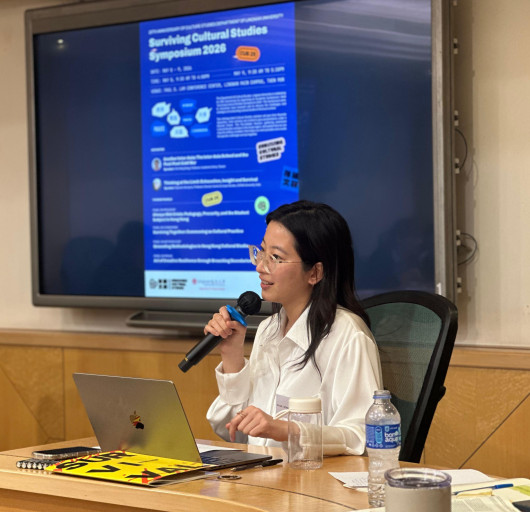
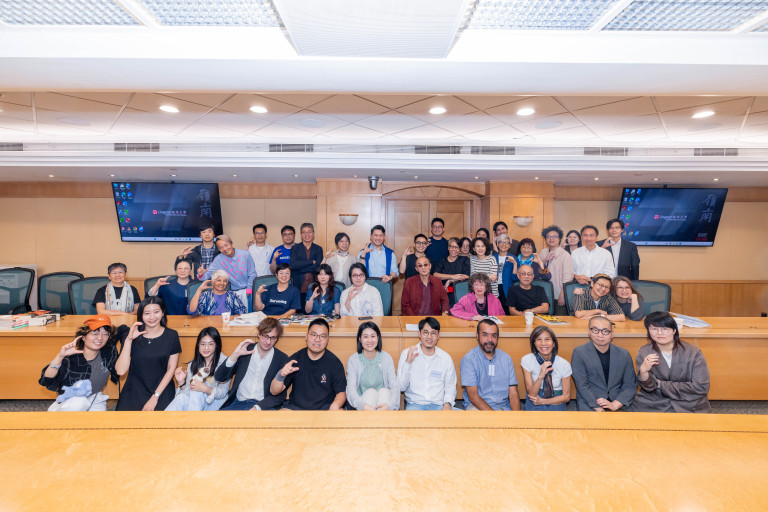
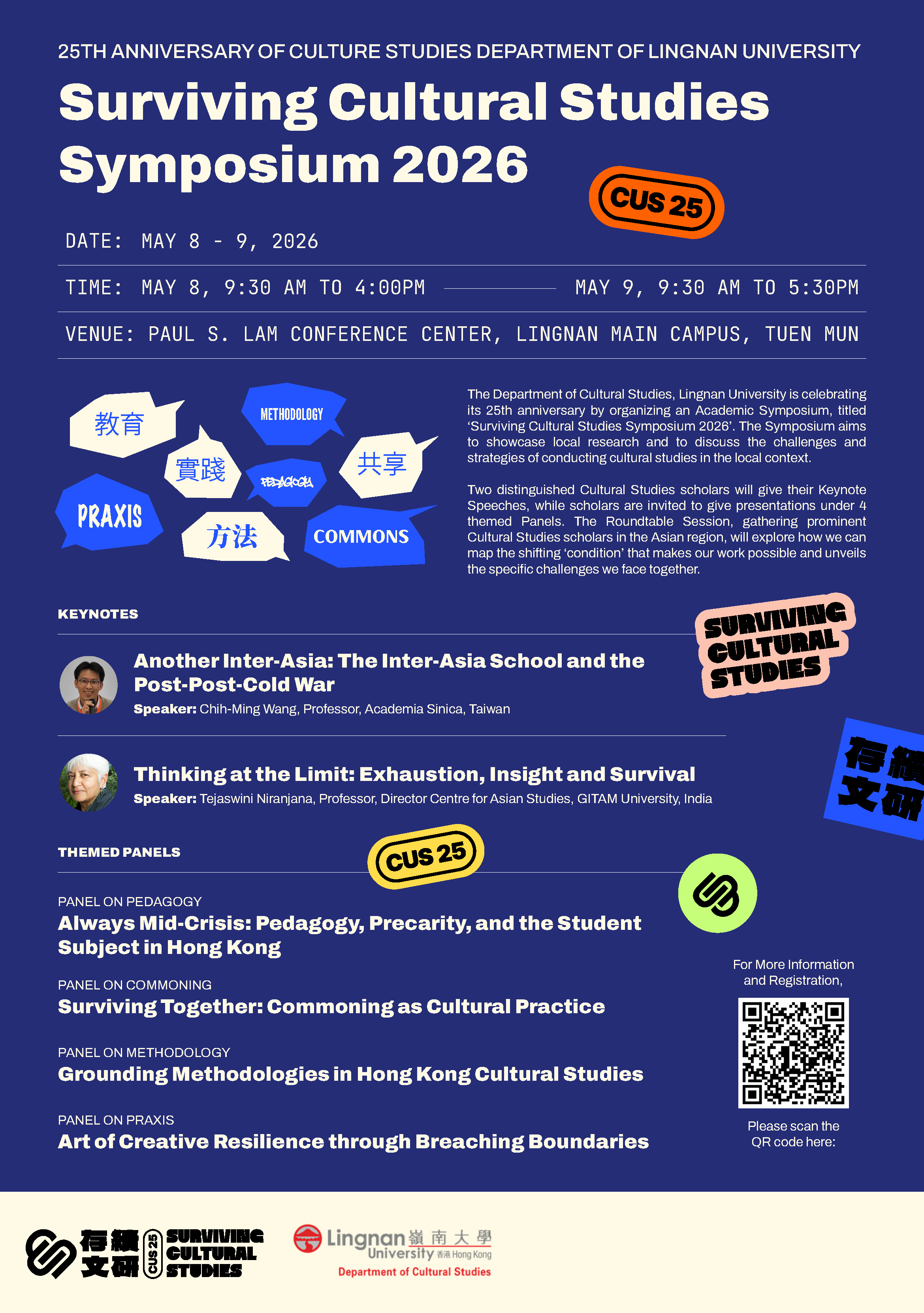
The Surviving Cultural Studies Symposium brings together local and international scholars and practitioners to reflect on the trajectories, conditions, and futures of Cultural Studies in Hong Kong and the wider region. Through themed panels and collective discussion, the Symposium examines how Cultural Studies has been shaped by processes of institutionalisation, and how it continues to respond to contemporary social, political, and cultural crises.
The theme of “surviving” is understood not as a passive condition or a nostalgic return to the past, but as a critical and active orientation toward the future. It invites reflection on the Department’s twenty-five years of achievements, pedagogical practices, and institutional struggles, while asking how core values of Cultural Studies have been realised, sustained, and transformed over time. At the same time, the Symposium seeks to identify new energies, directions, and strategies for Cultural Studies in Hong Kong and the wider region, as scholars collectively map the shifting conditions that make their work possible—and the shared challenges they now face.
As a collective event, this symposium aims to consolidate intellectual, pedagogical, and institutional conversations among like-minded scholars, early-career researchers, students, and community partners. The Symposium will bring together participants from Hong Kong, Taiwan, Mainland China, and the wider Inter-Asian context, fostering interdisciplinary, inter-generational, and intersectional exchanges.
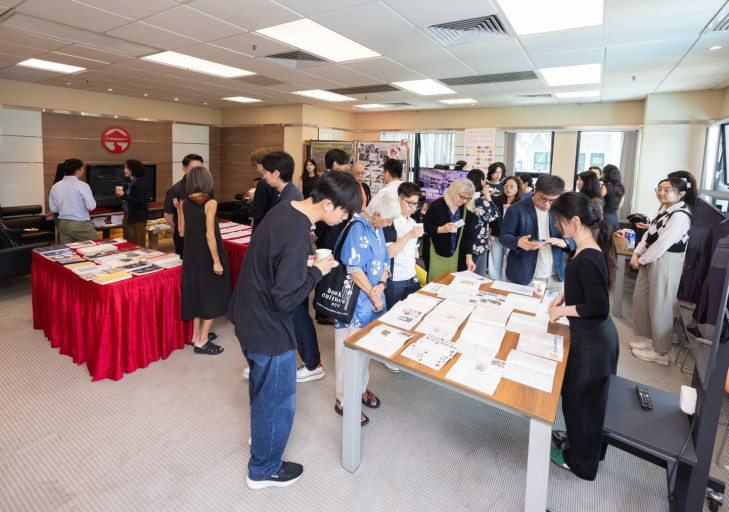
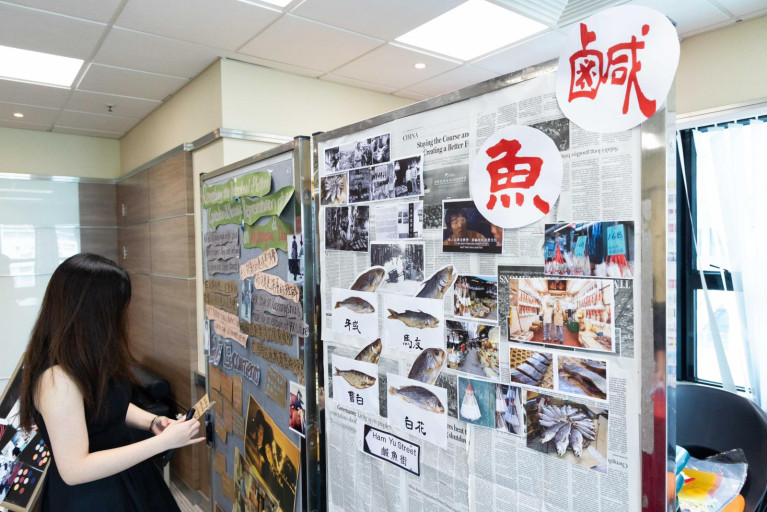
The programme will feature two keynote lectures, four themed panels, a roundtable discussion, exhibitions of staff publications, student projects, and contributions from partnering organisations, highlighting the Department’s ongoing engagements across research, teaching, and community practice.
Date: May 8-9, 2026
Time: 9:00 am – 4:30pm (May 8); 9:00am to 5:00pm (May 9, 2026)
Venue: Paul S. Lam Conference Centre, 3/F, Lau Lee Yuen Han Building, Lingnan University
Panels and Roundtable
1. Panel on Pedagogy – Always Mid-Crisis: Pedagogy, Precarity, and the Student Subject in Hong Kong
Venue: Paul S. Lam Conference Center, Lingnan Main Campus, Tuen Mun | Date: May 8, 2026 | Time: 11:30-13:00
Chair: Daren Shi-chi Leung | Panelists: Joseph Li, Sze Ming Liu, Muriel Law | Discussant: Benjamin Kindler
This panel responds to the fact that cultural studies always begins mid-crisis: wherever it takes root, it must be made and remade as a pedagogical practice within shifting conjunctures of power, institutions, and everyday life. The inception of Cultural Studies in Hong Kong has necessarily involved its institutionalization into undergraduate and postgraduate teaching; yet, as Stuart Hall warned, institutionalization is a “moment of profound danger” as well as a strategic opportunity for public pedagogy. Our shared problem, as underscored in work such as Cultural Studies in the Classroom and Beyond (2019), is how to hold together theory, practice, and politics in ways that remain radically contextual, multi-perspectival, and accountable to students’ lived conditions across very different educational sites.
Post-2019 and post-pandemic Hong Kong represents a distinct conjuncture—a condensation of contradictions marked by altered public life, the intensified platformization of learning, and reconfigured affective landscapes. These shifts pose urgent questions: Who are our learners now? What can they become? How must pedagogical relationships, methods, and responsibilities change when students’ horizons of possibility and risk have been transformed? The stakes are not merely curricular; critical pedagogy requires inventing minor, collaborative practices that sustain inquiry and agency under pressure.
Against this background, the Pedagogy panel convenes practitioners who teach across the educational ecology—high school, undergraduate, and postgraduate cohorts—to think conjuncturally about students and their agencies. We map who “the student” is across these sites, how youth subjectivities have been reshaped, and what pedagogical forms foster agency without collapsing analysis into pre-given commitments. Together, the panel asks: How can we define critical pedagogy in Hong Kong today without reducing it to hot takes or canon-teaching? Surviving cultural studies, in this sense, means practicing the art of articulation and cultivating student agency as both the object and outcome of pedagogy.
2. Panel on Commoning - Surviving Together: Commoning as Cultural Practice
Venue: Paul S. Lam Conference Center, Lingnan Main Campus, Tuen Mun | Date: May 8, 2026 | Time: 14:30-16:00
Chair: Pun Ngai | Panelists: Chau Leung, Haley Kwan, James Chong (Rolling Books), Joanne Choi and Jolie Chan (i-COMMON HK) | Discussant: John Erni
The commons has re-emerged as a powerful conceptual and political framework in Cultural Studies, not as a static set of resources but as a dynamic, situated practice—commoning—through which communities negotiate shared life, space, knowledge, and cultural meaning. In the context of post-2019 Hong Kong, the urgency of this framework has only deepened. As state and capitalist control over public space, cultural infrastructure, and education intensifies, the act of commoning offers a counter-imaginary: a way of reclaiming agency, cultivating solidarity, and building spaces of care and negotiation amid structural uncertainty.
This panel brings together scholars, educators, and cultural practitioners to explore how commoning is being theorised and practiced across multiple domains of everyday life. Through four interrelated presentations, the panel examines how the commons is enacted through education, community arts, reading and storytelling practices, and NGO-led strategies for social empowerment. Together, these papers foreground commoning as both a cultural and infrastructural project—one that cuts across artistic, pedagogical, economic, and institutional practices.
Collectively, the panel asks: What does it mean to build and sustain commons in a city like Hong Kong, where space is contested, social bonds are increasingly frayed, and collective imagination is under pressure? How can Cultural Studies translate critical reflection into embodied, collaborative practices that nurture belonging, equity, and survival? By centering the work of educators, artists, and community organisers, the panel highlights the multiple scales at which commoning operates—from classroom dialogue to neighbourhood performance, from mobile libraries to policy transformation. It offers a generative space to reflect on the strategies, tensions, and futures of the commons as both a cultural idea and a material practice—rooted in the specific urgencies of Hong Kong, yet resonant far beyond it.
3. Panel on Methodology – Grounding Methodologies in Hong Kong Cultural Studies
Venue: Paul S. Lam Conference Center, Lingnan Main Campus, Tuen Mun | Date: May 9, 2026 | Time: 11:00-12:30
Chair: Denise Tse-Shang Tang | Panelists: Chan Wai-yin, Victor Shin, Tsang Chung-kin, Cally Yu Yeuk-Mui
Cultural studies scholars Hui Po-keung and Pang Chak-sang assert that the joint intellectual project of Cultural Studies and doing action research is to “[bring] forth social transformation and critical self-reflection.” Moreover, it is “not merely aim at making sense of the world, but also [an] attempt to transform it towards a more meaningful and liveable space for the populate, particularly the marginal groups.”
For this panel, we present research that ground Cultural Studies methods in context, in communities, in discourse and in practice. Chan Wai-Yin examines the work practices, assets and values of waste pickers, and the values of informal waste picking activity to the society as well as to waste pickers themselves. Victor Shin presents on doing ethnography at Hong Kong ritualistic Cantonese opera and communities in rural villages. Tsang Chung-Kin offers a methodological reflection on applying articulation theory to research on Hong Kong culture. Cally Yu Yeuk-Mui explores the concept of creative aging using the case study of creative dance and the elderly from a grassroots community context.
4. Panel on Praxis - Praxis: art of creative resilience through breaching boundaries
Venue: Paul S. Lam Conference Center, Lingnan Main Campus, Tuen Mun | Date: May 9, 2026 | Time: 14:00-15:30
Chair: Lisa Leung | Panelists: Iam Chong Ip, Daisy Tam, Sampson Wong, Dayang Magdalena Nirvana Tamanio Yraola | Discussant: KC Lau
The concept of ‘praxis’, with its roots dated to Greek philosophy, has played a pivotal role in influencing Cultural Studies scholarship. While CS exemplifies the core principles of ‘praxis’ as infusing ‘theories’ with ‘practice’, it also tasks researcher-scholar to actively blend research with ‘community engagement’, realizing the relationship between action and reflection, and the synergies between teaching, research, and working with/ in communities.
This panel aims to reflect on how academic and community efforts in Hong Kong in the past 25 years have interpreted and contextualized the meanings of ‘praxis’ in Hong Kong. Scholars invited to present in this panel are active practitioners in their own field (media, environmental protection, and sound performance). Through self-reflection of their own experiences, they will contribute to the evaluation of some of the milestones as well as challenges of ‘praxis’ over the years by the CS community, including ‘translation’ between theorization, critique and ‘doing’; deriving / modifying strategies to navigating the different stakeholders and ‘communities’. They will address how their active community/ cultural work, as well as similar initiatives in the wider CS community, has evolved as a result of critical evaluation of the challenges as well as opportunities incurred from the changing political, economic and socio-cultural scape in Hong Kong in the past 25 years. Discussions generated from this panel would hope to shed light on forging a more sustainable ‘praxis’ for the CS community in the future.
Roundtable Session
Venue: Paul S. Lam Conference Center, Lingnan Main Campus, Tuen Mun | Date: May 9, 2026 | Time: 15:30-17:00
Moderator: Roberto Castillo | Participants: John Erni, Pang Lai-kwan, Andy Wang, Luo Xiao-ming, Wu Ka-ming, Chow Yiu-fai, Lo Kwai-cheung, Chua Beng-huat, Chen Kuan-hsing, Meaghan Morris and Tejaswini Niranjana
Bringing together invited speakers, senior scholars, and distinguished guests, this roundtable reflects on the shifting conditions under which Cultural Studies is practised in Hong Kong and across the Inter-Asian region. Moving from diagnosis to projection, the discussion considers what it means to “survive” in a moment marked by institutional restructuring, geopolitical transformation, technological acceleration, and pedagogical pressure. Participants will reflect on these questions and other related issues emerging from their own contexts, experiences, and ongoing work.
.jpg)
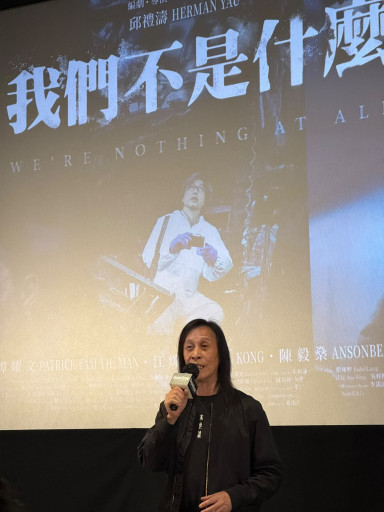
We Are Nothing At All Film Screening & Director Q&A
We Are Nothing At All《我們不是什麼》
Director: Dr. Herman Yau (PhD, 2015)
Date: May 8, 2026
Time: 5:30pm
Venue: Golden Scene Cinema (Kennedy Town)
By invitation only.