


Course Descriptions
Required Courses

| SCI501 Geospatial Intelligence for Sustainable Development (3 credits)The United Nations has recognised the use of geospatial data and earth observation in advancing and achieving the SDGs. The aim of the course is to learn about the geographic foundations of GIS, location intelligence and remote sensing. It covers how GIS and earth observation facilitate geospatial data analysis and communication to address complex geographic concepts or problems. Understanding how geospatial analytics, combined with AI and IoT technology could support professionals to analyse geospatial data from multiple sources to monitor the progress of the SDGs and, empower understanding, insight, intelligent decision-making and prediction. Cutting-edge topics and applications of sustainable development will be introduced. The ethical, legal, and societal issues in the field will also be reviewed and addressed. The course combines classroom teaching and hands-on tutorials to learn GIS analytical and remote sensing skills through practice. |
 | SCI502 Climate Change Literacy and Science (3 credits)This course provides an overview of issues related to climate change. The course comprises a series of 3-hour lecture and discussion sessions, as well as field trips. Lectures will cover topics such as causes and consequences of climate change, responses and actions of climate change, the controversial issues and climate solutions, and the needs of sustainable development. |
 | SCI503 Sustainability and Environmental Communication (3 credits)This course will introduce students to environmental communication, an interdisciplinary field that considers the communication of information to encourage the establishment of best practices related to environmental issues and sustainable development.The course comprises a series of 3-hour lecture and discussion sessions. Lectures will cover topics under the framework of UNSDGs and analyse scientific arguments related to environment and sustainability issues, drawing upon issues and examples on sustainable coastal development. It will also train students basic theory and techniques of environmental communication, and to communicate effectively about the issues with a variety of stakeholders in a variety of circumstances. |
 | SCI504 Urban Ecology and Sustainable Planning (3 credits)This course examines how urban ecology, the science that examines the interactions between organisms and the urban environment, can help identify strategies to achieve a balance between human needs and the natural environment and encourage sustainable development. The course will focus on environmental and sustainability issues, particularly on the interactions between wildlife and humans in an urban environment. It also covers important implications for urban farming, agriculture and building sustainable food systems. The course comprises a series of 3-hour lecture and discussion sessions, as well as field trips. Lectures will cover topics such as human-wildlife interactions in urban environments, the controversial issues, critical environmental challenges, urban sustainability, sustainable communities design and urban planning. |
 | SCI505 Introduction to Environmental, Social and Governance (ESG) Planning (3 credits)This course provides an overview of the global trend in Environmental, Social and Governance (ESG) reporting and sustainability performance in commercial sectors under the framework of UN Sustainable Development Goals (UNSDGs). The course comprises a series of 3-hour seminars and discussion sessions, as well as field trips. Guest speakers and industrial practitioners of related fields, such as ESG partners, sustainability managers, and risk advisory will be invited to share ESG trends and practice. Small group field trips will also be arranged. Other learning activities include case studies, media reviews and data analyses. |
 | SCI507 Environmental Analytics and Modelling using R and Python (3 credits)Data has been likened to oil. While they are valuable in almost all facets of modern life, data cannot be used unrefined. This course aims to equip students with the concepts and tools to transform raw environmental data into actionable insights using both R statistical environment and foundational Python. Students will learn data wrangling, visualization, statistical analysis and introductory modelling in R, alongside with basic Python scripting. Lectures will comprise of 1.5 hours of theory, followed by 1.5 hours of practical learning using simulated datasets related to environmental issues, sustainability and/or SDGs. By the end of the course, students should be comfortable with gaining meaningful insights from raw/unrefined data through independent analyses of statistical trends and patterns. This will better prepare students for their research projects and eventual career that requires proficient data analytical skills using R and Python. |
 | SCI508 Practical & Research Training: Topics in Environment, Society, and Sustainable Future (3 credits)This course introduces students with practical and research techniques in various fields of environmental science, focusing primarily on ecological surveys and environmental monitoring. The course will adopt a blended, experiential approach by combing lectures and field trips to enhance students’ practical skills in both the field and laboratory setting, as well as application of survey designs. Lectures will cover basic sampling designs, descriptive statistics, species identification and report writing, which would be practised through conducting field-based surveys and sampling in various ecosystems in Hong Kong. |
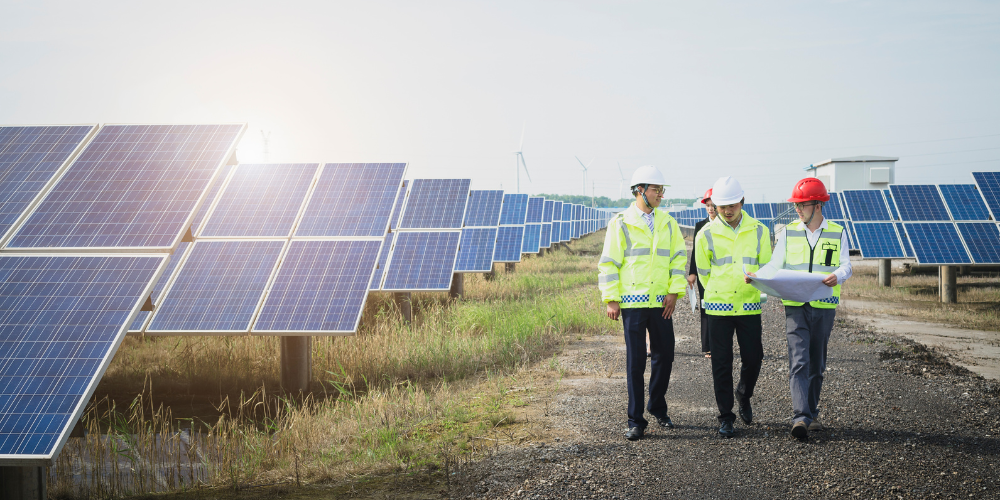 | SCI509 Green Energy and Sustainability (3 credits)The course introduces students to the fundamental principles of environmental engineering, and clean and renewable energy. Students will gain comprehensive knowledge regarding the production, distribution, challenges, and future prospects of renewable energy within the framework of a smart and sustainable society. The course will also examine the economic, sociological, and environmental aspects of renewable energy, allowing students to develop a deep awareness of its multifaceted nature.The course comprises a series of 3-hour lecture and discussion sessions. Lectures will address topics related to green energy and various renewable energy technologies under the framework of UN SDGs. There will be a presentation of practical international case studies for each technology. The human behaviour and socio-economic consequences during the sustainable energy transitions will be discussed and evaluated. |
Elective Cluster Courses
HTI503 Rural Food-Energy-Water Systems (FEWS) (3 credits)Understanding how three critical factors to the viability of the Human species, namely Food, Energy and Water affect each other, is going to be critical in solving challenges in the 21st century. The course will explore the link between the Food, Energy and Water systems (FEWs). Poverty and the causes that lead to poverty in a community is invariably linked to the availability and the efficient functioning of FEWs. |
MCG503 History, Heritage and Regional Perspectives (3 credits)The course History, Heritage and Regional Perspectives provides an overview of key theoretical, practical and policy debates within the field of heritage management. The focus is on the history and heritage of the Greater Bay Area, but also brings in a comparative perspective by incorporating international case studies and policy issues from other parts of Asia and the world. The concept of heritage will be explored from an inter-disciplinary approach to cover heritage practices including the identification, assessment, research, preservation, interpretation, and promotion of various forms of cultural heritage. Students will also be introduced to international, national and regional cultural heritage regulations and policies. |
CDS548 Introduction to Smart Cities (3 credits)This course aims to provide a comprehensive overview of the concepts, technologies, and applications that define smart cities. The primary objective is to equip students with the foundational knowledge and skills necessary to understand and engage with the multifaceted challenges and opportunities that urban environments have faced in recent years. The course will provide a solid foundation for students to engage with and contribute to the development of smart cities, preparing them for further study or careers in this dynamic and impactful field. By the end of the course, students should be able to explain the concept of smart cities and their significance, explain some core technologies that enable smart city solutions, understand the challenges of urbanisation and propose smart solutions, recognise the importance of policy, governance, and citizen engagement, have knowledge on real-world smart city applications, understand the impact of smart cities on sustainability and resilience, anticipate future trends and innovations in the field of smart cities. The course is focused on an overview of smart city technologies, examples and real-world applications. |
MHM504 Modern Technology in Health and Social Services (3 credits)This course aims to provide a comprehensive overview of the concepts, technologies, and applications that define smart cities. The primary objective is to equip students with the foundational knowledge and skills necessary to understand and engage with the multifaceted challenges and opportunities that urban environments have faced in recent years. The course will provide a solid foundation for students to engage with and contribute to the development of smart cities, preparing them for further study or careers in this dynamic and impactful field. By the end of the course, students should be able to explain the concept of smart cities and their significance, explain some core technologies that enable smart city solutions, understand the challenges of urbanisation and propose smart solutions, recognise the importance of policy, governance, and citizen engagement, have knowledge on real-world smart city applications, understand the impact of smart cities on sustainability and resilience, anticipate future trends and innovations in the field of smart cities. The course is focused on an overview of smart city technologies, examples and real-world applications. |
CDS521 Foundation of Artificial Intelligence (3 credits)Artificial intelligence (AI) is a new technical science that studies and develops theories, methods, techniques, and application systems for simulating and extending human intelligence. AI techniques and models have been widely employed in various domain-specific applications due to their promising performance compared to conventional methods. This course focuses on fundamental concepts, techniques, and potential business applications of artificial intelligence. The course provides an overview of waves of AI, intelligent agents, problem-solving, planning, reasoning, learning. It includes topics about search, logic, genetic algorithms, computational learning methods, and some potential business applications like expert systems, news analysis, and so on. |
ESG516 ESG and Big Data (3 credits)This course is designed to shed light on the sustainability context of data reliability, transparency, consistency, and materiality. Students will be introduced to some essential tools and applications for big data management and gain an understanding of the five W/Hs (what data to collect, when to collect, how to use and analyse the data, where to store data, and how to report data) under the three primary umbrellas: environmental data, social data, and governance data. The course will cover basic concepts of statistical analysis and research, the strengths and weaknesses of different methods, and the ethical considerations of research within sustainability studies. |
CDS525 Practical Application of Deep Learning (3 credits)Deep learning is one of the bleeding-edge technologies of machine learning. It is a neural network used to establish and simulate the human brain for analytical learning and to interpret data by imitating the mechanism of the human brain. Deep learning is widely used in computer vision, speech recognition, natural language processing, and other fields. This course aims at providing an understanding and hands-on experience of the existing deep learning approaches. The topics will cover how to select deep neural networks, how to design deep neural networks, and how to train and optimise the neural networks for practical applications using state-of-the art software packages. The course will introduce different deep neural network models, including convolutional neural networks, recurrent neural networks, adversarial learning models, and training techniques including dropout, batch normalisation, selection of activation functions and so on. TensorFlow, Pytorch, or other state-of-the-art deep learning tools will be introduced and applied to solve different classes of problems with huge datasets in business domains. |
CDS527 Big Data Analytics (3 credits)This course provides an understanding of the concept and challenge of big data. The focus is on the data analytic techniques to tackle the V’s (volume, velocity, variety, veracity, valence, and value) in big data and how these impacts data collection, monitoring, storage, analysis and reporting. The following topics across the big data domain will be introduced: distributed file systems; big data analysis techniques; high-performance processing algorithms for big data; big data search and query technologies. An example (Apache Spark) of big data management system to manage and process large-scale data is |
MIB607 Big Data Marketing (3 credits)In the age of Big Data, marketing analytics increasingly plays an important role in business decision making. Big data marketing analytics improves the quality of marketing decision making by helping firms better understand their customers and competitors. This course introduces students to state-of-the-art big data and marketing analytics to generate business insights, demonstrates how to practically apply these analytical skills to real-world business decisions, and provides the skills needed to make intelligent use of marketing data in making recommendations about marketing strategies. These skills are learned through a combination of lectures, assignments, in-class exercises, and projects with real data. |