


School Life & Student Sharing

MScSCTA Promotional Video
Student Sharing Stories from Our Learning Journey
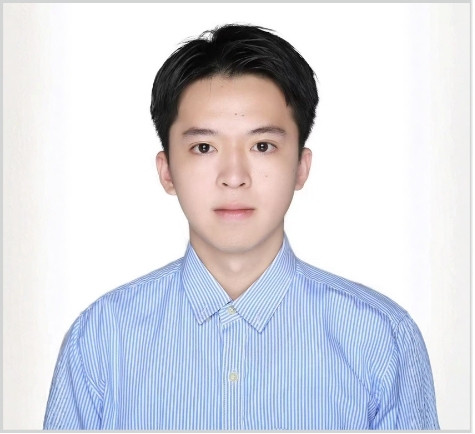
Mr. ZHONG
MScSCTA
Graduate, Class of 2025/26
Graduate, Class of 2025/26
With an undergraduate background in Civil Engineering, I began to re‑evaluate my long‑term career aspirations upon graduation. As the traditional engineering sector encounters increasing structural constraints, I questioned whether I could position myself within a more forward‑looking field offering broader development prospects.
Motivated by this reflection, I ultimately chose to pursue the Master of Science in Smart City Technologies and Applications (MScSCTA). This programme represents a pivotal opportunity for professional transformation. By integrating cutting‑edge technologies—including artificial intelligence, big data analytics, and the Internet of Things—it provides a pathway for transitioning from conventional civil engineering to the emerging domains of smart construction and smart city development.
As one of Lingnan University’s newest programmes, the MScSCTA offers robust academic resources, an innovative and interdisciplinary curriculum, and an inspiring learning environment dedicated to future‑oriented urban studies. More importantly, the programme has substantially expanded my professional horizons. It enables me to engage with high‑demand areas such as urban digitalization, intelligent transportation systems, and urban big data, thereby opening a wider range of promising career trajectories.
I look forward to further developing my competencies in this dynamic learning environment, integrating technological innovation with urban development, and contributing meaningfully to the advancement of smart city construction in the future.
Motivated by this reflection, I ultimately chose to pursue the Master of Science in Smart City Technologies and Applications (MScSCTA). This programme represents a pivotal opportunity for professional transformation. By integrating cutting‑edge technologies—including artificial intelligence, big data analytics, and the Internet of Things—it provides a pathway for transitioning from conventional civil engineering to the emerging domains of smart construction and smart city development.
As one of Lingnan University’s newest programmes, the MScSCTA offers robust academic resources, an innovative and interdisciplinary curriculum, and an inspiring learning environment dedicated to future‑oriented urban studies. More importantly, the programme has substantially expanded my professional horizons. It enables me to engage with high‑demand areas such as urban digitalization, intelligent transportation systems, and urban big data, thereby opening a wider range of promising career trajectories.
I look forward to further developing my competencies in this dynamic learning environment, integrating technological innovation with urban development, and contributing meaningfully to the advancement of smart city construction in the future.
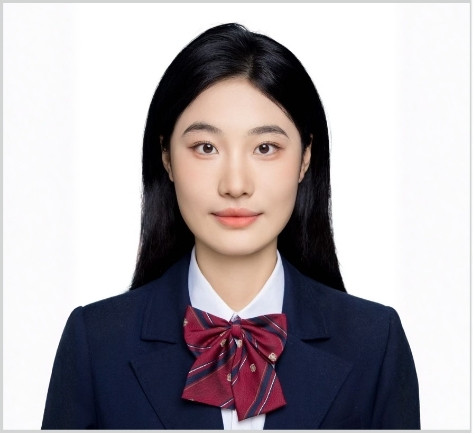
Ms. YUAN
MScSCTA
Graduate, Class of 2025/26
Graduate, Class of 2025/26
My undergraduate training in Urban and Rural Planning, I participated in several territorial spatial planning projects at The China Academy of Urban Planning and Design, where I gained substantial hands‑on project experience. These experiences not only deepened my understanding of the operational logic behind urban development, but also sparked my strong interest in smart city development. This motivated me to pursue the Master of Science in Smart City Technologies and Applications (MScSCTA). Through this programme, I hope to integrate data science with urban planning and contribute to the sustainable development of cities.
During my undergraduate training and practical planning work, I developed a profound appreciation for the crucial role of GIS spatial analysis and data‑driven approaches in modern urban governance. I chose the MScSCTA programme because it aligns perfectly with my career aspiration to merge traditional spatial planning with advanced digital technologies. The programme covers essential subjects such as operations research, big data analytics, and artificial intelligence, enabling me to strengthen my abilities in data mining and algorithmic modelling within complex urban environments. It is equipping me to become an interdisciplinary professional capable of supporting digitalised spatial governance.
What distinguishes the MScSCTA programme is its strong emphasis on the integration of theory and practice. The curriculum not only delivers a solid theoretical foundation in data science, but also strongly encourages us to address real‑world challenges using technological solutions. Throughout my studies, I have been able to directly apply what I learned to research projects. For example, I am currently involved in a project on urban video surveillance and intelligent analysis using the VIRAT dataset, and I am leading a study on an optimal outdoor walking route planning and facility accessibility assessment system for smart campuses. Thanks to the programme’s training, the abstract of my related research has been accepted by this year’s postgraduate conference, where I have been invited to present orally. The dedicated guidance of the faculty and the programme’s forward‑looking curriculum have significantly enhanced both my academic competence and practical capabilities.
During my undergraduate training and practical planning work, I developed a profound appreciation for the crucial role of GIS spatial analysis and data‑driven approaches in modern urban governance. I chose the MScSCTA programme because it aligns perfectly with my career aspiration to merge traditional spatial planning with advanced digital technologies. The programme covers essential subjects such as operations research, big data analytics, and artificial intelligence, enabling me to strengthen my abilities in data mining and algorithmic modelling within complex urban environments. It is equipping me to become an interdisciplinary professional capable of supporting digitalised spatial governance.
What distinguishes the MScSCTA programme is its strong emphasis on the integration of theory and practice. The curriculum not only delivers a solid theoretical foundation in data science, but also strongly encourages us to address real‑world challenges using technological solutions. Throughout my studies, I have been able to directly apply what I learned to research projects. For example, I am currently involved in a project on urban video surveillance and intelligent analysis using the VIRAT dataset, and I am leading a study on an optimal outdoor walking route planning and facility accessibility assessment system for smart campuses. Thanks to the programme’s training, the abstract of my related research has been accepted by this year’s postgraduate conference, where I have been invited to present orally. The dedicated guidance of the faculty and the programme’s forward‑looking curriculum have significantly enhanced both my academic competence and practical capabilities.
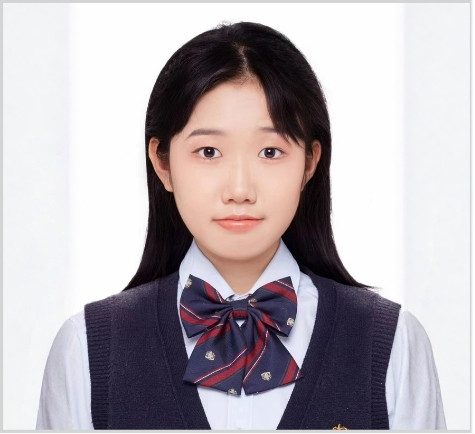
Ms. NIU
MScSCTA
Graduate, Class of 2025/26
Graduate, Class of 2025/26
Having completed my undergraduate studies in Information Management and Information Systems, I have developed a dual foundation in both management and data science. During my studies, I primarily conducted data‑driven research using tools such as Python and SQL, and published papers on topics related to digital currency (e‑CNY) and smart campus management. I also actively participated in various competitions to strengthen my ability to tackle real‑world problems. In addition, I led several national‑level and provincial‑level innovation and entrepreneurship projects, gaining valuable experience in teamwork and project implementation.
I have built a solid technical foundation, with proficiency in multiple programming languages and analytical software. Beyond academic and technical pursuits, I have remained committed to social welfare. I founded the “捡星星” platform in an effort to leverage technology to support children with autism. I have also participated in research projects on CIM‑based smart campuses and digital twin systems, which allowed me to build preliminary experience in the field. Nevertheless, I aspire to deepen my understanding of underlying technologies and system‑level applications.
The MScSCTA programme aligns closely with my academic background and represents an ideal pathway for my further development. As an emerging interdisciplinary field, smart city technologies holds tremendous potential for modern urban development. The School of Data Science at Lingnan University is a key strategic faculty of the institution, with particularly strong expertise in artificial intelligence. In the context of AI‑driven technological advancement, I believe this programme will expose me to valuable knowledge and resources.
The curriculum covers core subjects such as deep learning and programming, which have provided us with a robust technical grounding. The strong academic expertise of the faculty ensures that I continue to benefit greatly. Notably, the course projects offer opportunities to engage directly with real‑world datasets. For example, I had the chance to work hands‑on with ECG data processing, an experience that was both highly practical and academically valuable.
The MScSCTA programme aligns closely with my academic background and represents an ideal pathway for my further development. As an emerging interdisciplinary field, smart city technologies holds tremendous potential for modern urban development. The School of Data Science at Lingnan University is a key strategic faculty of the institution, with particularly strong expertise in artificial intelligence. In the context of AI‑driven technological advancement, I believe this programme will expose me to valuable knowledge and resources.
The curriculum covers core subjects such as deep learning and programming, which have provided us with a robust technical grounding. The strong academic expertise of the faculty ensures that I continue to benefit greatly. Notably, the course projects offer opportunities to engage directly with real‑world datasets. For example, I had the chance to work hands‑on with ECG data processing, an experience that was both highly practical and academically valuable.
Exploring Learning Beyond the Classroom


