



Article by Wong Sum Yee|Instructed by Prof Emilie Yeh
The end of the 19th century to the 1920s was a period of enlightenment for Hong Kong cinema, and many traces of the history of film screening can be found on Hong Kong Island, from open-air cinemas to formal cinemas, marking the important development of Hong Kong’s film screening industry. With the summer holidays approaching, why not embark on a “pilgrimage”, using words, to explore the cinema sites in the midst of the city?
First stop: Bank of China Tower
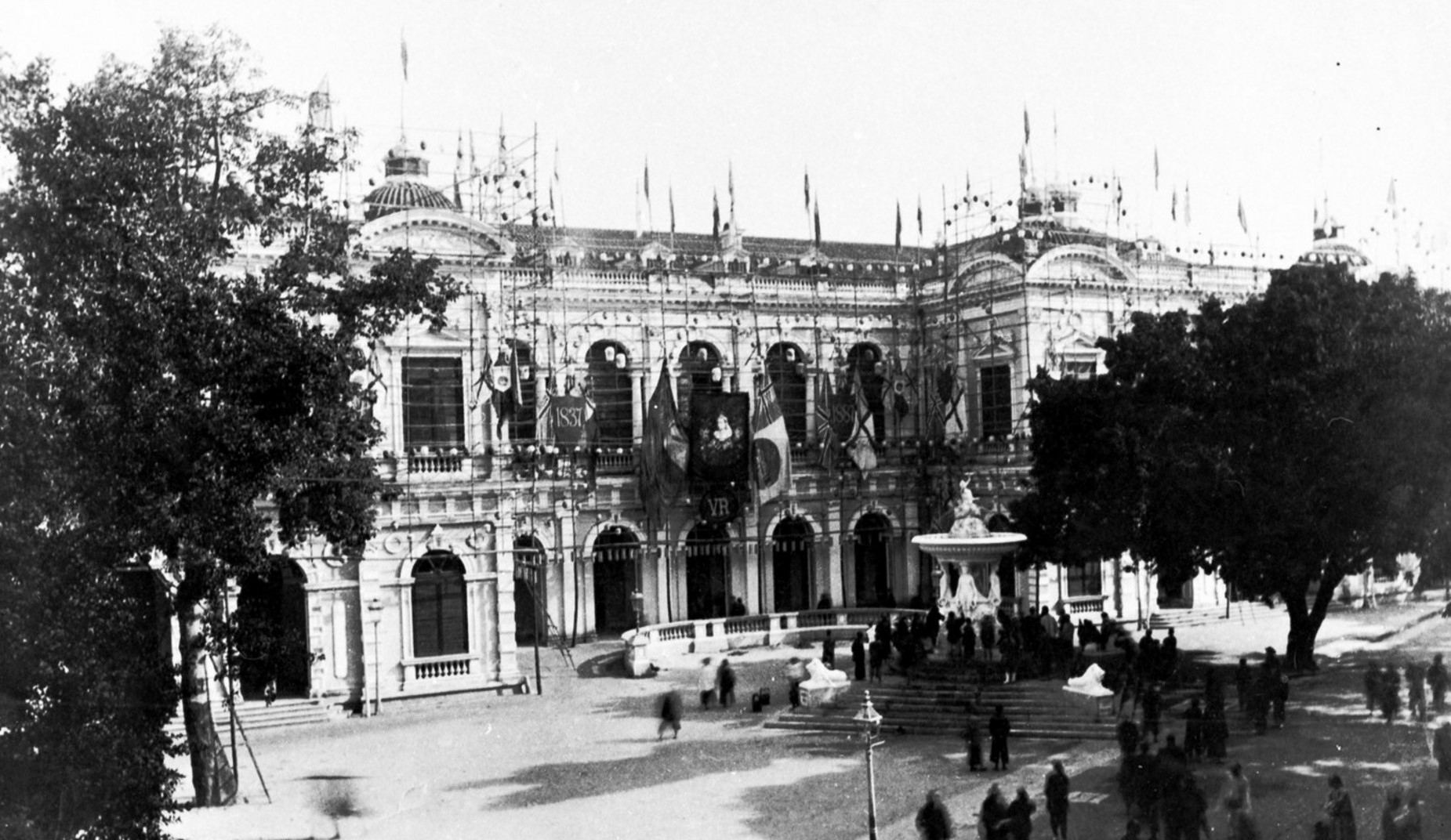
The Bank of China Tower, formerly the old City Hall of Hong Kong, was the first venue for film screenings in Hong Kong. French Professor Maurice Charvet arrived in Hong Kong on 24th April 1897, and four days later he held a film screening in St Andrew’s Hall of the City Hall (Fig. 1), which was the first ever recorded film screening in Hong Kong.
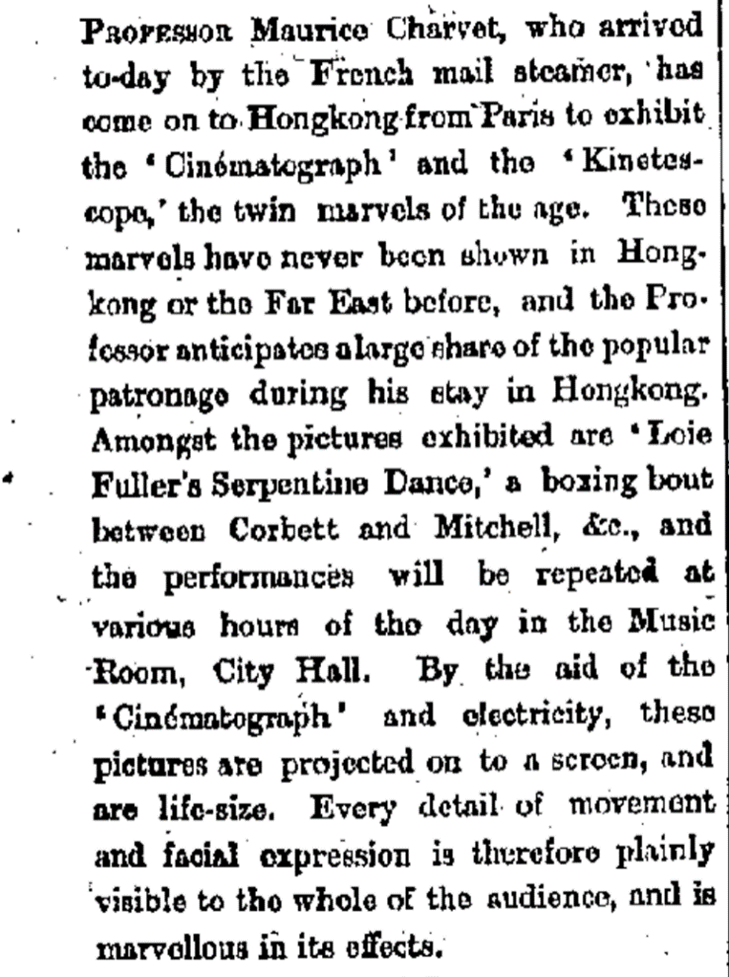
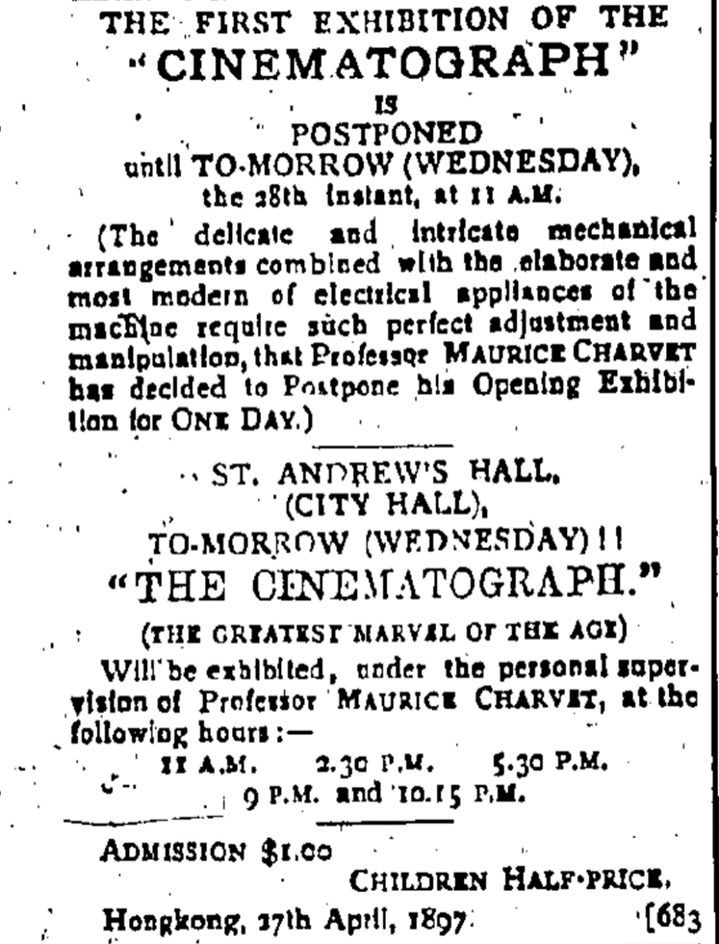
Figure 1: (Left) News of Charvet’s arrival in Hong Kong (The China Mail, 24th April 1897); (right) the screening scheduled for 27th April was postponed by one day due to machine adjustments (The Hong Kong Telegraph, 27th April 1897)
Second stop: Entertainment Building
The Entertainment Building in Wyndham Street was formerly known as the Cafe Weismann hotel. On 17th July 1907, Dietrich, a German, advertised in the South China Morning Post that the hotel would screen the films of Pathé (Fig. 2). In 1909, V. D. Casley, an American businessman, planned to establish the Star Theatre in the same location, and it was opened on 20th March.[1]
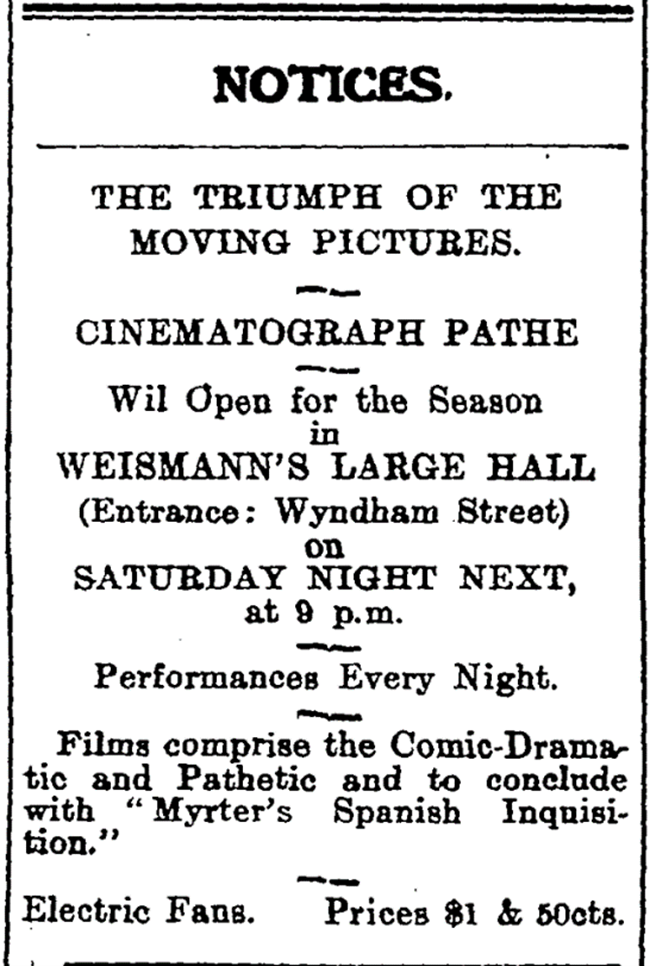
Figure 2: Advertisement for the screening at Cafe Weismann (South China Morning Post, 17th July 1907)
The Star Theatre was very short-lived, having been in operation for less than a year, yet it had a record of being involved in intellectual property cases. On the tenth day following its opening, the theatre was sued by the largest film source company at the time, Pathé, for stealing their trademark “Rooster” for their films. The cinema was eventually fined $50 and ordered to pay $50 litigation costs and return the film to Pathé within seven days, making it the first case of intellectual property infringement in Hong Kong (Fig. 3).
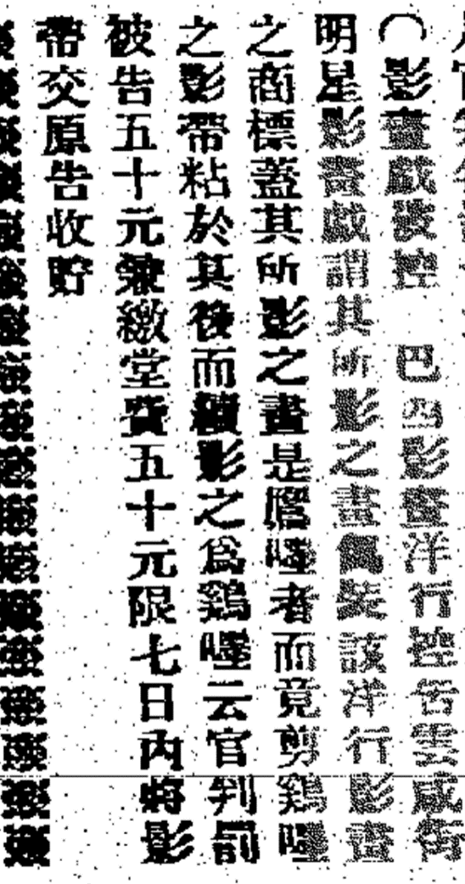
Figure 3: Pathé Film Company suing the Star Theatre (Chinese Mail, 31st March 1909)
In 1909, in the same location as the Star Theatre, the Salon-Cinema Theatre was opened.[2] In late 1910, the Salon-Cinema Theatre was replaced by the Bijou Scenic Theatre.[3] Unlike other cinemas, which only had evening screenings, the Bijou Scenic Theatre made matinee screenings a regular feature, starting every Wednesday and Saturday at four or five o’clock,[4] which became a key feature of the cinema. In 1918, the cinema was renamed the Coronet Theatre and opened on Christmas Eve with H.W. Ray as its new manager.[5]
The YMCA next to the Coronet Theatre was also one of the first venues for film screenings in Hong Kong. Unlike the more commercial venues, the YMCA was used mainly for preaching the gospel through pictures. When missionaries preached or made speeches, they would share their films taken on their travels with the public and the followers to make it more interesting (Fig. 4). Thus, the YMCA became an important entry point to the public’s knowledge and understanding of the West, making its role different from that of an entertainment-based cinema. In 1925, the Canton-Hong Kong Strike affected Hong Kong’s economy. Various establishments or institutions, including cinemas, ceased operation as a result of the strike. When the cinemas ceased operation, the YMCA continued to screen films from time to time, making it an important venue for the public to enjoy films at the time.[6]
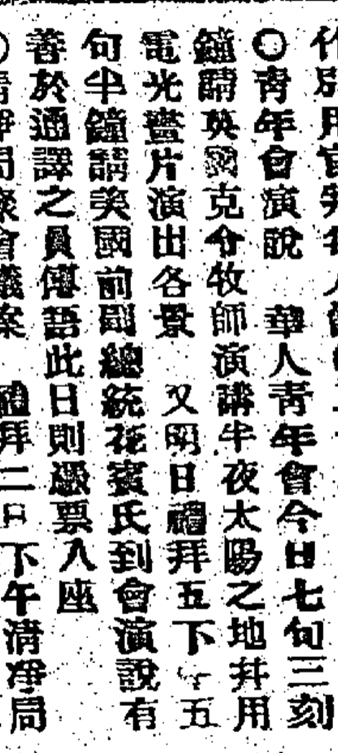
Figure 4: News article of the YMCA delivering a speech (Chinese Mail, 28th October 1909)
Third stop: Theatre Lane
Theatre Lane was the site of another famous old cinema, the Queen’s Theatre, which closed in 2007. It was formerly the second generation of the Hong Kong Theatre. It opened in 1915,[7] closed in 1922 and was converted into the Queen’s Theatre in 1924.[8]
Fourth Stop: Wing On House
Film screening venues in the early days, such as City Hall, theatres and open-air cinemas, were not specifically intended for film screening. The Wing On House on Des Voeux Road Central was the first formal cinema in Hong Kong-the Victoria Theatre. It was opened on 31st October 1907 and was founded by a Spaniard by the name of Antonio Ramos. At the time of its opening, it was advertised in the South China Morning Post and the Chinese Mail as having different facilities and, correspondingly, higher prices than other cinema venues: one dollar for a box seat and 70 cents for first class. The Victoria Theatre was reopened in 1911 after its renovation, and its facilities were also upgraded (Fig. 5 ). It was said to have changed the public perception of open-air cinemas with modest facilities, thereby occupying an important place in the history of cinemas in Hong Kong.
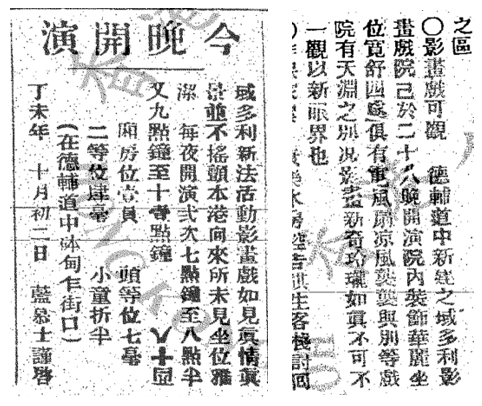
Fifth stop: Central Market
In the waterfront space just across the street from the Central Market, a simple open-air theatre was established using fabric to enclose the surrounding area, leaving only the doorway for the audience to enter and exit. An advertisement in the Chinese Mail in 1903 stated that films would be shown at Tung Kee opposite the Central Market and that the first class seats were charged at 60 cents and the second class seats at 40 cents (Fig. 6), which was more expensive than those cinemas with Cantonese opera performances. Despite the problem of an unpleasant environment, the open-air cinema used new films as its selling point and therefore charged more than other screening venues. The cinema included a variety of short films, such as documentaries, tamer films and war films, forming a two-hour programme.[9] The films shown would change daily, which was another selling point for the audience.
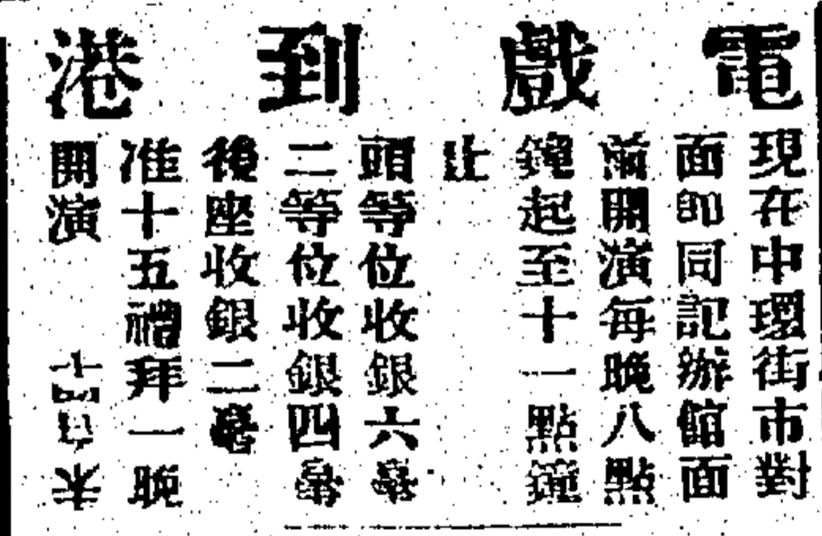
Figure 6: Advertisement about the arrival of films in Hong Kong (Chinese Mail, 5th October 1903)
The first generation of Hong Kong Theatre was the first cinema in the waterfront open space, with the first advertisement placed on 4th December 1907 (Fig. 7). Although it had a wide range of programmes showing both films and singing and dancing performances accompanied by Western music,[10] it was soon replaced in 1910 by the Empire Cinematograph Theatre founded by Ramos.[11] And the Empire continued to use the same layout and facilities as the Victoria Theatre.
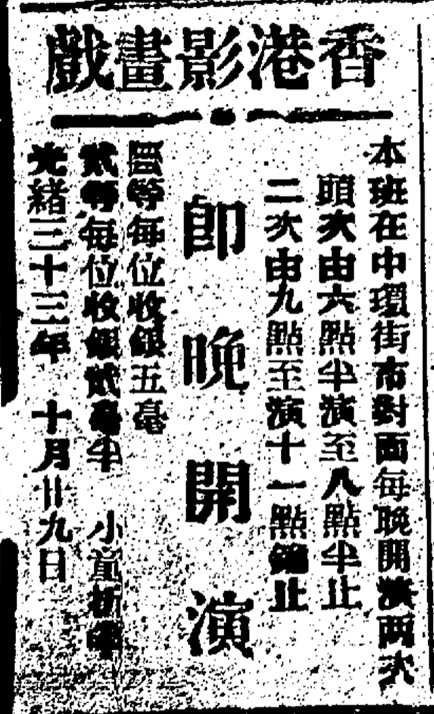
Figure 7: Advertisement for Hong Kong Theatre (Chinese Mail, 4th December 1907)
Sixth stop: Tai Ping Shan Street Area
The Ko Shing Theatre (Ko Shing Yuen) was originally located at 117 Queen’s Road West and was once a well-known theatre alongside the Chung King Theatre and the Tai Ping Theatre.[12] The three theatres were not originally intended to screen films, but to provide performances of Cantonese opera. However, as films gradually became more and more popular as a form of entertainment for the public, the theatres began to transform into venues for both film screenings and Cantonese opera performances (Fig. 8) and later converted to show films primarily, thus indicating that cinema had gradually become part of the public’s life.

Figure 8: Advertisement for Ko Shing Yuen, featuring a picture film during the show (Chinese Mail, 1st January 1903)
The Chung King Theatre was one of the most important cinemas of its time, although it operated for a relatively short period of time. It was formerly the Tung Hing Theatre, located in Tai On Terrace, an area in Tai Ping Shan where the Chinese community lived at the time. In 1890, it was renovated and was renamed “Chung King Yuen” in 1892. The main focus of the theatre was still on Cantonese opera, and the venues for such performances were often named “Yuen”. When cinema became more important, Chung King and Ko Shing began to use the term “Theatre”. As can be seen from the advertisements in 1900 and 1904 in the Chinese Mail, apart from changing the name from Chung King Yuen to Chung King Theatre, seat accommodation was also changed, with “chaise longue” (Fig. 9) added in addition to seats in board and chairs, thus indicating that the theatre had improved its facilities in order to attract audiences to the theatre and that this was used as a selling point.
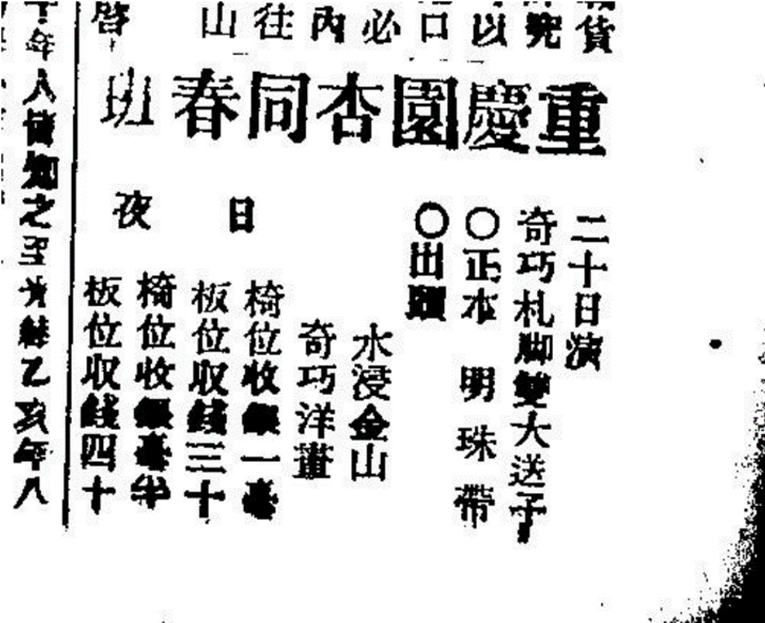
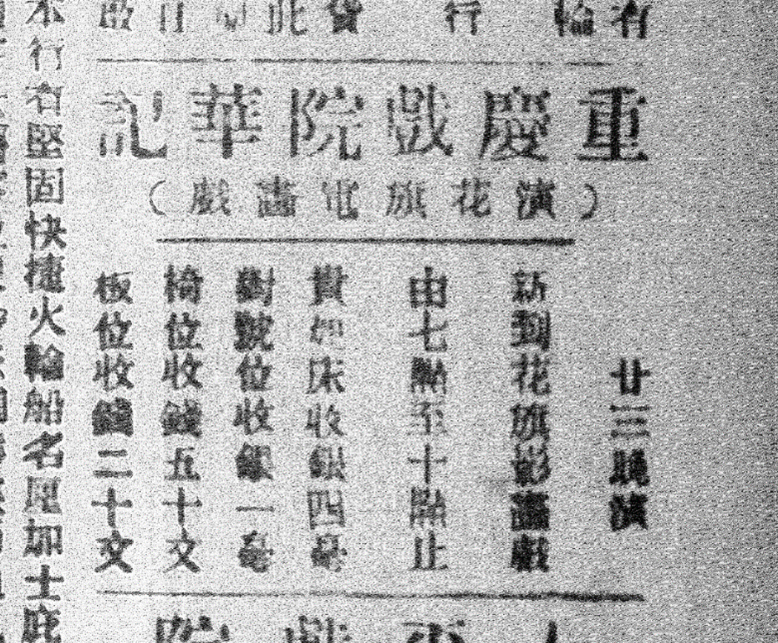
Figure 9: (Left) Advertisement for Chung King Yuen (Chinese Mail, 19th February 1900); (right) Advertisement for Chung King Theatre (Chinese Mail, 29th November 1904)
References
殷慧嘉:〈香港的早期電影院:1900-1920〉,《走出上海:早期電影的另類景觀》。北京:北京大學出版社,2016,頁193-237。
葉月瑜:〈演譯「影戲」:華語電影系譜與早期香港電影〉,《走出上海:早期電影的另類景觀》。北京:北京大學出版社,2016,頁19-68。
Centre for Film and Creative Industries: “Exploring and Trekking Hong Kong Historic Cinema Districts”. Hong Kong: Lingnan University, 2020, retrieved from: https://www.ln.edu.hk/cfci/ktproject/index.html
Centre for Film and Creative Industries: “A Historical Archive of Film Exhibition and Reception in Hong Kong (1897-1925)”. Hong Kong: Lingnan University, 2023, retrieved from: https://digital.library.ln.edu.hk/en/projects/flim/intro
[1] Advertisement “The Star Cinematograph”, The China Mail, 20th March 1909, p.4.
[2] News article “A New Cinematograph”, South China Morning Post, 30th December 1909, p.6.
[3] News article “Bijou Scenic Theatre: Successful Opening Night”, The Hong Kong Telegraph, 17th November 1910, p.4.
[4] Advertisement “Bijou’s first-class picture film cinema”, Chinese Mail, 9th August 1915, p.8.
[5] News article “The Coronet: Picture Theatre Enterprise”, South China Morning Post, 25th December 1918, p.3.
[6] News article “YMCA Film Screening”, Chinese Mail, 2nd February 1925, p.9; News article “A Famous Chinese Painting in Film (Sea Oath)”, Chinese Mail, 1st December 1925, p.7.
[7] “Advertisement for the opening of Hong Kong Theatre”, Chinese Mail, 9th August 1915, p.3.
[8] News article “Queen’s Theatre: To be Opened Next Month”, The Hong Kong Telegraph, 14th April 1924, p.1.
[9] Advertisement “Britain’s finest motion picture film arrives in Hong Kong for the first time”, Chinese Mail, 16th September 1905, p.7.
[10] Advertisement “Picture films in Hong Kong”, Chinese Mail, 4th December 1907, p.7.
[11] “Local News”, South China Morning Post, 2nd April 1910, P.2.
[12] New article “Trust of the Theatres”, Chinese Mail, 20th June 1907, p.3.