

A Personal Perspective on Doing Good Research Seminar Series - Professor William HAYWARD
About the Event
Date & Time:
26 November 2025 (Wed) | 11:00 am – 12:00 noon
Venue:
Leung Fong Oi Wan Art Gallery, 2/F, Patrick Lee Wan Keung Academic Building (South Wing), Lingnan University
Enquiries:
Organiser:
School of Graduate Studies
About the Speaker
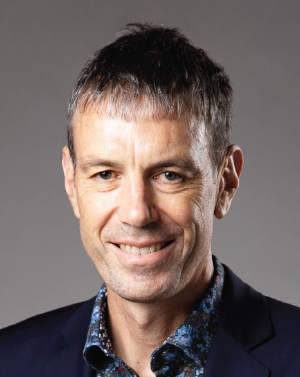
Professor William HAYWARD
Dean of the Faculty of Social Sciences
Chair Professor of Psychology
Biography
Professor William Hayward is the Dean of the Faculty of Social Sciences and Chair Professor of Psychology at Lingnan University. Before joining Lingnan, he was the Dean of the Faculty of Social Sciences at the University of Hong Kong, the Head of the School of Psychology at the University of Auckland, New Zealand, and also held academic appointments at the Chinese University of Hong Kong and the University of Wollongong, Australia. A native of New Zealand, he holds a BA and MA from the University of Canterbury, and a PhD in Psychology from Yale University, USA.
With a career in cognitive psychology and cognitive neuroscience, Professor Hayward’s research focuses on how we achieve understanding of the world around us through our use of visual information; in particular, he measures both behaviour and neural activity in response to faces and objects, and to shifts of visual attention. To study these questions, he and his research team measure human behavioural responses, for example, recording keypress responses following the display of a visual stimulus, while also measure neural activity through electroencephalography (EEG) and eye-tracking.
He has held a large number of grants from the Hong Kong Research Grants Council (RGC), including 14 General Research Funds (GRFs) and one Strategic Topics Grant as Co-PI. In addition, in 2026 he was awarded the Humanities and Social Sciences Prestigious Fellowship by the RGC. He is a member of the Social Sciences and Humanities Panel of the RGC and serves as an Associate Editor of the British Journal of Psychology (and formerly Associate Editor of Visual Cognition). His research has been published in leading international journals such as Trends in Cognitive Sciences, Psychological Science, Psychonomic Bulletin and Review, Cerebral Cortex, Nature Neuroscience, and the Journal of Experimental Psychology: Human Perception and Performance.
In his spare time, he is a keen ultramarathon runner, having completed about 40 ultramarathons on four continents. He features in the popular Hong Kong documentary Four Trails, which documents the attempts of runners to complete 300km across Hong Kong’s mountain trails within 60 hours.
Abstract
Cognitive Science is an interdisciplinary field that seeks to use scientific methods to understand the mind. Most of my career as a Cognitive Scientist has been spent in Hong Kong, and my research career shows a strong influence from that decision. In particular, I have spent many years studying face perception by people who are not White college students and whose environments are not filled with lots of White faces, which makes my research programme somewhat distinctive from most others around the world. For this reason, one of the topics that I have spent time investigating is “the other-race effect”, or the finding that people typically find it easier to identify members of their own racial group, relative to members of other racial groups. In this talk, I’ll discuss how I became interested in face perception, and what we’ve discovered about the way that non-White people identify faces. I’ll also signal the direction of my next research topic in this area, which I’ll pursue next year on a fellowship from the Hong Kong Research Grants Council. Finally, I’ll discuss another way that my interest in Cognitive Science has been shaped by being in Hong Kong, which is my own experience of fatigue and hallucination from running ultramarathons. I’ll use some psychological theories to make sense of the experiences that I have had on those adventures.
