


When AI Reshapes the City and Technology Comes Within Reach
Produced by
LI Junfeng, Master of Cities and Governance programme (AY2025/26 intake)
LIU Tianyuan, Master of Cities and Governance programme (AY2025/26 intake)
REN Shijian, Master of Cities and Governance programme (AY2025/26 intake)
WANG Xiaohan, Master of Cities and Governance programme (Environmental and Sustainability) (AY2025/26 intake)
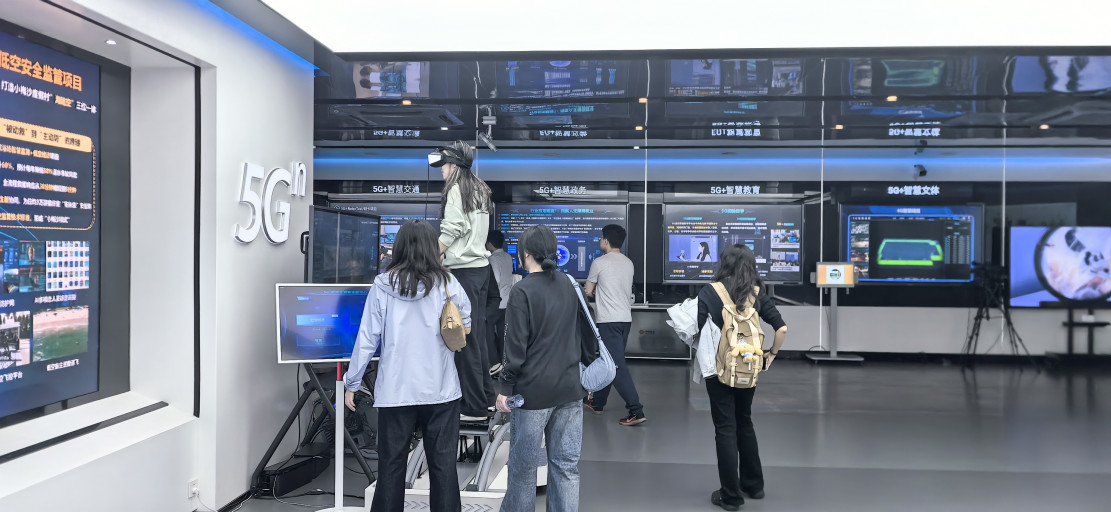
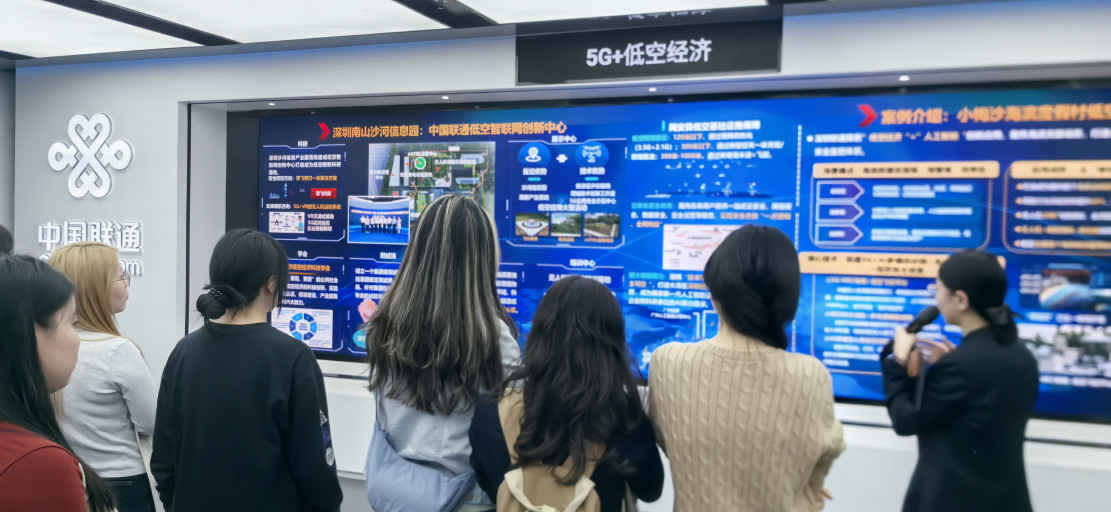
This year, one of the courses I am taking arranged for students to conduct regional research and a field trip to the Greater Bay Area, and I was fortunate enough to participate. At the China Unicom Shenzhen Exhibition Hall, we witnessed firsthand the profound transformation that big data and artificial intelligence are bringing to urban governance. Walking into the Unicom 5G Digital Innovation Experience Center, we were immediately struck by an overwhelming sense of technology. The exhibition hall is divided into two sections: the front hall showcases Unicom's product capabilities and 5G innovative applications, while the rear hall presents a rich and diverse array of industry-specific 5G application cases. In addition, we personally experienced interactive activities such as a VR skiing machine and a simulated driving experience. Throughout the visit, I deeply realized how technology is reshaping the ways in which cities are governed. Driven by the dual engines of "sensing + AI," Unicom integrates high-tech solutions such as video surveillance and IoT sensing to build an urban intelligent hub, transforming city management from manual inspection to real-time data transmission. Standing before screens displaying constantly updating real-time data, I could not help but reflect: the city of the future will be a perceptive, thinking intelligent organism. This field trip not only broadened my professional horizons but also filled me with anticipation for the deep integration of AI and urban governance.
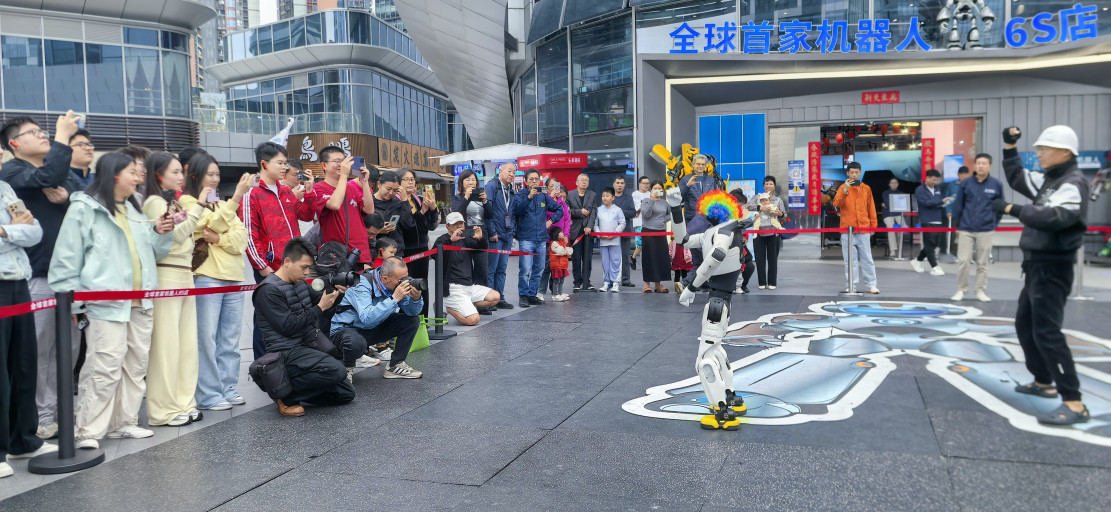
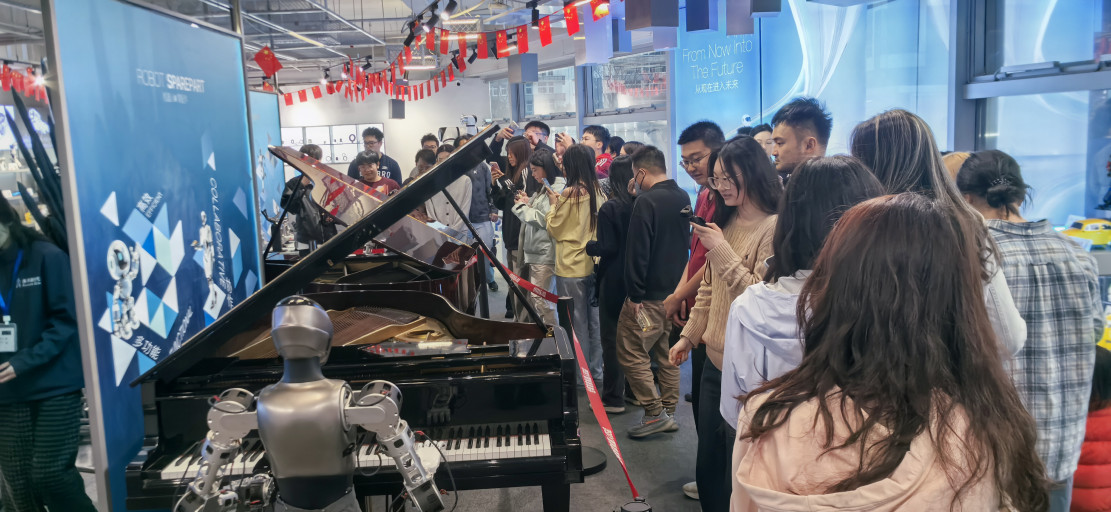
Leaving the Unicom exhibition hall, we arrived at the robot block in Bantian, Longgang District, Shenzhen. Here stands the world's first robot 6S store, which brings future scenarios directly into real life. In this space filled with a sense of technology, technology is no longer a set of cold parameters but a tangible presence within reach. On the third floor, the interactive experience hall allowed us to personally control battling robots in spirited competitions, remotely navigate robotic dogs through obstacle courses, and experience cutting-edge projects such as brain-controlled racing cars and brain-controlled claw machines. On the second floor, the scenario experience hall vividly demonstrated the applications of robots in future work and daily life scenarios, including photovoltaic cleaning, industrial inspection, and AI-assisted medical diagnosis. Each robot seemed to be telling us how technology is quietly transforming the way humans produce and live.
Beyond the hardcore interactive projects, the "robot coffee" left a particularly deep impression on me – it skillfully integrates the warmth of technology into the fabric of daily life. This immersive experience, which breaks down the boundaries of screens, made me truly realize that technology is no longer a distant concept, but is empowering every corner of our lives. From the smart city blueprint at the China Unicom exhibition hall to the future life scenes in the robot block, this Greater Bay Area field trip has shown me the limitless possibilities of deep integration between technological innovation and urban development. I firmly believe that in the near future, technology will shape our beautiful, accessible tomorrow in an even gentler and more powerful way.

From the intelligent city hub connected by Unicom to the immersive experience of the robot district, this visit allowed me to see how technology is empowering urban governance and daily life with perception and warmth, reshaping a tangible and beautiful future.