



MA in Chinese History and Digital Humanities*
Understanding Chinese History with Cutting-Edge Digital Tools.
The CHDH prepares students to research, teach, and present Chinese history through the use of digital technologies. Taught in English and Putonghua by distinguished scholars, students aiming to become professors, practitioners of digital humanities, or interested to explore innovative approaches in rethinking China's past will develop proficiency in researching, writing, and presenting the history of China.
The new application cycle begins September 1, 2026.
* This is formerly the MA programme in Digital History in Global Asia. This new name and programme structure are currently pending university approval.

Director's Message
"Lingnan University carries a long and illustrious tradition of Chinese historical scholarship, counting legendary figures such as Chen Yinke 陳寅恪 and Chen Xujing 陳序經 among its distinguished faculty. Today, the MA in Chinese History and Digital Humanities (CHDH) honors this rich legacy by bringing classical rigor into the digital and artificial intelligence age.
By combining deep historical analysis with modern computational methods—including artificial intelligence, text mining, spatial mapping, and data visualization—our program transforms how we interrogate vast archives and classical texts. Here, time-honored humanities research meets cutting-edge technology, empowering students to uncover new patterns and reinterpret the past.
Situated in Hong Kong—a vital crossroads for global sinology and technological innovation—our department offers a forward-looking environment to hone your skills. Whether you aim to pursue advanced research or launch a career in education, cultural heritage, or digital media, CHDH equips you with both foundational wisdom and state-of-the-art toolkits.
I invite you to join us and help shape the next chapter of historical inquiry."
Vincent S. Leung, Programme Director of the MA in CHDH.

Programme Structure
Required Courses (2 Courses, 6 credits)
DHG501 Introduction to Chinese History and Digital Humanities (3 credits)
This course introduces students to digital history, providing them with foundational knowledge on its emergence, developments, benefits, and challenges, and its methods, theories, and practices. It will begin with an exploration of digital history's relationship to history, digital humanities, and Asian studies, and an overview of how historians of global Asian history have used and created digital history. Throughout the course, students will study and explore existing digital history projects and probe into the different kinds of digital expressions that historians have deployed. By the end of this course, students will be introduced to Digital History and the basics to create a digital history project.
DHG502 Digital Approaches in Historical Research (3 credits)
This course familiarises students with the approaches, theories, and tools of digital historical scholarship. It is aimed at developing their skills as thinkers, writers, and creators of Asian historical narratives with the use of digital approaches. Throughout the course, students will be exposed to several digital tools, such as QGIS (Mapping) and Gephi (Networks and Data Visualisation) and will utilise these platforms to enhance their digital skills in historical research and presentation. Drawing on specific case studies, students will be acquainted with how digital technology has revolutionised research on global Asia from the perspective of urban studies, heritage, mobilities, networks, race, class and gender, etc.
Elective Courses (any 6 courses, 18 credits)
DHG503 Digital Data Management in Asian Studies (3 credits)
Digital Data Management refers to the organisation, cleaning, analysis, and interpretation of data to support historical research. This course will walk students through the process of digital data management for historians, librarians, archivists, and museums curators. It will draw on the experiences of Asian libraries, archives, and museums to give students an in-depth understanding of the essential components of data management (e.g., collection selection, organisation, documentation, storage, analysis, preservation, presentation, and dissemination) with a focus on Asian history, culture, and society. Students will be expected to work with Excel and SQL to build a database and Gephi for data visualisation.
DHG504 Visualisation and Digital Mapping of Asian Cities (3 credits)
This course focuses on the 'spatial turn' in historical studies and introduces a range of geospatial technologies available to historians including spatial theory and thinking, geographical text analysis, and GIS. This unit will take place over two complementary halves, the first considering the driving motives and potential uses of geospatial research, and the second turning to how such research has been applied to Asian case studies. Students will not only have the opportunity to acquire transferable digital skills in visualising data in two and three dimensions, creating timelines, producing maps, and performing spatial statistical analyses, but also develop an all-rounded understanding of the limitations and practical implications of geospatial technologies.
DHG505 Digital Public History (3 credits)
This course exposes students to the theory, practices, and issues surrounding digital public history in adjacent fields at museums, libraries, governments, and historical and communal institutions. Students will explore methods of presenting, communicating, researching, and creating history with digital technology that is accessible to and engages the public, and will have the opportunity to create their own work of digital public history in relation to contemporary concerns in Asian societies.
DHG506 3D Remodelling of Asian Heritage (3 credits)
This course will introduce students to applications in 3D modelling and basic skills in 3D modelling and animation. Students will focus on the challenges of digitally reconstructing Asia's past, problematise digital exhibition, and museums through critical heritage management, and public archaeology, etc., and take part in the reconstruction of a significant Asian cultural heritage. The course will also cover the ethical considerations on digital preservations and how digital approaches can contribute to the preservation of Asian cultural heritage sites and artifacts.
DHG507 Rethinking the Historical Archive (3 credits)
This course introduces students to the shifting landscape of historical archiving and preservation that has accompanied the 'digital turn.' The course will focus on how digital access to resources is reframing academic research, the potential benefits and innovations increased access has for the discipline, and also the pitfalls that commonly accompany the digital curation of source materials. Students will further encounter the ways programming, Optical Character Recognition, and the free version of Natural Language Processing can provide new access to - and new ways of working with - digitised archives. This course looks at both scholarly debates and a variety of archival digitisation and databasing projects to explore the research questions, methods, and logic behind their creation, and to critically frame the potential and limitations of digital archival research.
DHG508 Critical Digital History (3 credits)
This course offers students the chance to critically assess the digital methods used in historical studies and the digital ways through which history is presented to the public. Students will engage with scholarly criticisms of digital history practices. Questions that will be explored include the inclusivity/exclusivity of digital history, the limitations of relying on selected data, how historical narratives are controlled and communicated to the public, and whether AI can be used responsibly to reshape the field.
DHG510 Hong Kong and Global Asia (3 credits)
This course examines the history from British Hong Kong to the present by engaging with emerging themes that range from governance issues, social stratification, cultural developments, urbanization, etc. Students will study the economic, political, and social developments of Hong Kong, focusing in particular on the complex interplay between the British and Chinese cultures at policy and grassroots levels. The course also encourages students to analyse a century of Hong Kong history through the deployment of digitised primary sources and visualise Hong Kong society from the lenses of relevant digital history platforms. Special attention will be paid to local digitisation projects, museum narratives, and the use of digital platforms in tracing and examining Hong Kong's formation from a war-torn city to a world-renowned metropolis of international standing. Some of the themes featured will touch on the city's postwar recuperation, the development of civil society, the rise of a nascent middle class, Hong Kong's relations to the Cold War, the path to the handover, and Hong Kong's post-1997 national integration and subsequent shaping as a part of the Greater Bay Area.
DHG512 Special Topics in History (3 credits)
This course provides an opportunity for students to study and discuss selected topics in history.
Early and Imperial China: Traditions and Transformations (3 credits)
This course provides a comprehensive introduction to Chinese history from its prehistoric origins through the collapse of the imperial system in 1911. Students will explore the socio-political, economic, and cultural developments that defined China across thousands of years. The first half of the course examines the foundations of Chinese civilization, including the philosophical developments of the Spring and Autumn/Warring States periods and the establishment of the early Qin-Han empires. The second half traces the evolution of the imperial state through the cosmopolitan Tang, economic and cultural developments of the Song, Mongol rule during the Yuan, and the late imperial consolidation and foreign encounters of the Ming and Qing dynasties.
The Making of Modern China (3 credits)
This course explores the major historical developments that forged modern China from the rise and consolidation of the Qing dynasty through the 21st century. Arranged chronologically and thematically, it examines how domestic transformations and international encounters reshaped Chinese political structures, social hierarchies, intellectual movements, and national identity.
Capstone Project (6 credits)
DHG601 Capstone Project (6 credits)
This capstone project enables students to deploy digital approaches and research methodologies learned throughout the master's programme, to explore in-depth relevant topics of personal interest, and to develop skills of critical research, analysis, the usage of digital applications, data organization and visualisation, presentation, and academic writing.
The capstone research is conducted through individual or group (max 2 persons) work under direct supervision, with consultation meetings between students and advisors arranged roughly once a month. Students will work with a supervisor whose expertise includes topics relevant to their project and who will provide guidance and academic support with developing, researching, and writing the MA capstone paper.
Word Count Requirements:
- Students working in pairs: 8,000-10,000 words
- Students working individually: 5,000-6,000 words
Footnotes and quotations from primary and secondary sources in the main text are included in the word count, but appendices, tables, charts, maps, image captions, and bibliographies are excluded from the final word count.
The capstone project may focus primarily on themes and concepts from within the fields of Digital History and its impact in Global Asia.
The medium of instruction is bilingual: English and Putonghua. Courses are taught in either English or Putonghua, depending on the course content. Courses on Chinese history are mainly taught in Putonghua.
Tuition and Scholarships
- Full-time (1 year): HKD 160,000
- Part-time (2 years): HKD 80,000
CHDH Capstone Project Scholarship Awards
- Best Historical Argument: for the Capstone Project that exhibits outstanding originality, analytical depth, and clarity of historical interpretation.
- Best Digital Showcase: for the Capstone Project that demonstrates exemplary innovation and technical excellence in digital presentation or methodology.
CHDH Academic Excellence Scholarship Award
The CHDH Academic Excellence Scholarship Award recognizes the student who has attained the highest cumulative GPA in the programme.
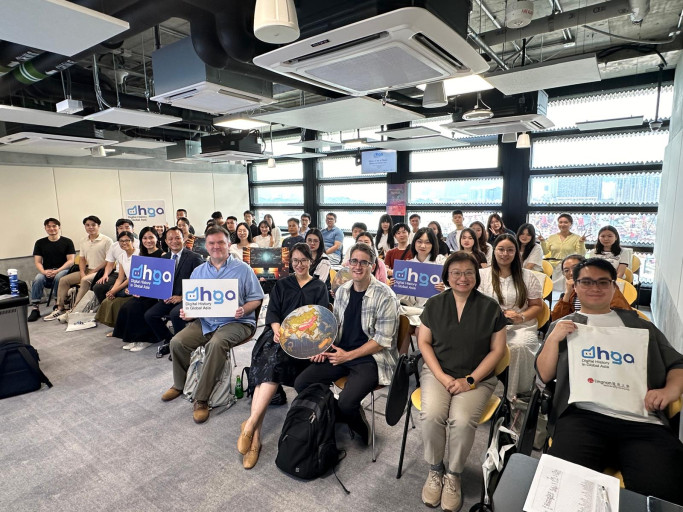
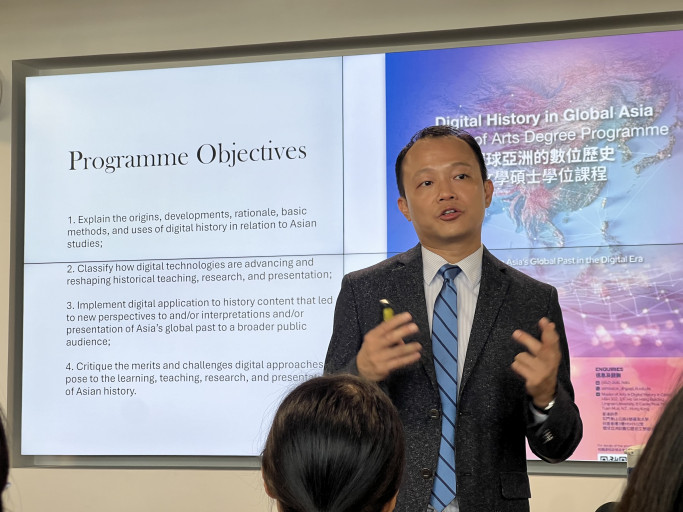
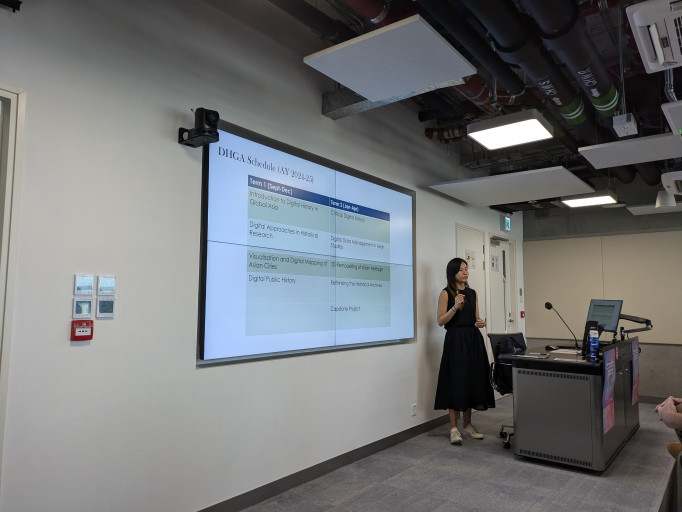
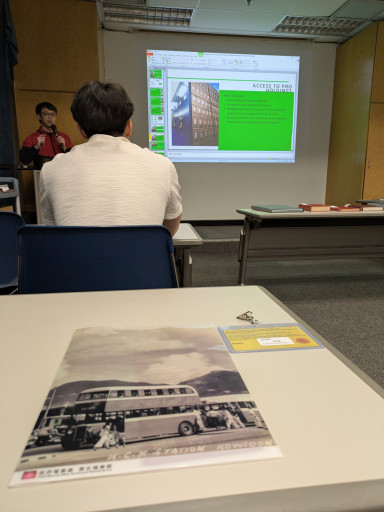
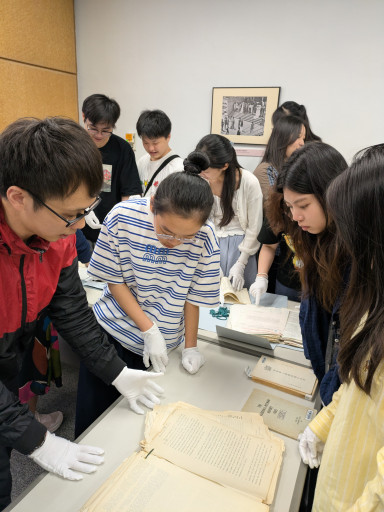
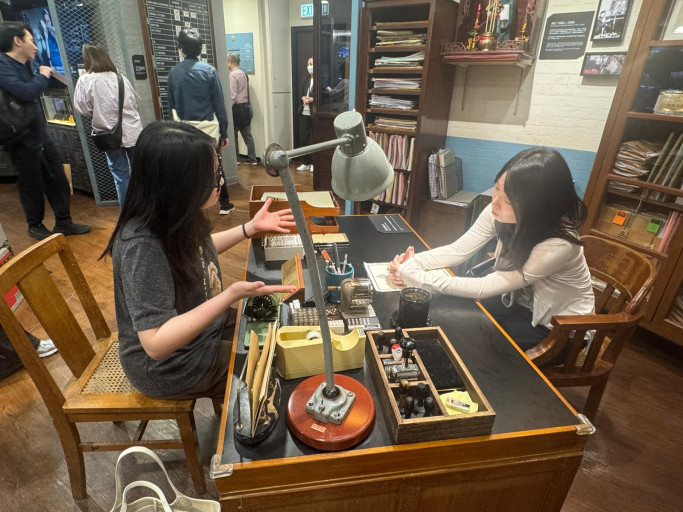
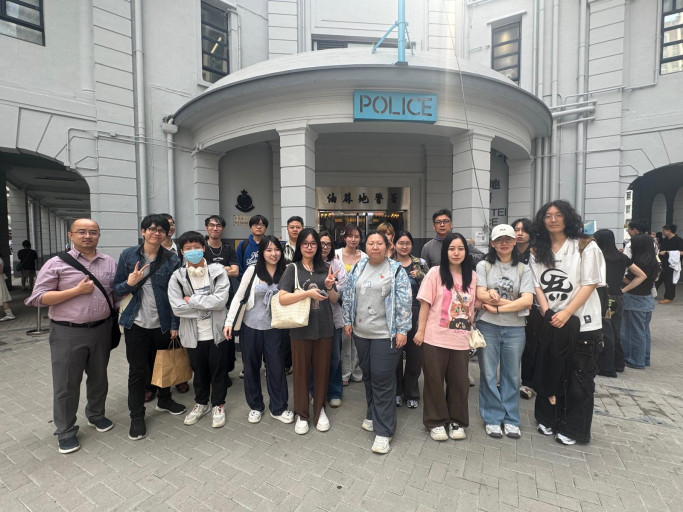
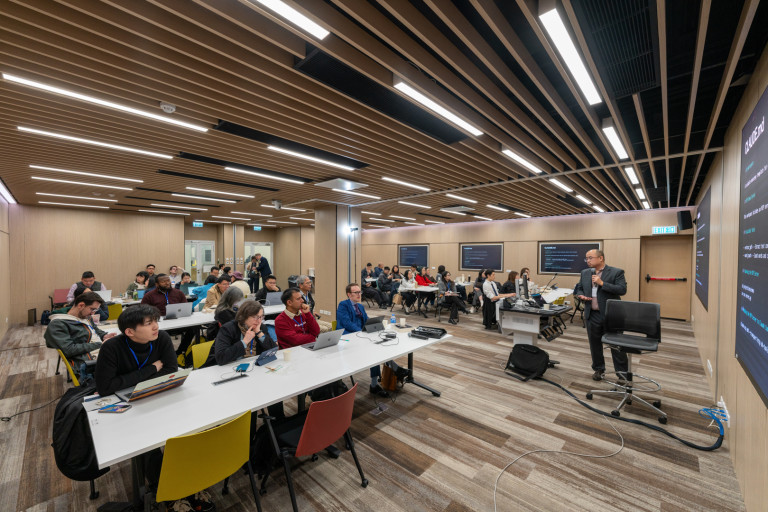
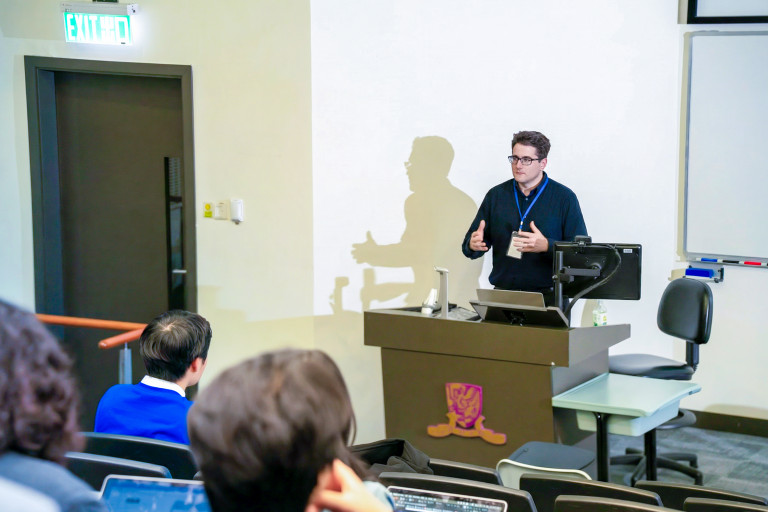
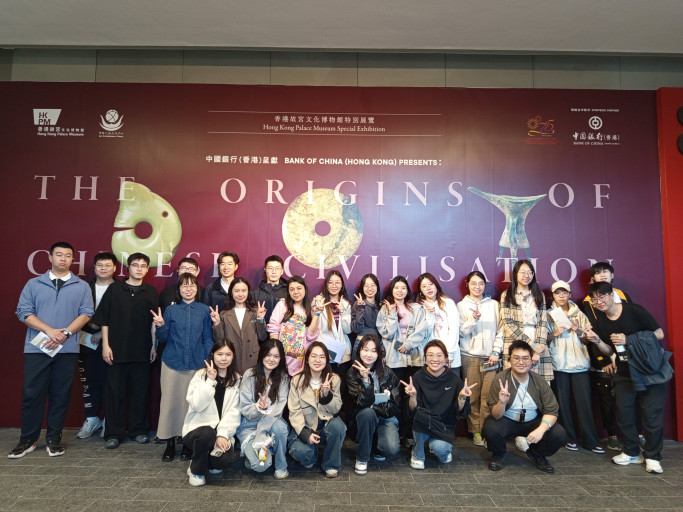
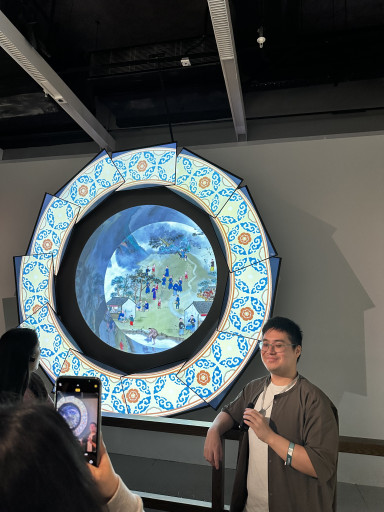
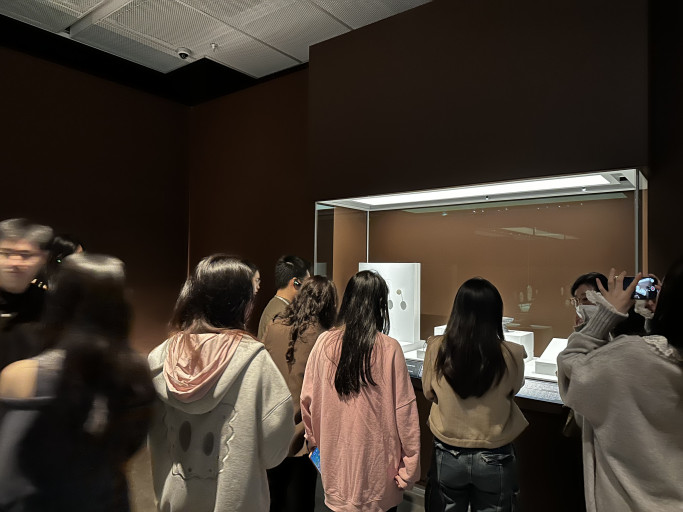
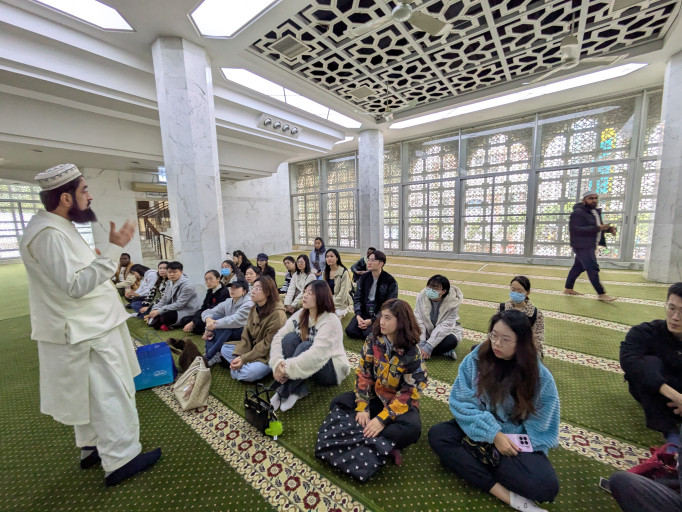
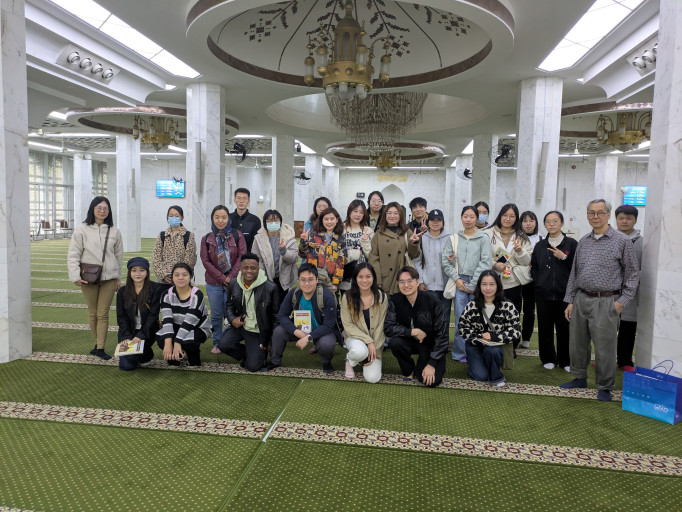
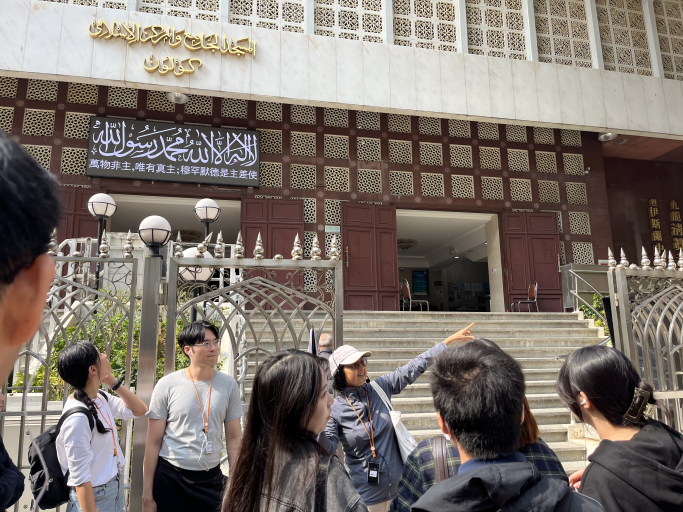
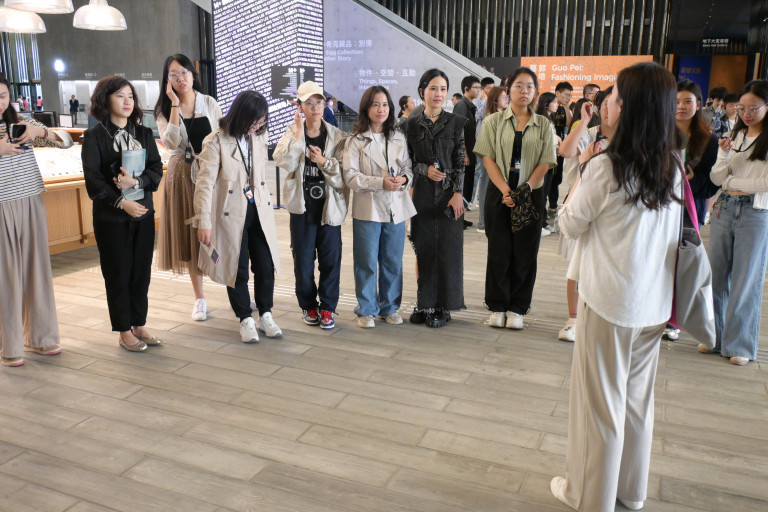
Activity Highlights


Digital History Research Platform
Events











When will the interview result be released?
The interview result will usually reach applicants within one to two weeks by email.
If I have received a conditional offer but not met the minimum English requirement, what should I do?
We advise you to take IELTS or TOEFL to meet the minimum English requirement. If you fail to meet the minimum English requirement by the specified deadline, the conditional offer will be forfeited.
Where will the classes take place?
Classes will normally take place on our West Kowloon campus, which is conveniently accessible by high-speed rail. The travel time between Shenzhen and West Kowloon is about 14–18 minutes from Futian or Shenzhen North.
Does CHDH provide internship opportunities?
CHDH provides internship opportunities based on individual performance and the availability of internship places each year.
Will I be able to seek qualification for Chinese Service Centre for Scholarly Exchange (CSCSE) certification after graduating from CHDH?
Graduates will be eligible to apply for official CSCSE certification upon graduation. Our team is fully committed to supporting and assisting each application. The standard procedures can be found on the official CSCSE website: https://zwfw.cscse.edu.cn/.
Does CHDH offer scholarships?
CHDH offers at least four scholarships under two categories: Best Student Award and Best Capstone Project Award. Both are open to all students.
Will late applications be considered?
Applications submitted after the deadline will be considered on a space-available basis. Applicants are advised to apply early.
Am I expected to have knowledge in history and/or digital humanities as a prerequisite?
No. CHDH welcomes passionate students with different levels of knowledge and from diverse academic backgrounds. The programme is designed to help students acquire new knowledge while further sharpening their existing skills.
Apart from digital approaches to history, will I also learn about AI?
While AI is seamlessly integrated into all digital modules of our courses, we believe that without a solid foundation in historiography and critical digital approaches, the use of AI could be deleterious. We also have a dedicated course to critical AI which covers in-depth understanding and cutting-edge hands-on training.
I need more information. Who should I reach out to?
You are welcome to contact our Programme Director, Prof Vincent Leung, at [email protected], and/or our programme administration team at [email protected].
Applicants must have a previous bachelor’s degree awarded by a tertiary education institution recognised for this purpose by the University (or an equivalent qualification), and have fulfilled the university’s English language requirement. For full details about admission requirements, please refer to the “Admission Information” page at the university’s School of Graduate Studies: https://www.ln.edu.hk/sgs/for-prospective-students/taught-postgraduate-programmes/admission-information
How to Apply
Applications must be submitted online via Lingnan University's Online Admission System.
Important note: In the online admission system, please choose the programme “Master of Arts in Digital History in Global Asia (2027-28).” This is the old name of this programme, and it will automatically change to the new name, “Chinese History and Digital Humanities,” in October, 2026 (with the university’s approval). They are the same programme.
A non-refundable HK$400 application fee is required upon submission.
Application Period
We will be accepting applications from 1 Sept 2026 - June 30 2027.
Applicants are strongly advised to submit their applications as soon as possible.
*We continue to accept late applications if spaces are still available, and applicants are still considered for the entrance scholarship.
Apply Now
For any enquiries, please contact (852) 2616 7485 or [email protected] (general) and [email protected] (admission).