



Master of Arts in Digital History in Global Asia
Understanding Asian and Global History with Cutting-Edge Digital Tools.
The DHGA is the first MA of its kind, both within Hong Kong and the wider region, and Lingnan’s liberal arts ethos combined with the Department of History’s teaching talent, make the university the ideal home for such a programme. Students will also be taught by a strong faculty in both the History of Asia and in the Digital Humanities.
“We hope to train our students to, first, use the tools really well and then to understand the meaning of the new data that is generated,” Prof Leung Vincent, the Programme Director says.
The focus on Asia’s global past in the programme is intended to provide students with concrete material to apply the digital tools to. What’s more, many of the early developments in the digital humanities, digital history and geographical information systems, were made by scholars in Asian studies.
“One of the first corpuses of text fully digitised was the Buddhist corpus,” Prof Leung notes. This track record provides the MA with deep foundations to build on, and Asia continues to be at the forefront of the evolution of digital history.

The MA in Digital History in Global Asia programme will be changed to the MA in Chinese History and Digital Humanities starting in the academic year 2027/2028.
Please check out our new website!
The application period is open from 1 September 2026 to 30 June 2027.
News and Events
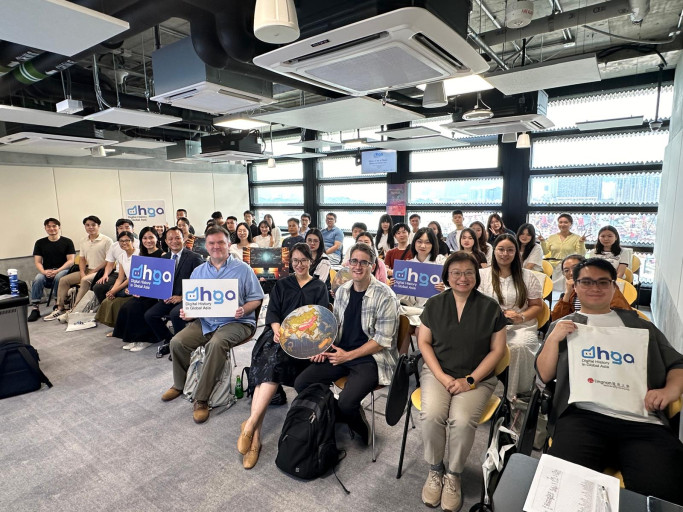
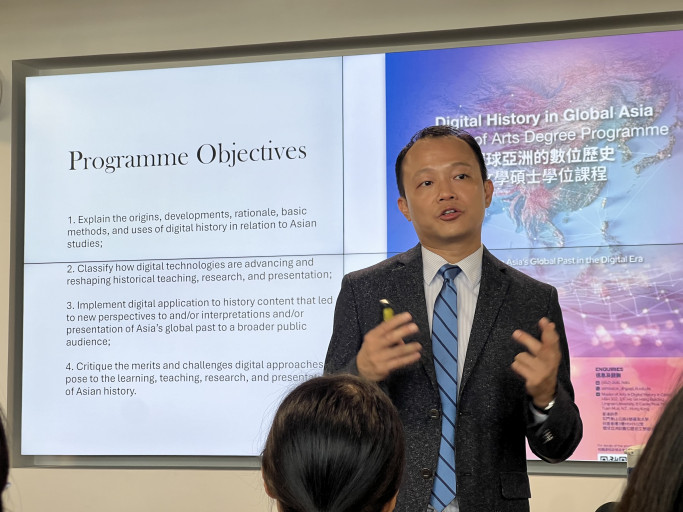
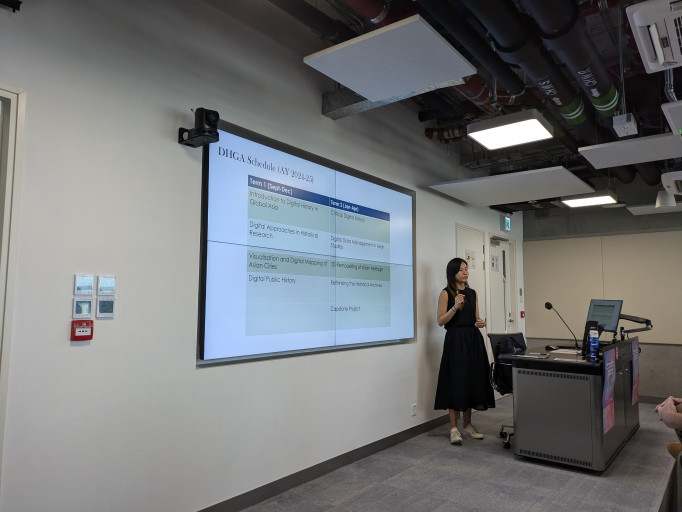

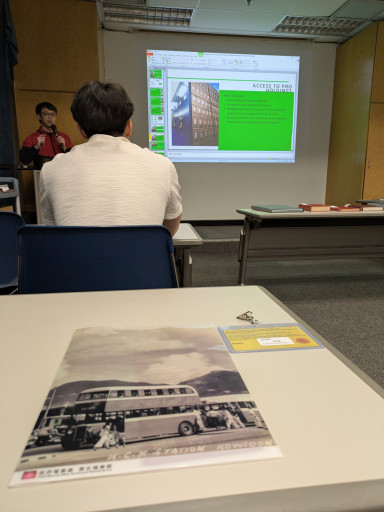

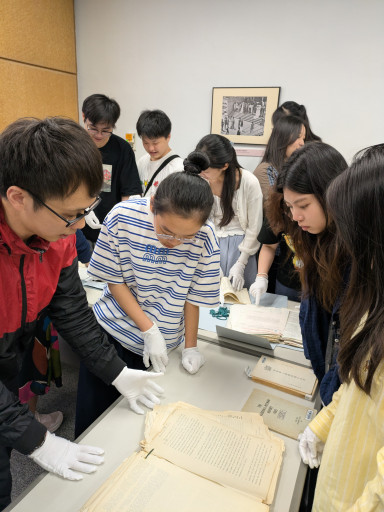

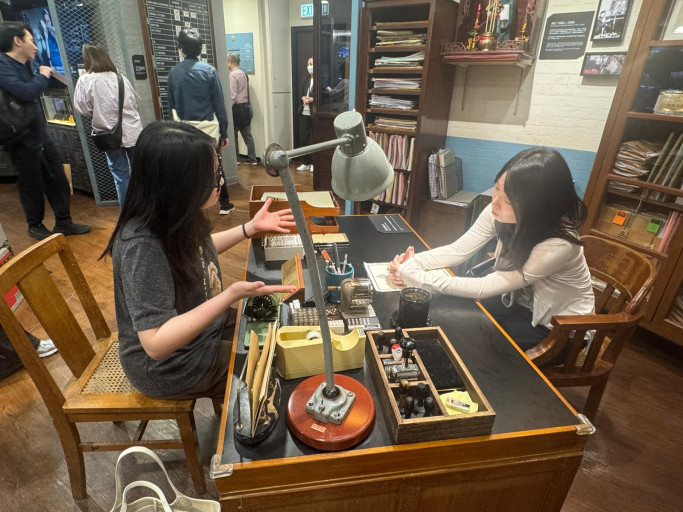

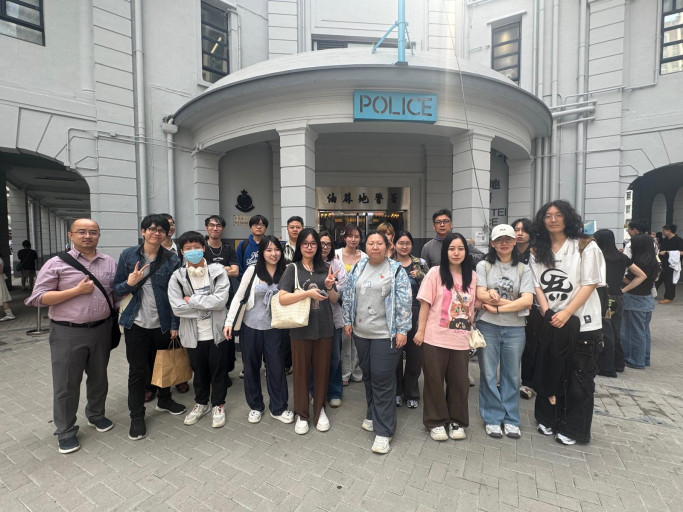


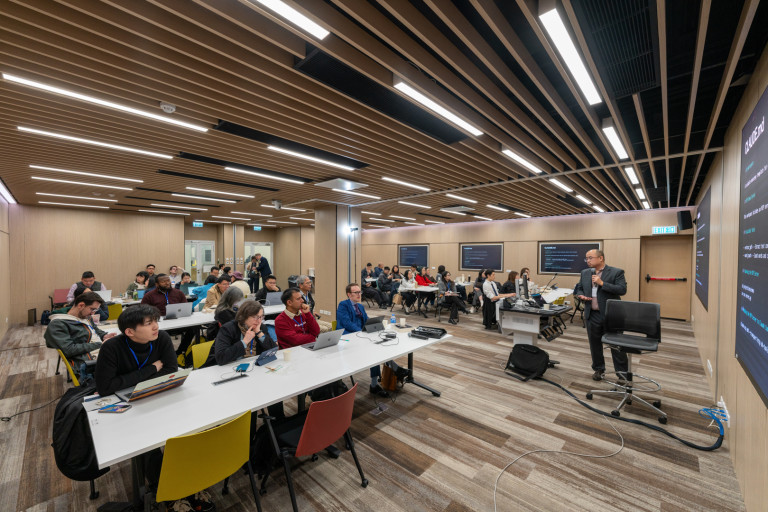
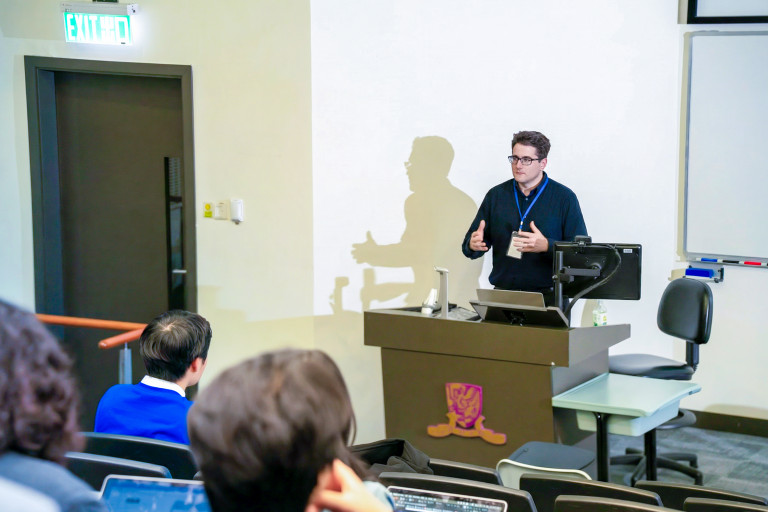


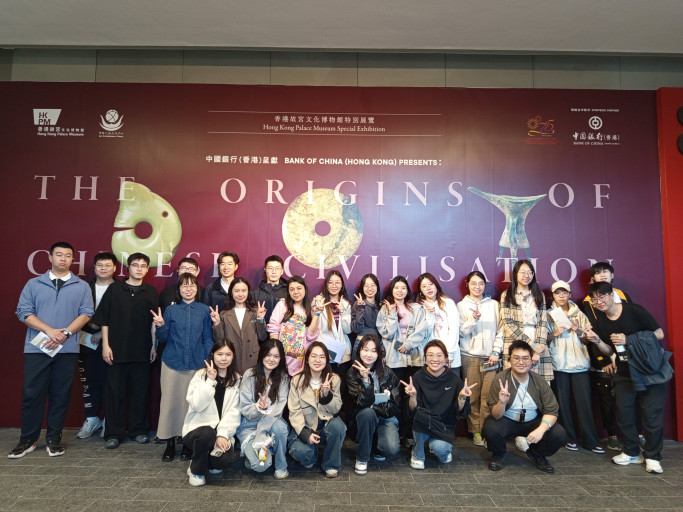
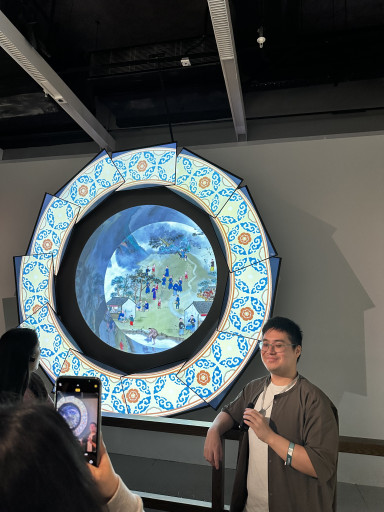
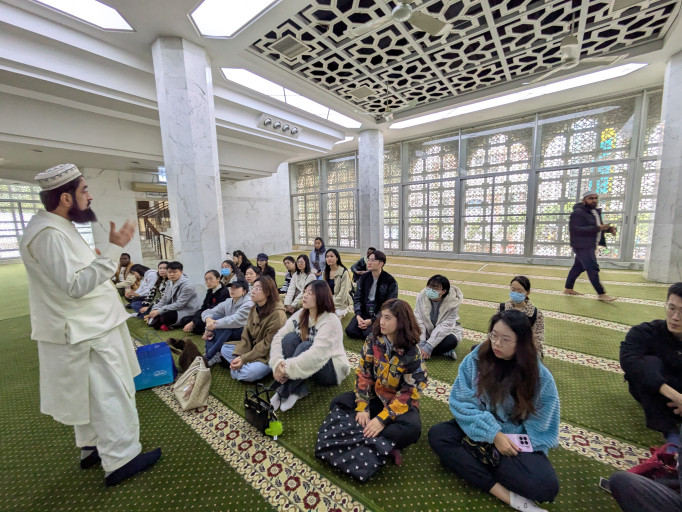
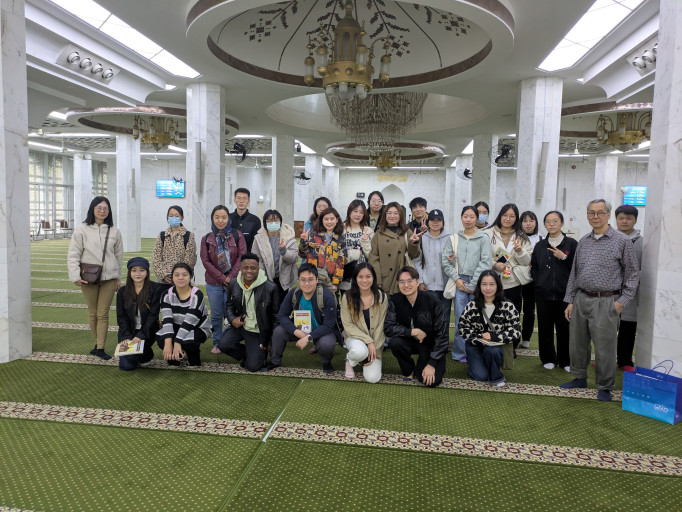
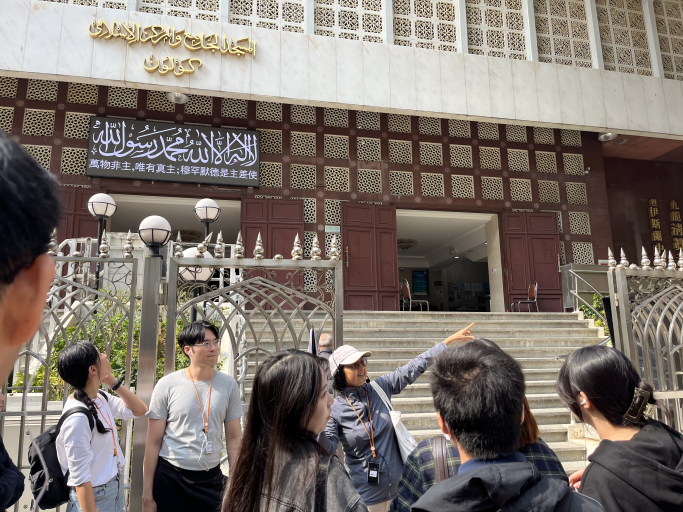
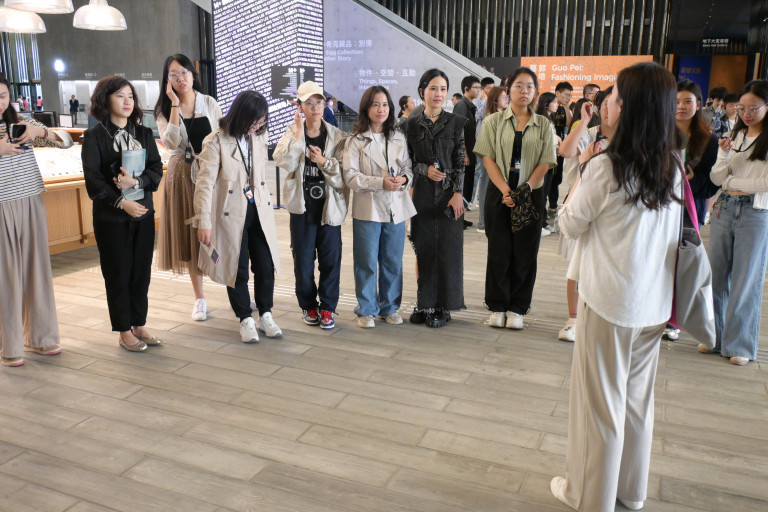
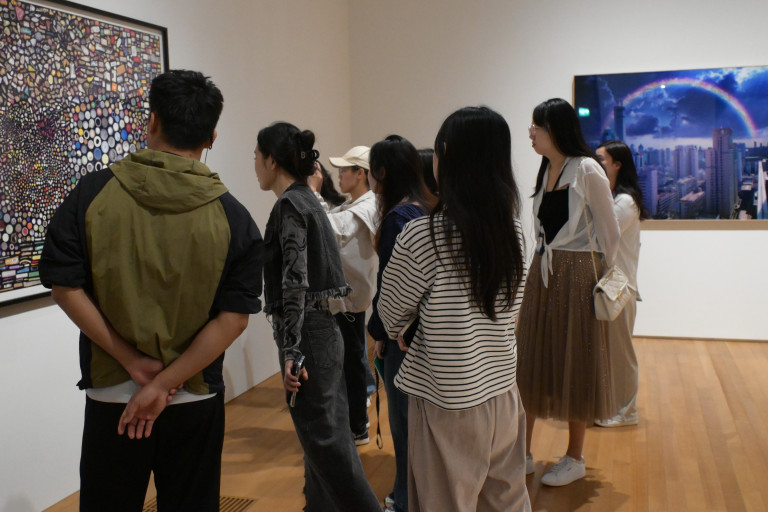
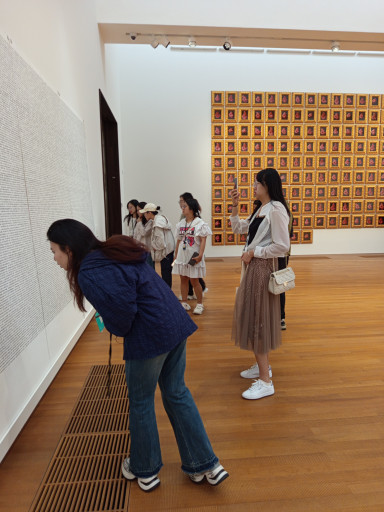
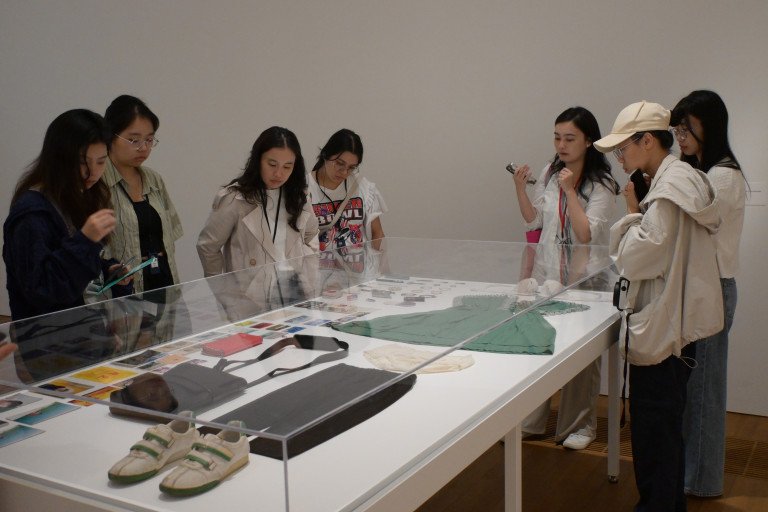
Lingnan University’s new MA in Digital History in Global Asia


Learning Outcomes Upon completion, students will be able to:
1. Explain the origins, developments, rationale, basic methods, and uses of digital history in relation to Asian studies;
2. Classify how digital technologies are advancing and reshaping historical teaching, research, and presentation.;
3. Implement digital application to history content that led to new perspectives to and/or interpretations and/or presentation of Asia’s global past to a broader public audience;
4. Critique the merits and challenges digital approaches pose to the learning, teaching, research, and presentation of Asian history.
Career Prospects Examples of career paths include:
Our graduates will be especially well-positioned to take up jobs in education, academia and data analyst.
Museums and archives:
Preserving their collections, education and exhibition of objects and ideas.
Education:
Teaching and training others on global and Asian history with different digital approaches and methods.
Consultant or Strategist:
Providing advice and guidance to organizations on how to utilize digital methods on conducting network and data analysis.
Data Analyst:
Interpreting complex digital data to assist businesses in decision-making, while ensuring ethical use of AI and data privacy.
Academia:
Pursuing a further degree in History or Area studies.
Programme Curriculum
With a more specialised scope on global Asia's history, our MA programme will allow students to gain an in-depth understanding of digital technology in relation to the history discipline through specific case studies. As students put their acquired knowledge and skillsets to practise in individual/group digital projects, they will gain a stronger understanding of how digital tools help advance the field of history and the dissemination of historical findings. It will be attractive to those seeking to advance their research in history, strengthen their knowledge and skills of teaching, writing, and presenting Asia's global past, and/or develop fundamental knowledge and skills in the use of digital technologies in the historical field and the information and cultural sectors.
Our programme offers comprehensive training across four key areas that equip students with both theoretical knowledge and practical skills.
1. Historical Training
Students receive rigorous training in historical inquiry, focusing on how to locate, critique, and utilize primary sources to construct compelling narratives. The curriculum is deeply rooted in the context of Global Asia, offering students a unique vantage point to understand regional dynamics and Hong Kong's specific historical trajectory through a digital lens.
Focus Areas
Regional & Global History: Specialized study of Global Asia and Hong Kong's role in world history.
Historiography: Tracing the evolution of historical thought from Sima Qian and Herodotus to modern historiography.
Primary Source Analysis: Advanced techniques for discovering and critically evaluating historical archives.
Fact Verification: In an era where AI can generate plausible but inaccurate content, training students to rigorously verify authenticity and ground all claims in solid historical evidence.
Relevant Courses: DHG501, DHG505, DHG508, DHG509, DHG510, DHG511, DHG512
2. Digital Approach to History
This pillar bridges historical inquiry with computational methods. Students learn and apply quantitative approaches—from cliometrics to AI-assisted analysis—while critically examining how these methods shape historical understanding.
Focus Areas
Quantitative History & AI: Understanding the debates around quantification and AI, and their impact on historiography.
Database Construction: The foundation of nearly all digital history work. Students learn to extract data (increasingly using AI-assisted methods), design ontologies, develop domain models, and manage datasets at varying scales—from small collections to large corpora. This systematic approach to organizing historical information underpins all subsequent analysis and presentation.
Historical Simulation: Reconstructing and analyzing historical processes through computational models, emulators, GIS scenes, and 3D environments. These tools enable researchers to test hypotheses, explore counterfactual scenarios, and gain analytical insights before presenting findings to the public.
Digital Curation & Public History: Presenting and communicating history to diverse audiences through digital storytelling, online exhibitions, museum education, and data visualization.
Relevant Courses: DHG501, DHG502, DHG503, DHG505, DHG507, DHG508
3. Hands-on Technical Skills
Building on the foundations of Historical Training and Digital Approach, this pillar focuses on teaching techniques rather than tools alone. While tools evolve rapidly, the underlying methods and research questions remain fundamental. Students gain solid, practical skills by learning tools through the lens of enduring techniques.
Techniques and Tools
Basic Coding Literacy
Languages: HTML, XML, Python, JavaScript, C#
Digitization
Techniques: Scanning Standards, OCR, HTR
Tools: Tesseract, Vision Models
Data Structuring
Techniques: Data Modeling, Relational Design, Knowledge Graphs
Tools: Relational Database, Graph Database
Textual Analysis
Techniques: Word Frequency, N-gram, KWIC, Topic Modeling (LDA, BERTopic, LLM)
Tools: Python, R, Jupyter, Google Colab, Voyant Tools
Visual & Document Analysis
Techniques: Image Classification, Image Retrieval, Object Detection, Document Forensics
Tools: ImageJ, OpenCV, Vision Models
Audio/Video Analysis
Techniques: Speech-to-Text, Audio Editing, Oral History Processing
Tools: Audacity, Whisper
Network Analysis
Techniques: Graph Visualization, Centrality Measures, Community Detection, Link Analysis
Tools: Palladio, Gephi
Spatial Analysis
Techniques: Georeferencing, Historical GIS, Spatial Clustering
Tools: QGIS, Leaflet, MapLibre GL JS
Temporal Analysis
Techniques: Timeline Construction, Chronological Visualization, Event Sequencing
Tools: Observable Plot, Palladio, D3.js
3D Modeling
Techniques: 3D Scanning, Photogrammetry, 3D Modeling, 3D GIS
Tools: Blender, Three.js, Unity
AI-Assisted Analysis
Techniques: LLM APIs, Prompt Engineering, RAG, Agent Frameworks (LangChain, LlamaIndex)
Tools: Cursor, GitHub Copilot, AI-assisted IDEs
Asian Studies Resources
Tools: CBDB, MARKUS, LoGaRT, JBDB
Relevant Courses: DHG501, DHG502, DHG503, DHG504, DHG505, DHG506, DHG507
4. Digital Research Workflow
This pillar focuses on the practical workflow of digital research. Students learn to manage the entire lifecycle of a project, integrating distinct tools into a seamless process. This is what deep research truly means—a rigorous, methodical workflow grounded in scholarly practice.
Workflows and Tools
Research Design
Workflows: Research project management
Tools: Markdown, Git
Reference Management
Workflows: Bibliographic organization, citation management
Tools: Zotero, BibTeX
Personal Knowledge Management (PKM)
Workflows: Note-taking, linking ideas, building a "second brain"
Tools: Obsidian, Local RAG Pipeline
Data Lifecycle
Workflows: Digitization, data structuring, persistence
Tools: OpenRefine, Tropy, Omeka
Development Environment
Workflows: Version control, dependency management
Tools: VS Code, GitHub, uv, npm
AI-Assisted Research Workflow
Workflows: Semantic search, AI-assisted literature synthesis
Tools: Semantic Scholar, Consensus, Elicit
Digital Native Writing Formats
Workflows: Academic writing in digital and AI-friendly formats
Tools: Markdown, LaTeX, Pandoc
Required Courses (3 Courses, 9 credits)
DHG501 Introduction to Digital History in Global Asia (3 credits)
This course introduces students to digital history, providing them with foundational knowledge on its emergence, developments, benefits, and challenges, and its methods, theories, and practices. It will begin with an exploration of digital history's relationship to history, digital humanities, and Asian studies, and an overview of how historians of global Asian history have used and created digital history. Throughout the course, students will study and explore existing digital history projects and probe into the different kinds of digital expressions that historians have deployed. By the end of this course, students will be introduced to Digital History and the basics to create a digital history project.
DHG502 Digital Approaches in Historical Research (3 credits)
This course familiarises students with the approaches, theories, and tools of digital historical scholarship. It is aimed at developing their skills as thinkers, writers, and creators of Asian historical narratives with the use of digital approaches. Throughout the course, students will be exposed to several digital tools, such as QGIS (Mapping) and Gephi (Networks and Data Visualisation) and will utilise these platforms to enhance their digital skills in historical research and presentation. Drawing on specific case studies, students will be acquainted with how digital technology has revolutionised research on global Asia from the perspective of urban studies, heritage, mobilities, networks, race, class and gender, etc.
DHG508 Critical Digital History (3 credits)
This course offers students the chance to critically assess the digital methods used in historical studies and the digital ways through which history is presented to the public. Students will engage with scholarly criticisms of digital history practices. Questions that will be explored include the inclusivity/exclusivity of digital history, the limitations of relying on selected data, how historical narratives are controlled and communicated to the public, and whether AI can be used responsibly to reshape the field.
Elective Courses (any 5 courses, 15 credits)
DHG503 Digital Data Management in Asian Studies (3 credits)
Digital Data Management refers to the organisation, cleaning, analysis, and interpretation of data to support historical research. This course will walk students through the process of digital data management for historians, librarians, archivists, and museums curators. It will draw on the experiences of Asian libraries, archives, and museums to give students an in-depth understanding of the essential components of data management (e.g., collection selection, organisation, documentation, storage, analysis, preservation, presentation, and dissemination) with a focus on Asian history, culture, and society. Students will be expected to work with Excel and SQL to build a database and Gephi for data visualisation.
DHG504 Visualisation and Digital Mapping of Asian Cities (3 credits)
This course focuses on the 'spatial turn' in historical studies and introduces a range of geospatial technologies available to historians including spatial theory and thinking, geographical text analysis, and GIS. This unit will take place over two complementary halves, the first considering the driving motives and potential uses of geospatial research, and the second turning to how such research has been applied to Asian case studies. Students will not only have the opportunity to acquire transferable digital skills in visualising data in two and three dimensions, creating timelines, producing maps, and performing spatial statistical analyses, but also develop an all-rounded understanding of the limitations and practical implications of geospatial technologies.
DHG505 Digital Public History (3 credits)
This course exposes students to the theory, practices, and issues surrounding digital public history in adjacent fields at museums, libraries, governments, and historical and communal institutions. Students will explore methods of presenting, communicating, researching, and creating history with digital technology that is accessible to and engages the public, and will have the opportunity to create their own work of digital public history in relation to contemporary concerns in Asian societies.
DHG506 3D Remodelling of Asian Heritage (3 credits)
This course will introduce students to applications in 3D modelling and basic skills in 3D modelling and animation. Students will focus on the challenges of digitally reconstructing Asia's past, problematise digital exhibition, and museums through critical heritage management, and public archaeology, etc., and take part in the reconstruction of a significant Asian cultural heritage. The course will also cover the ethical considerations on digital preservations and how digital approaches can contribute to the preservation of Asian cultural heritage sites and artifacts.
DHG507 Rethinking the Historical Archive (3 credits)
This course introduces students to the shifting landscape of historical archiving and preservation that has accompanied the 'digital turn.' The course will focus on how digital access to resources is reframing academic research, the potential benefits and innovations increased access has for the discipline, and also the pitfalls that commonly accompany the digital curation of source materials. Students will further encounter the ways programming, Optical Character Recognition, and the free version of Natural Language Processing can provide new access to - and new ways of working with - digitised archives. This course looks at both scholarly debates and a variety of archival digitisation and databasing projects to explore the research questions, methods, and logic behind their creation, and to critically frame the potential and limitations of digital archival research.
DHG509 Global History of Modern East Asia (3 credits)
This course introduces major themes in the history of modern East Asia, including China, Japan, and Korea, as well as Taiwan, Macau, and Hong Kong. With an emphasis on relevant digital sources, databases, and tools, it introduces students to themes ranging from the shaping of East Asia as a political and cultural entity to the evolution of East Asia's relationship with the Western world, to overlapping narratives and episodes of cooperation and tension linked to colonialism, nationalism, and independence. The themes will be studied from varying perspectives, in particular the dynamics of continuity and change within individual East Asian societies and across East Asia and the transformative roles of East Asia in the modern world.
DHG510 Hong Kong and Global Asia (3 credits)
This course examines the history from British Hong Kong to the present by engaging with emerging themes that range from governance issues, social stratification, cultural developments, urbanization, etc. Students will study the economic, political, and social developments of Hong Kong, focusing in particular on the complex interplay between the British and Chinese cultures at policy and grassroots levels. The course also encourages students to analyse a century of Hong Kong history through the deployment of digitised primary sources and visualise Hong Kong society from the lenses of relevant digital history platforms. Special attention will be paid to local digitisation projects, museum narratives, and the use of digital platforms in tracing and examining Hong Kong's formation from a war-torn city to a world-renowned metropolis of international standing. Some of the themes featured will touch on the city's postwar recuperation, the development of civil society, the rise of a nascent middle class, Hong Kong's relations to the Cold War, the path to the handover, and Hong Kong's post-1997 national integration and subsequent shaping as a part of the Greater Bay Area.
DHG511 Southeast Asia in the World (3 credits)
This course introduces the history of Southeast Asia, covering a broad temporal framework that runs from antiquity to the post-war period. It permits students to engage with the historical making of Southeast Asia through significant themes such as ancient trading systems, colonialism, the rise of print culture, modernisation, anti-colonialism, and independence. Students will be introduced to relevant digital sources, tools, and platforms to enrich their study and research of Southeast Asian history.
DHG512 Special Topics in History (3 credits)
This course provides an opportunity for students to study and discuss selected topics in history.
Capstone Project (6 credits)
DHG601 Capstone Project (6 credits)
This capstone project enables students to deploy digital approaches and research methodologies learned throughout the master's programme, to explore in-depth relevant topics of personal interest, and to develop skills of critical research, analysis, the usage of digital applications, data organization and visualisation, presentation, and academic writing.
The capstone research is conducted through individual or group (max 2 persons) work under direct supervision, with consultation meetings between students and advisors arranged roughly once a month. Students will work with a supervisor whose expertise includes topics relevant to their project and who will provide guidance and academic support with developing, researching, and writing the MA capstone paper.
Word Count Requirements:
- Students working in pairs: 8,000-10,000 words
- Students working individually: 5,000-6,000 words
Footnotes and quotations from primary and secondary sources in the main text are included in the word count, but appendices, tables, charts, maps, image captions, and bibliographies are excluded from the final word count.
The capstone project may focus primarily on themes and concepts from within the fields of Digital History and its impact in Global Asia.
To qualify for the award of the Master of Arts in Digital History in Global Asia offered by Lingnan University, students must, where applicable:
Complete 9 courses (8 courses and 1 capstone project) and obtain a minimum of 30 credits;
Achieve a minimum CGPA of 2.67; and
Fulfil the University exit requirement on English language competency, if applicable; and fulfil all University/programme requirements.
A student who has fulfilled all the requirements for graduation shall be awarded a Master of Arts in Digital History in Global Asia degree with one of the following classifications:
| Degree Classification | Minimum Cumulative G.P.A. |
|---|---|
| Distinction | 3.50 |
| Pass | 2.67 |
As a recognized taught postgraduate programme, our graduates are eligible to apply for official CSCSE certification (留服认证) upon graduation. While this is an independent administrative step that you will submit directly to the CSCSE, our programme team is fully committed to supporting you and will assist in preparing the necessary academic documentation to ensure a smooth application process. You can review the standard procedures on the official CSCSE website (https://zwfw.cscse.edu.cn/).
Admission & Application Requirements
Applicants shall fulfil the minimum admission requirements for taught postgraduate’s degree programmes as follows.
Academic Qualification(s):
- hold a relevant bachelor’s degree awarded by a tertiary education institution recognised for this purpose by the University; or
- have obtained an equivalent qualification; or
- have provided satisfactory evidence of academic and professional attainment.
In addition to the above, applicants whose degree or, exceptionally, an alternative qualification deemed equivalent from a tertiary institution not using English as the medium of instruction (MOI) for the programme should obtain:
- a minimum score 79 (internet-based test) in the Test of English as a Foreign Language (TOEFL)1 ; or
- a band score of 6.0 or above in the International English Language Testing System (IELTS)1, or
- a minimum score of 450 or above in the College English Test Band 6 (CET-6), with proof of competency in spoken English2
- an equivalent score in a recognised test, or
- an equivalent qualification
1 For IELTS and TOEFL qualifications for admission purpose, the University only accepts results of tests that are conducted at a test centre and within the validity period, viz. 2 years, from the time of submission of an admission application for the specific intake cohort.
2 For CET-6 results submitted for admission purposes, the University accepts only those obtained within the five-year validity period, counted from the date of submission of the admission application for the specific intake cohort. Applicants must also demonstrate competency in spoken English through an oral interview conducted by the Programme and/or obtain grade B or above in the CET-6 Speaking English Test.
Additional Admission Requirements:
- Applicants may be invited to attend a face-to-face or video interview when it is deemed necessary.
Applicants should scan and submit the following documents to the Online Application System for evaluation of their applications:
Identity documents (e.g. Identity card*, passport or other travel document)
Curriculum Vitae
Official Transcript (for academic qualifications of undergraduate and/or postgraduate studies):
An official final transcript for a completed programme
The latest transcript if the programme is not yet completed
An official English-translated copy must be attached if the transcript is not in English. The interpretation of grades (in English) is also required.
Degree Certificate/Graduation Certificate/Proof of Study (as appropriate)
Verification proof by third-party authorities (for a completed programme):
Online Verification Report of Higher Education Degree Certificate (中國高等教育學位在綫驗証報告), both Chinese and English versions, issued by the CHSI (中國高等教育學生信息網) for qualification(s) awarded by universities in Mainland China
Online Query of Overseas Credentials Evaluation Reports國(境)外學歷學位認証書 issued by the Chinese Service Center for Scholarly Exchange (CSCSE) (教育部留學服務中心) (applicable to Mainland applicants with qualifications awarded by overseas universities)
Proof of English language proficiency, e.g. IETLS, TOEFL Score Report (applicable to applicants whose degree or, exceptionally, an alternative qualification deemed equivalent, is not from a tertiary institution where English is used as the medium of instruction (MOI) for the degree programme)
Personal statement (Please write a personal statement of around 500 words in English outlining your academic achievements, choice of study and career goals.)
Tuition, Scholarships & Apply
Study Modes
- 1-year Full-time
- 2-year Part-time
Tuition Fee
- Full-time (1 year): HKD160,000
Part-time (2 years): HKD80,000
An extension fee of HKD10,000 will be charged to students who choose to extend their capstone projects into the summer term.
You will also be expected to take care of additional expenses including accommodation, travel to and from Hong Kong, a graduation deposit (HK$600) and Hong Kong Immigration visa charges (HK$700, if applicable). For a useful summary of things to consider when coming to Hong Kong for postgraduate study, you may consult: http://www.studyinhongkong.edu.hk/en/.
Medium of Instruction
- English
Scholarship
We offer annual awards in recognition of outstanding academic and creative achievement among its students.
MADHGA Capstone Project Scholarship Awards
The MADHGA Capstone Project Scholarship Awards honour graduating students who have demonstrated exceptional performance in their final-year Capstone Project (DHG601). Supervisors may nominate one or more of their students for consideration. No separate application is necessary. Two awards will be given each year:
- Best Historical Argument: for the Capstone Project that exhibits outstanding originality, analytical depth, and clarity of historical interpretation.
- Best Digital Showcase: for the Capstone Project that demonstrates exemplary innovation and technical excellence in digital presentation or methodology.
The final decision will be made by a judging panel consisting of scholars from the History Department of Lingnan University, as well as local and/or international scholars of digital humanities from outside the university.
MADHGA Academic Excellence Scholarship Award
The MADHGA Academic Excellence Scholarship Award recognizes the student who has attained the highest cumulative GPA in the programme. No application or nomination is necessary; all graduating students are automatically considered.
How to Apply
Applications must be submitted online via Lingnan University's Online Application System*. A non-refundable HK$400 application fee is required upon submission.
* Note: All documents submitted will not be returned. Information on all unsuccessful applicants and applicants who have declined the offer will be destroyed after the admission exercise. All application fees paid are non-refundable and no receipt for application fee will be issued.
Application Period
We will be accepting applications from 1 Oct 2025 - June 30 2026.
Applicants are strongly advised to submit their applications as soon as possible.
*We continue to accept late applications if spaces are still available, and applicants are still considered for the entrance scholarship.
Apply Now
Contact Us
Email: | Admission [email protected] General - [email protected] |
Telephone: | (852) 2616 7485 |
Fax: | (852) 2467 7478 |
Address: | MA Digital History in Global Asia Programme, Department of History Room HSH302, 3/F, Ho Sin Hang Building, Lingnan University, Tuen Mun, New Territories, Hong Kong SAR |
FAQ
The interview result will usually reach applicants within one to two weeks by email.
We advise you to take IELTS or TOEFL to meet the minimum English requirement. If you fail to meet the minimum English requirement by the specified deadline, the conditional offer will be forfeited.
Classes will normally take place on our West Kowloon campus, which is conveniently accessible by high-speed rail. The travel time between Shenzhen and West Kowloon is about 14–18 minutes from Futian or Shenzhen North.
MADHGA provides internship opportunities based on individual performance and the availability of internship places each year.
Graduates will be eligible to apply for official CSCSE certification upon graduation. Our team is fully committed to supporting and assisting each application. The standard procedures can be found on the official CSCSE website: https://zwfw.cscse.edu.cn/.
MADHGA offers at least four scholarships under two categories: Best Student Award and Best Capstone Project Award. Both are open to all students.
Applications submitted after the deadline will be considered on a space-available basis. Applicants are advised to apply early.
No. MADHGA welcomes passionate students with different levels of knowledge and from diverse academic backgrounds. The programme is designed to help students acquire new knowledge while further sharpening their existing skills.
While AI is seamlessly integrated into all digital modules of our courses, we believe that without a solid foundation in historiography and critical digital approaches, the use of AI could be deleterious. We also have a dedicated course to critical AI which covers in-depth understanding and cutting-edge hands-on training.
You are welcome to contact our Programme Director, Prof Vincent Leung, at [email protected], and/or our programme administration team at [email protected].