


Create Together, Become More Thoughtful and Braver Individuals
I made this calendar with paintings from Grandma Guo, an 81-year-old farmer who can’t read. The picture on the left is her, and I drew the cover on the right from her photo.
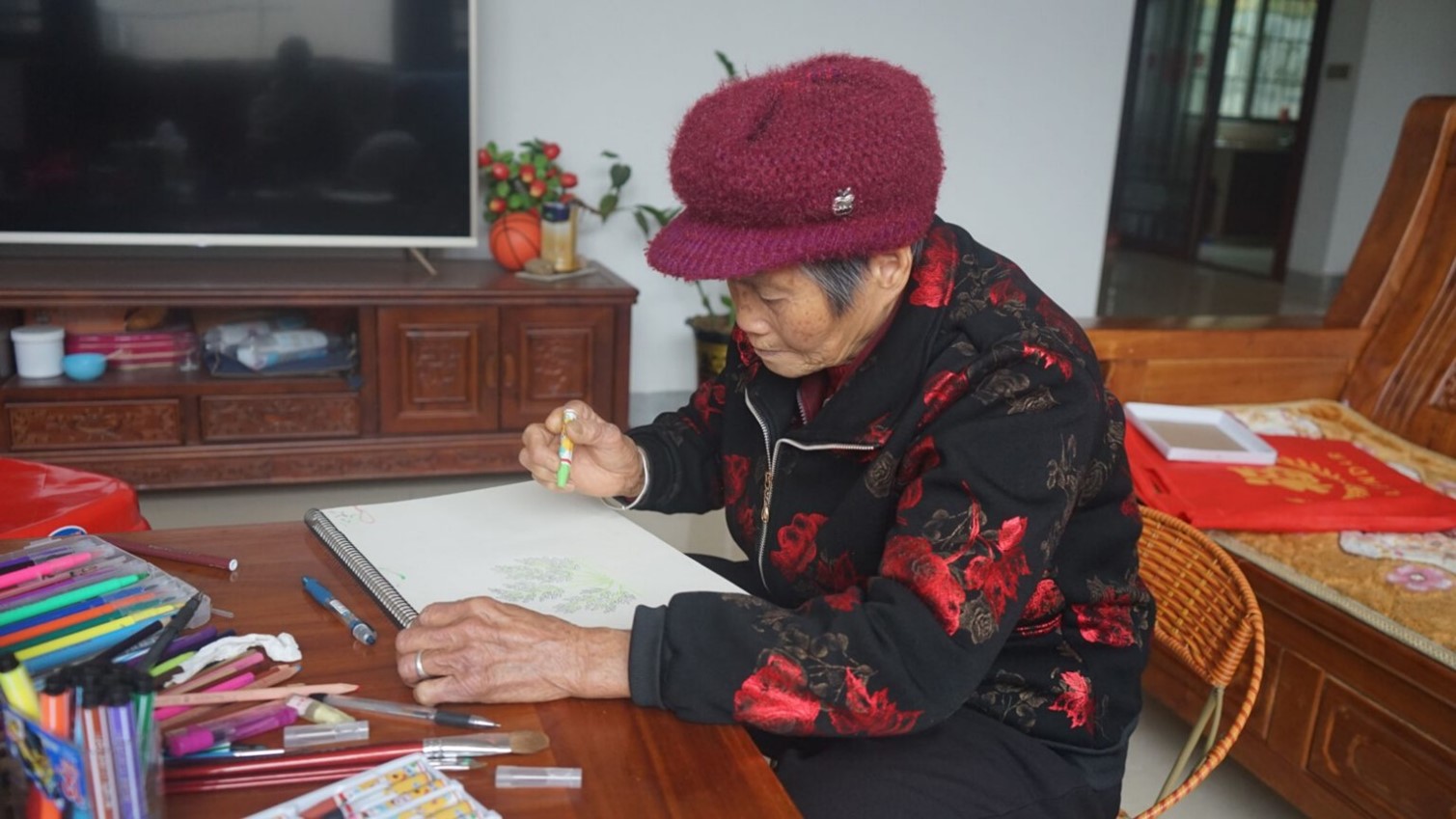
Photo of Grandma Guo drawing. © SSR Archive. Image courtesy of Jing Y.
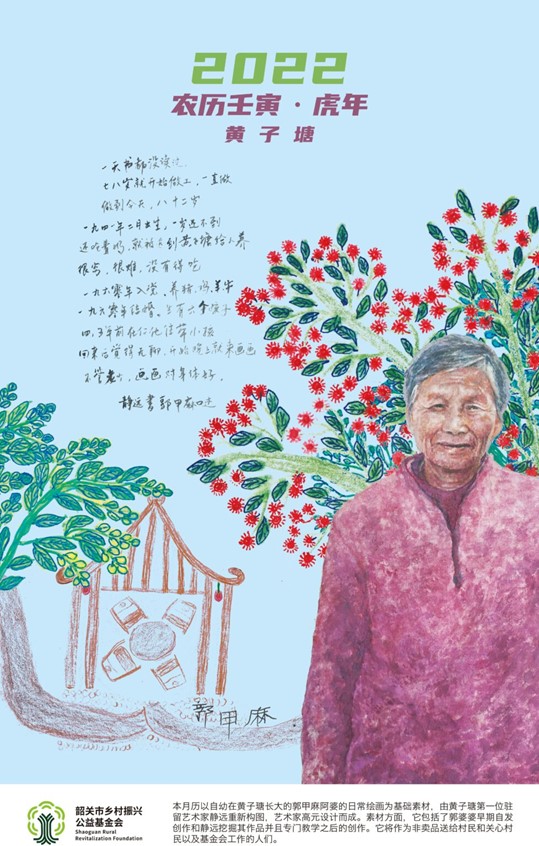
Guo Jiama, Jing Y. and Gaoyuan, A calendar co-created with Guo Jiama, 2022, printed paper product, 33 x 20.5cm. © Guo Jiama, Jing Y., Gaoyuan and SSR Archive. Image courtesy of Jing Y.
I met her last year during an art residency project at the Shaoguan Rural Revitalization Foundation. By then, she had been painting spontaneously at home for about four or five years, but her output was limited. The images in this calendar were designed and created by the designer Gao Yuan and me, based on her paintings.
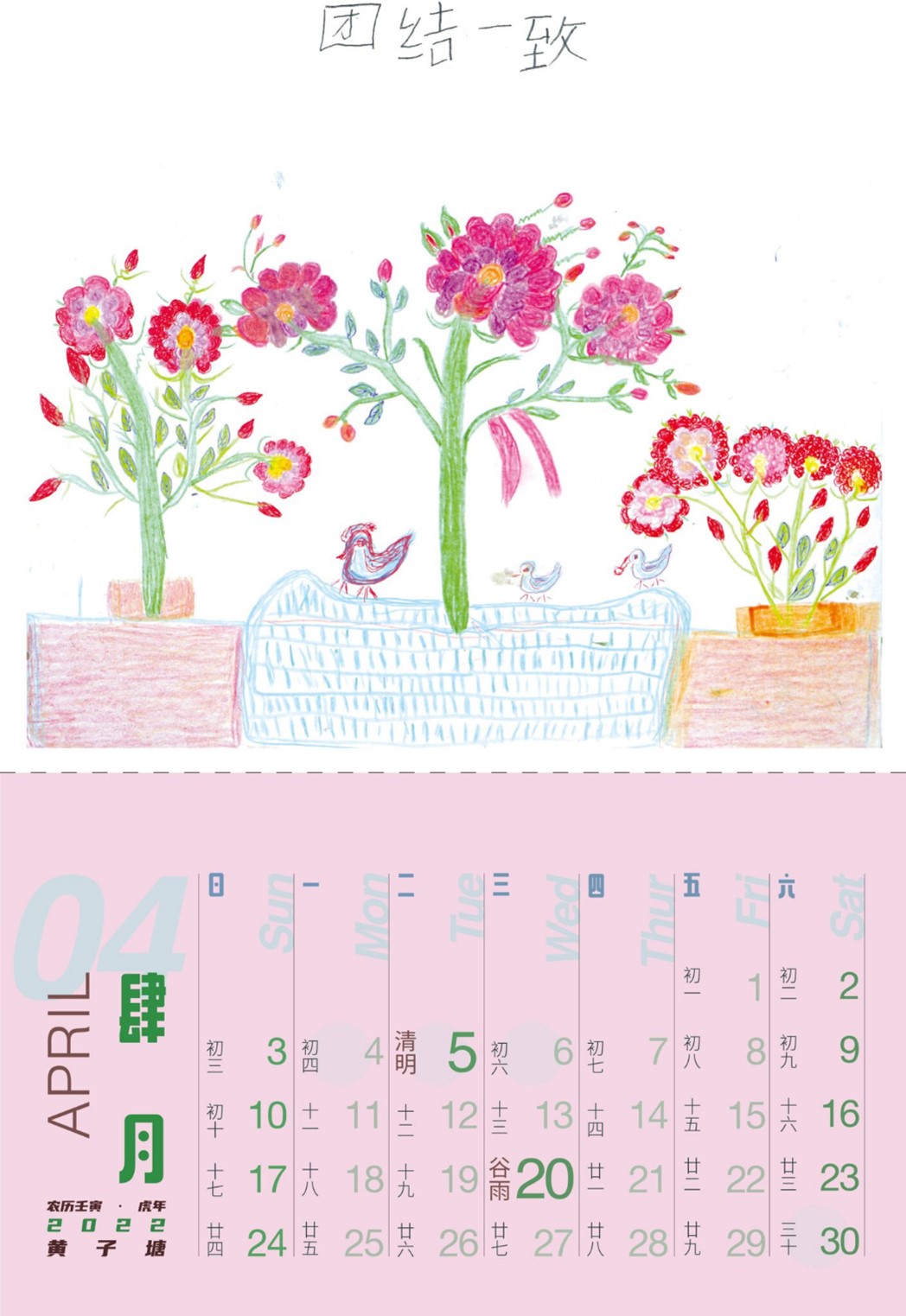
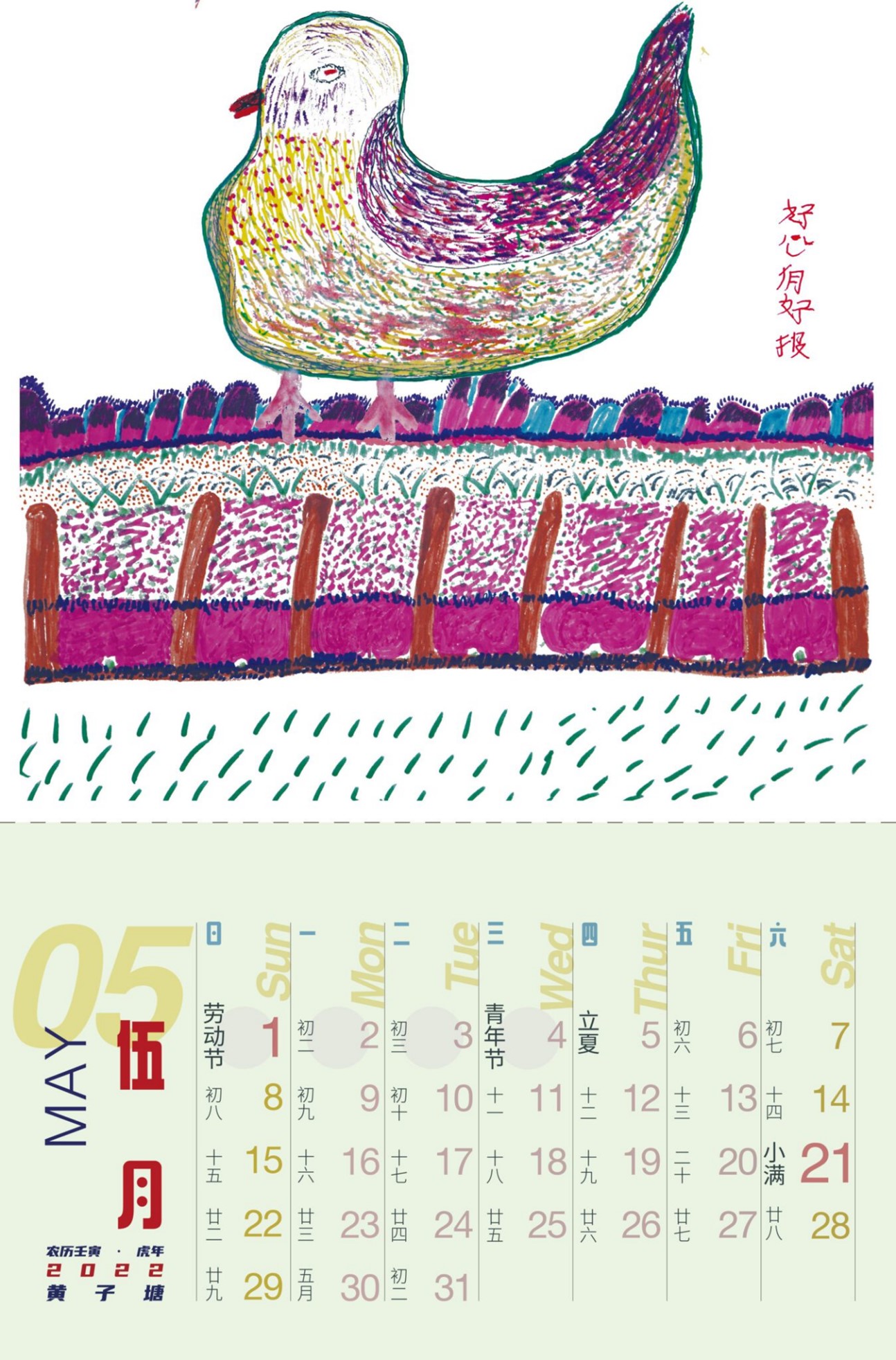
The artwork here is her original, primarily themed around plants. After meeting her, I introduced her to expand her subject matter to animals and also taught her how to use different painting tools.
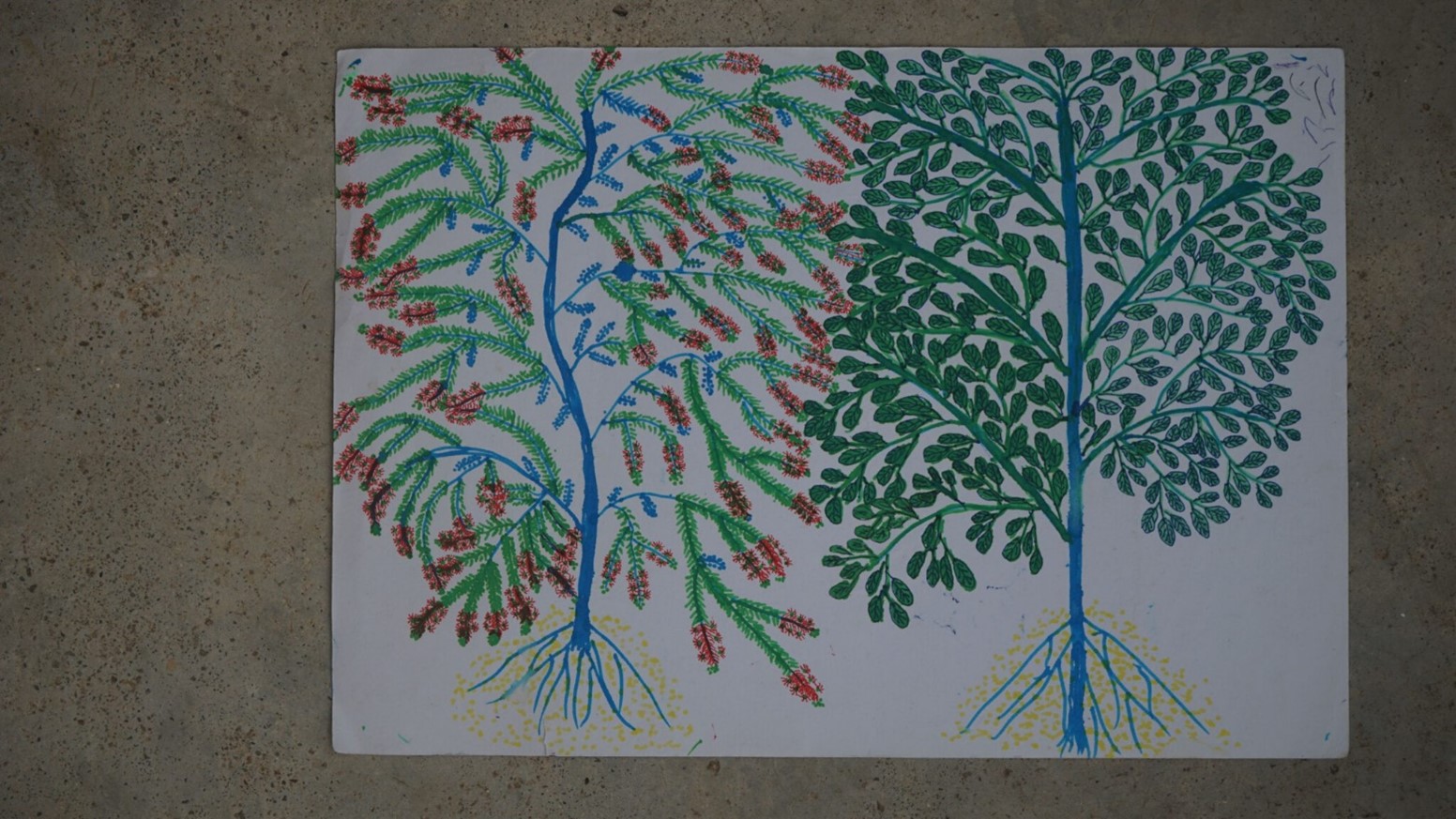
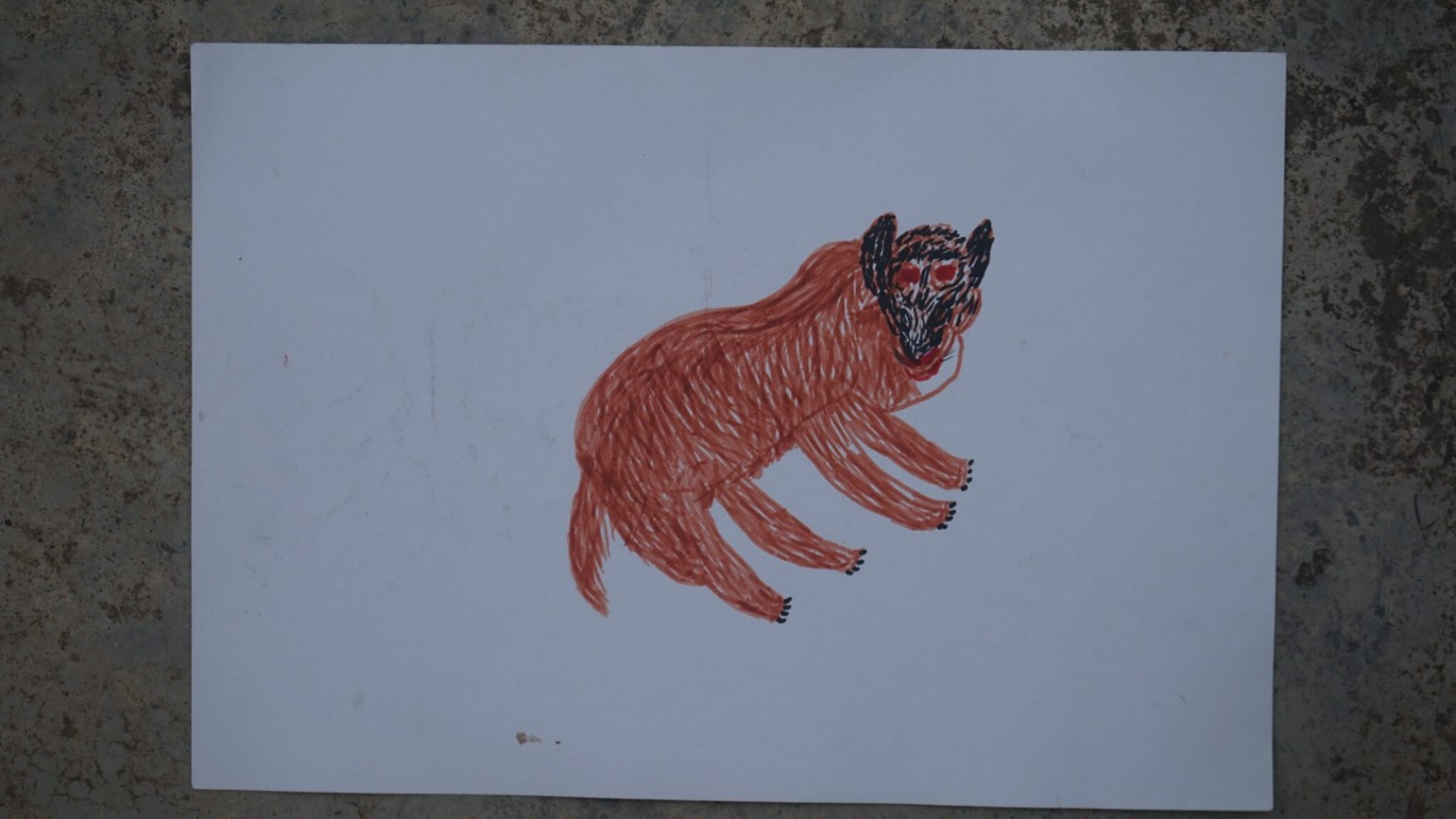
Grandma Guo is part of my art project “Sweat! Stop! Rewrite!” The “Sweat! Stop! Rewrite!” project began in 2019 and offers free writing and painting lessons to migrant female workers. My background is in painting. However, the focus of this article isn’t on my solo creations but rather the artistic journeys of several women like Grandma Guo, who come from rural areas and have never been formally trained in painting.
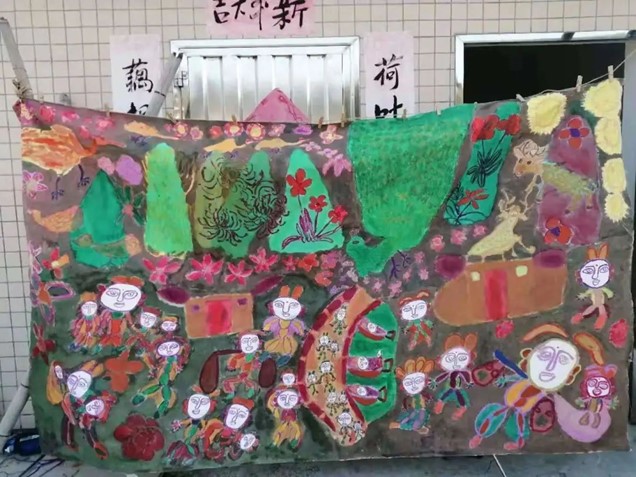
The protagonist of the first story is Sister Qing. She’s 55 years old this year and started helping with farm work in her family’s fields after leaving primary school early. In November 2020, with support from the Green Sprout Foundation and the Longan Residency Project, I undertook an art residency in her village, where she made her living farming lotus roots.
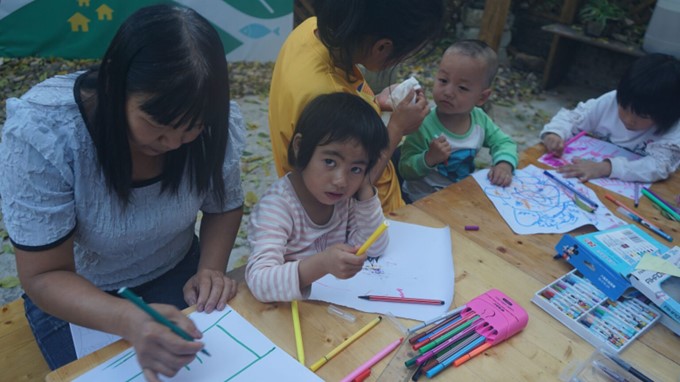
During my stay, I noticed that most of the village consisted of left-behind children, and the nearby primary school didn’t offer art classes. So, I decided to offer painting classes to the villagers. The attendees were mostly kids, but Sister Qing was the only adult who showed a long-term interest.
On the left is Sister Qing’s first painting, where she used tracing paper to sketch some simple children’s drawings. On the right is a piece she created independently, which interestingly carries hints of Picasso and Matisse.

The two paintings below are based on family photos of her parents.
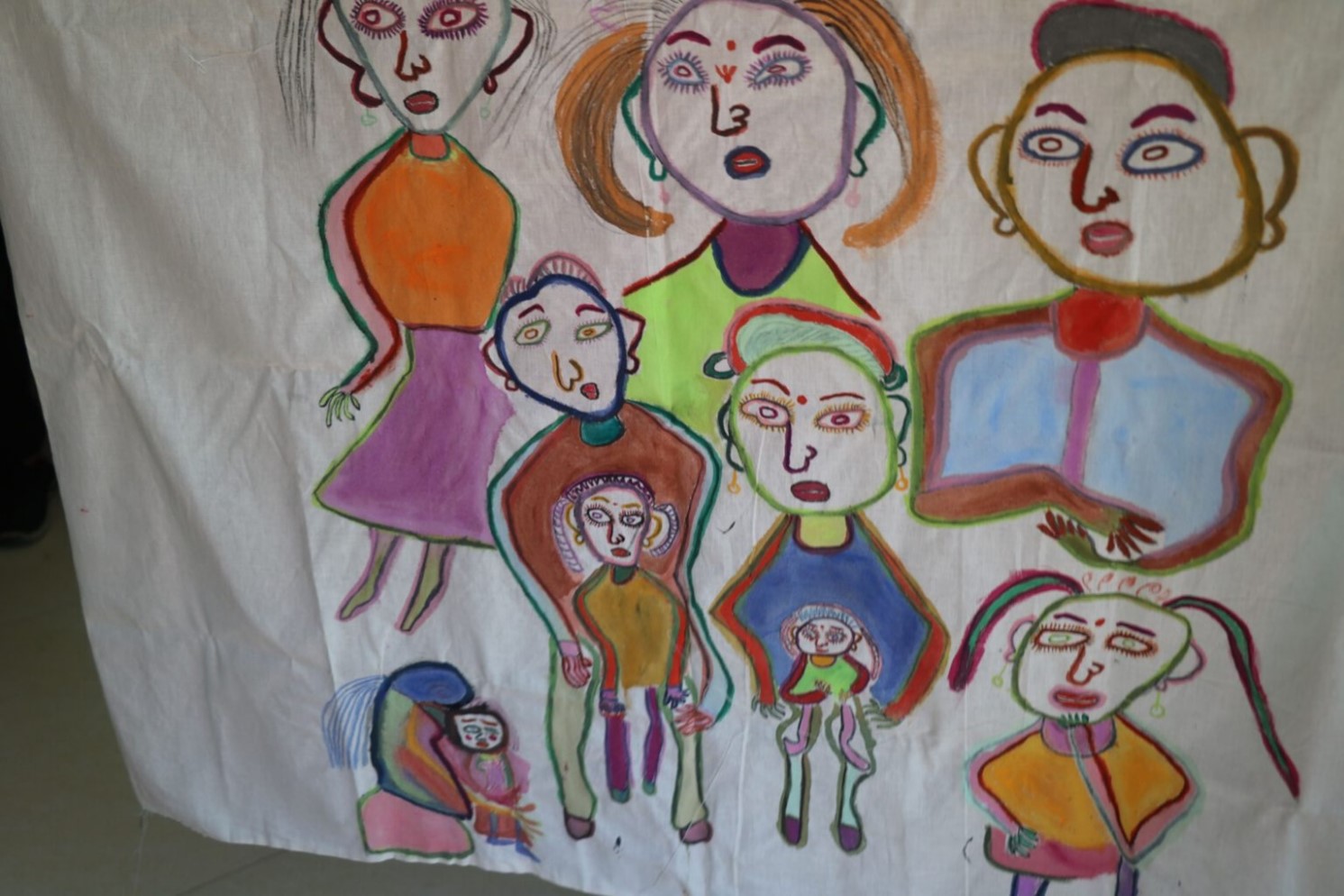
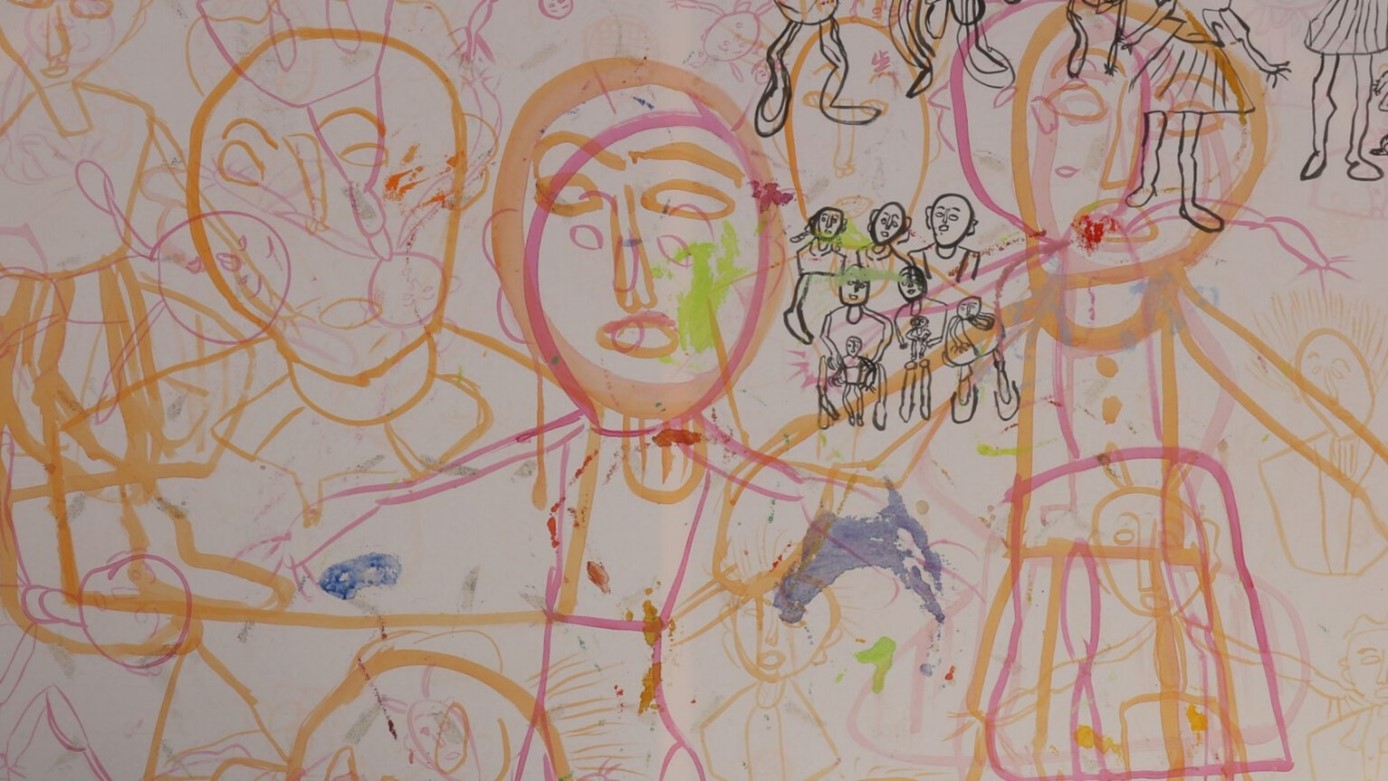
She has a vivid personality and a strong desire to express herself. She doesn’t really care about what others think of her. At the same time, she’s tenacious and once she started painting, she just couldn’t stop. We held an exhibition for her right at her doorstep after our residency concluded.
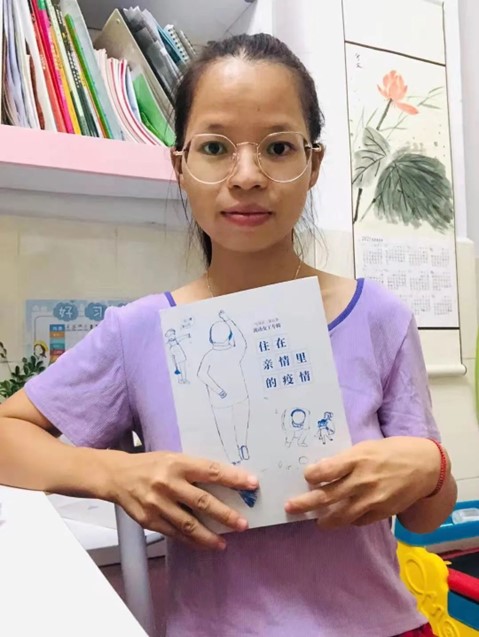
Xiao Xi is the youngest of our students, at 30 years old this year. The book in her hands, titled “Epidemic Nestled in Affection: A Collection for Migrant Women Workers,” is a graphic book I edited and published last year. Her older sister is one of the authors of the book, and that’s how I got to know Xiao Xi. The first time I met her, she seemed reticent, avoiding eye contact, and was constantly occupied with housework and taking care of her sister’s child. It was as if she wished she could fade into the background. As I grew closer to her sister, I learned more about Xiao Xi, including how she dropped out of school to ease the financial burden on her family. One day, her sister casually mentioned Xiao Xi’s fondness for drawing in the past. Intrigued, I asked to see some of her work.
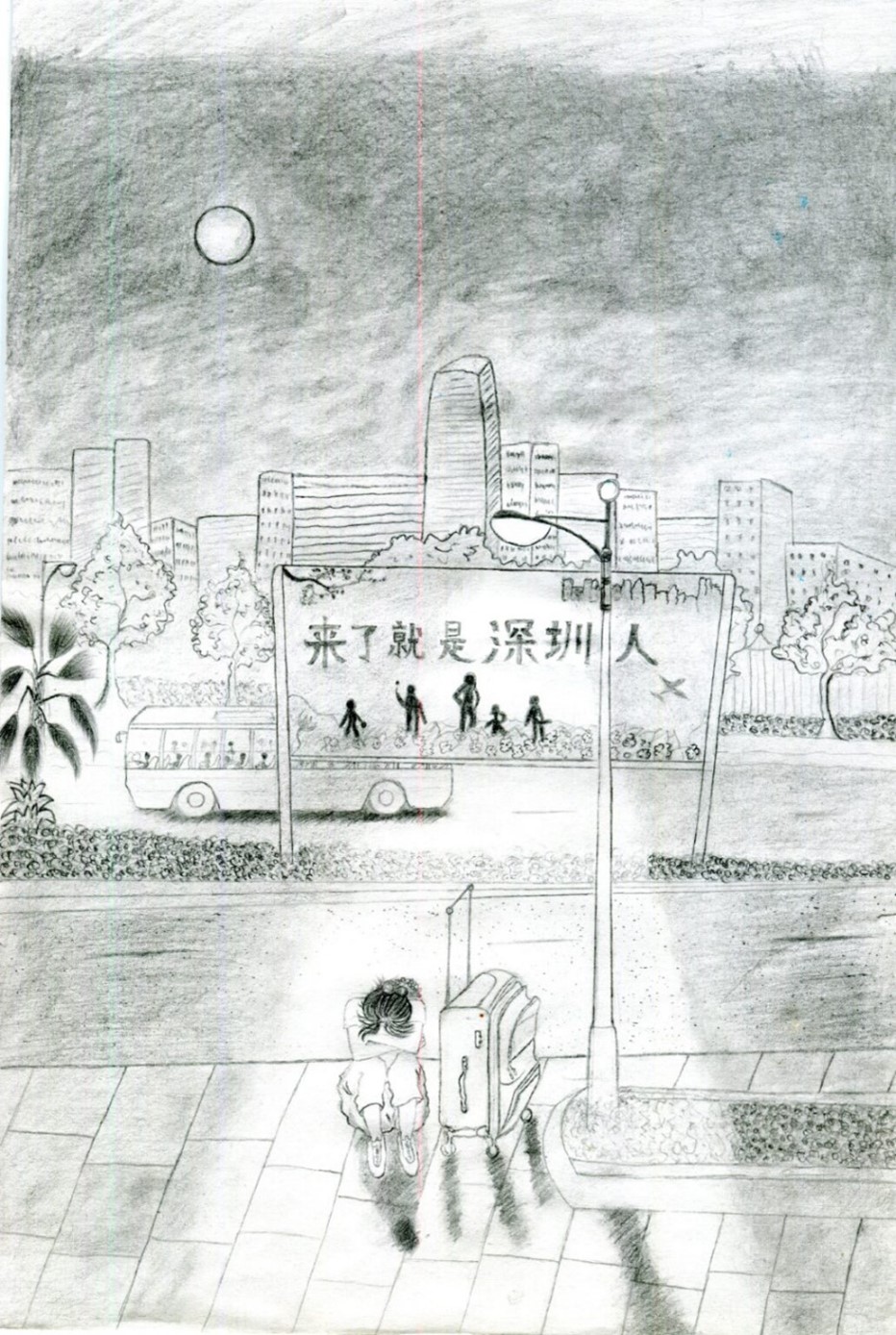
The first time I saw her artwork, I was struck by how much it radiated love for the world. Comparing it to my initial impression of her, my heart ached. The world truly had been unkind to her. Why else would someone with such a rich and tender inner world shut herself off? I then invited her to illustrate the article written by her sister.
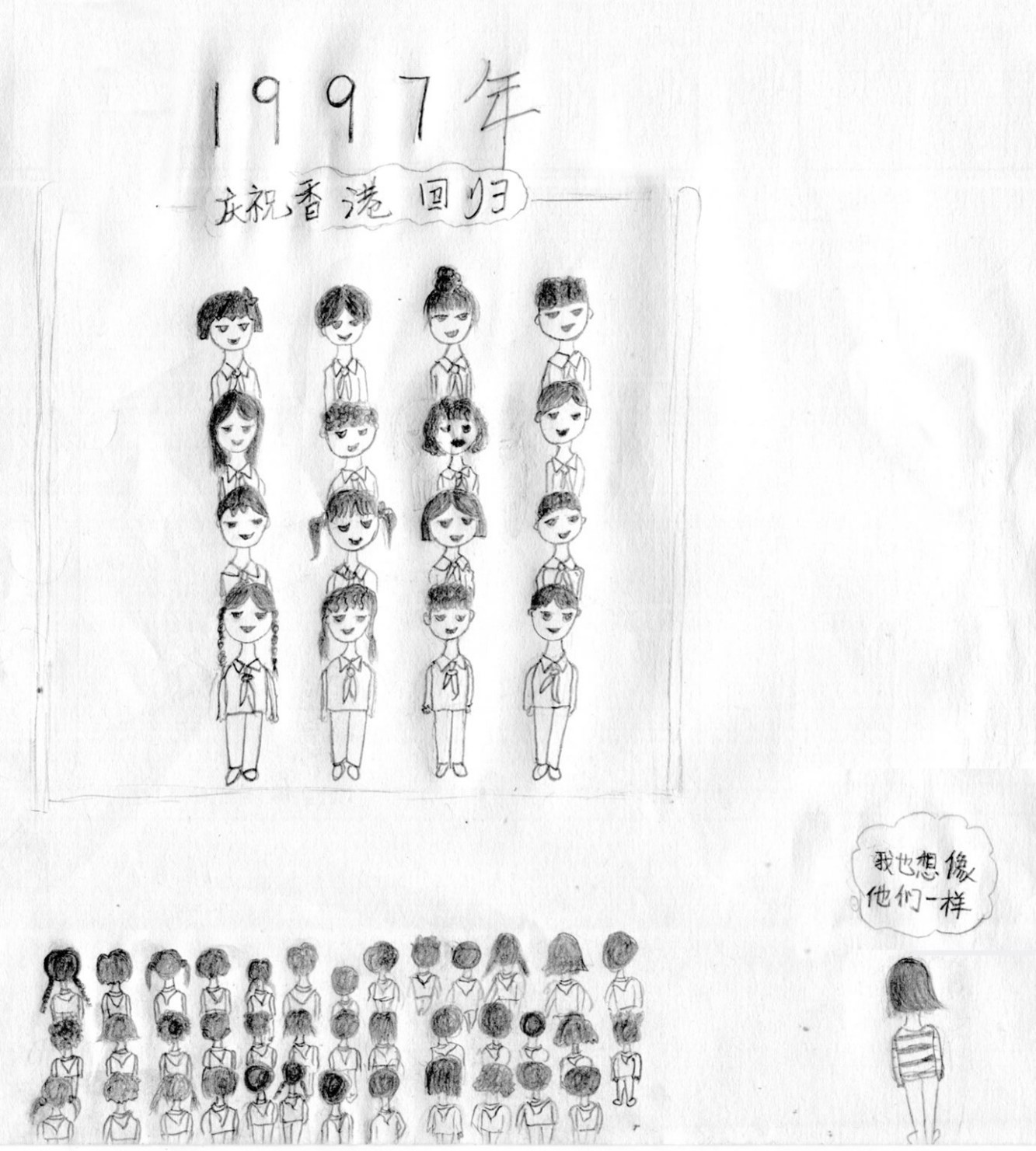
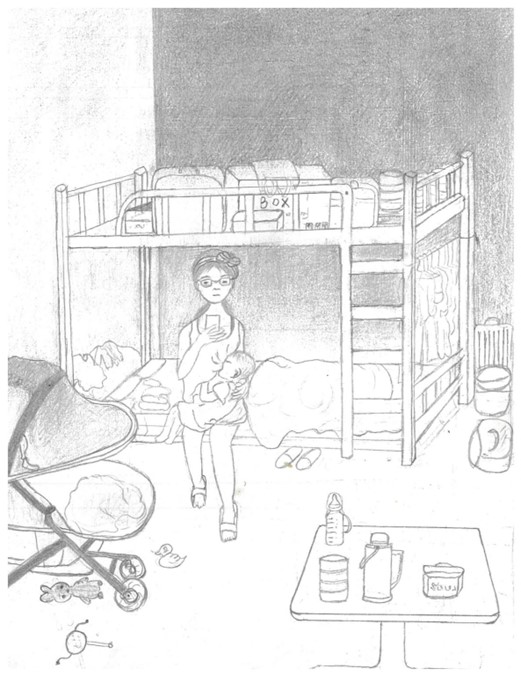
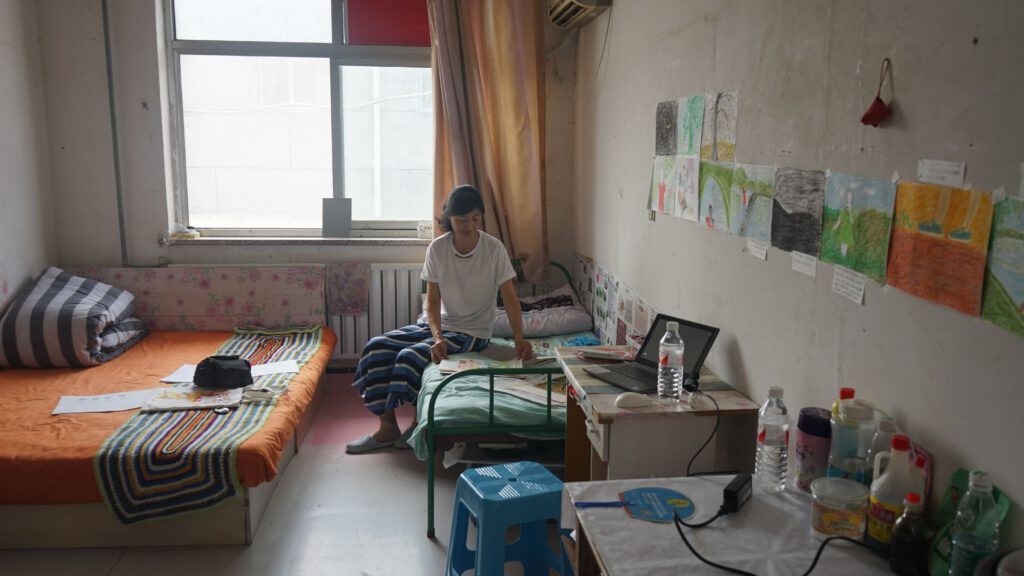
Another creator is Meng Yu. She’s 55 this year and hails from Gansu. With a junior high school education, she began working outside her hometown in 2007 due to family circumstances. Currently, she’s working in Beijing as a domestic helper. I got to know her in 2018 through a workers’ literature group on WeChat. By then, she had already started publishing articles in a magazine created by workers. She has appeared on TV, and some directors and journalists have chronicled her story.
This is one of Meng Yu’s earliest drawings.
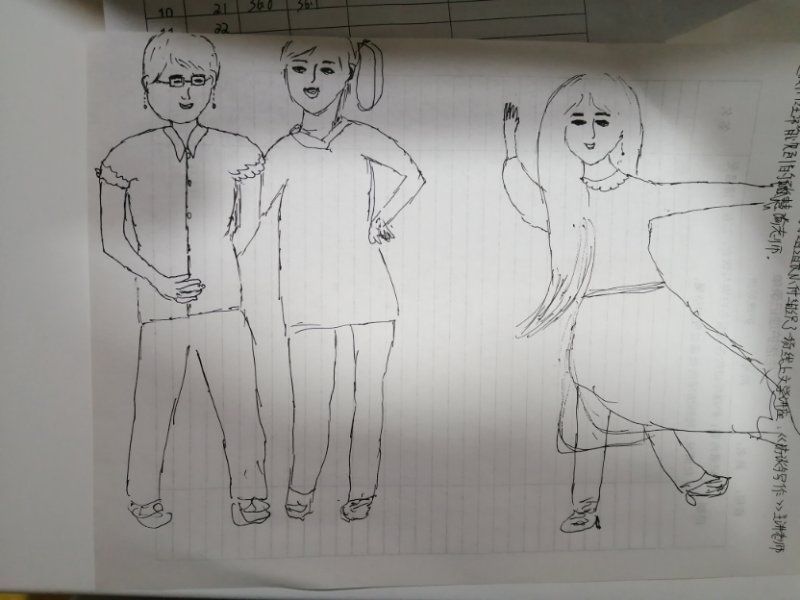
As you can see, her lines were initially disjointed. She felt her drawings were poor, but I reassured her, saying that her lines were beautiful, so there was no need for corrections or hesitations. Soon after, her lines became fluent. The work below showcases her improved technique.
These illustrations are from the collection “Epidemic Nestled in Affection: A Collection for Migrant Women Workers,” accompanying her personal narrative about three generations of women.
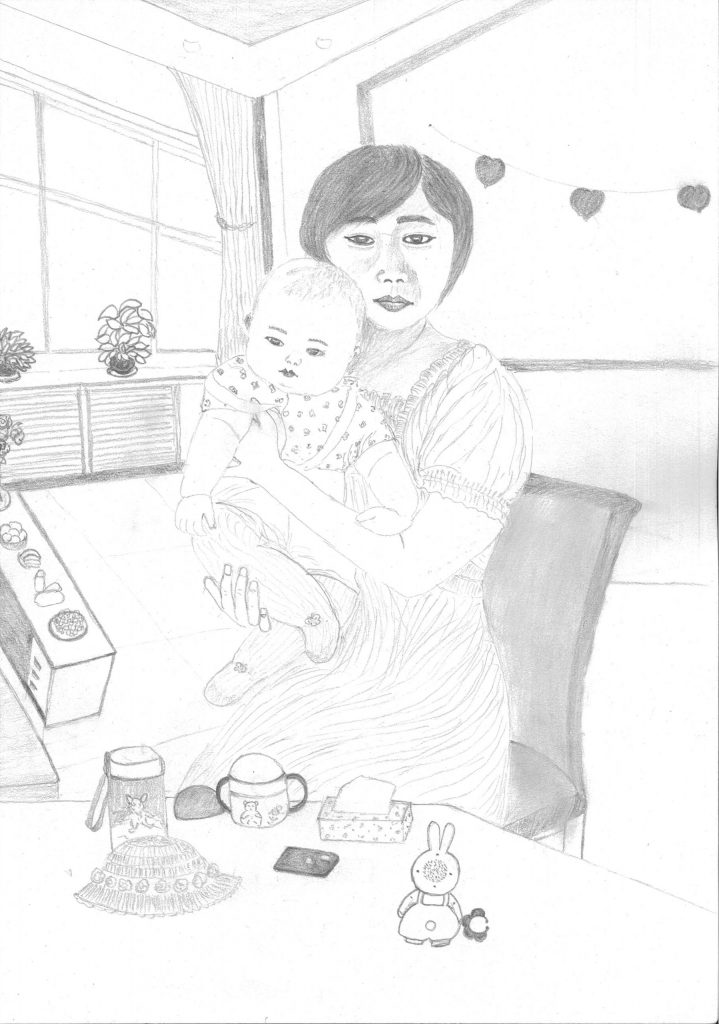
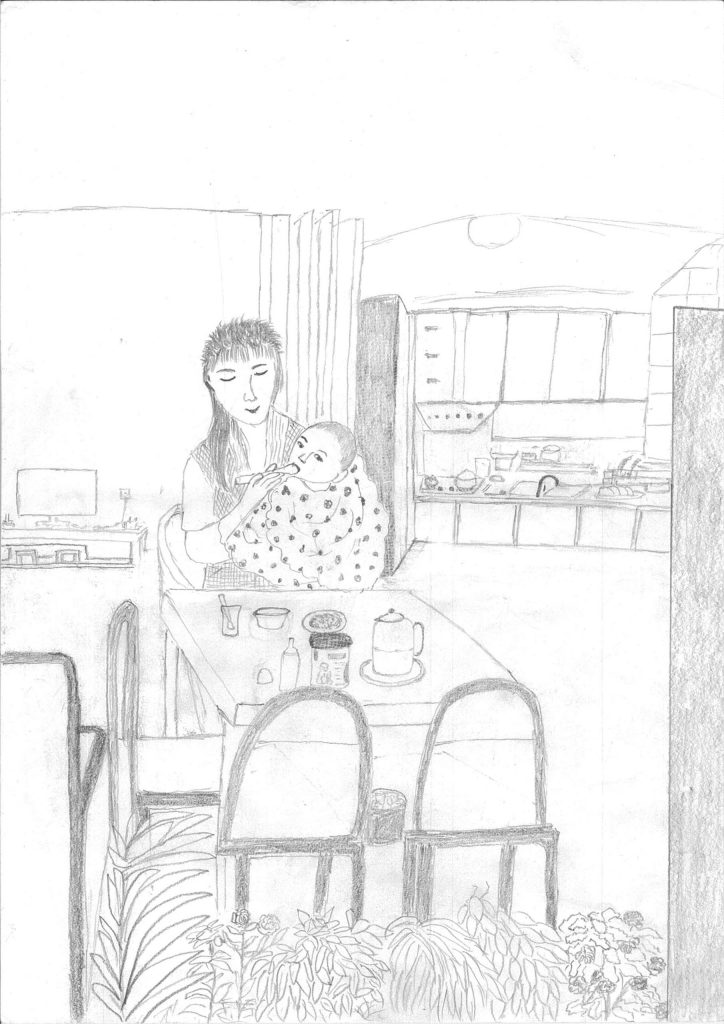
From these few stories, you might have discerned that my goal is to share my professional skills and aesthetic insights, enabling these female workers to reshape their relationships with themselves and the world through the act of creation. So, what has this creative experience brought them? Here’s a summary based on my observations:
1. Regaining dignity, self-confidence, hope, and the possibility of a positive feedback loop.
“Growing up in an environment of constant denial, with limited access to resources and information, that sense of powerlessness made me see no hope. I thought I would just drift aimlessly through life. I never imagined I could change the aimlessness of my former life through a passion.”
“Many friends and family laughed at my drawings, questioning their purpose and remarking that they couldn’t make money. Such comments made her feel extremely dejected and oppressed. She began to resent her environment and even her own impulse to create.”
2. Liberation from Constraints: There’s a habitual belief that only the “beautiful” is worth depicting or that only paintings that show “beauty” are good. I’m uneducated, and I can’t draw well. I can’t even draw a straight line.
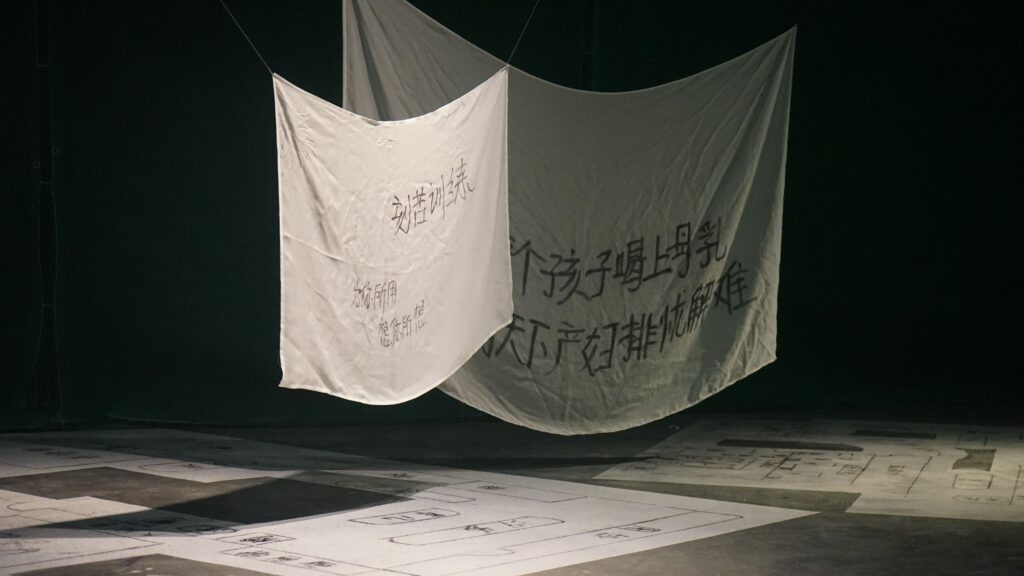
3. Critical Thinking. The core of creation lies in observation, verification, and critical thinking. A creator constantly asks: “What do I see? What do I want to express? Do the things I’ve expressed align with what I see and desire?” When it comes to writing, female workers are frustrated from thinking and prefer to vent their emotions. For instance, in the early days, Meng Yu felt that if she spoke about domestic work, she would definitely focus on their hardships. She would automatically filter out the complexities and diversities of interacting with employers and the intricacies of the domestic work system. And she wouldn’t probe into the roots of “suffering”. Later, we co-created several works, through which I introduced her to nuanced narratives and complexities. Gradually, brainstorming became a pleasure for her. This installation was co-created by us. It primarily consisted of slogans from the domestic industry handwritten by her, which I then transferred onto silk fabric.
4. Diverse Social Engagements:
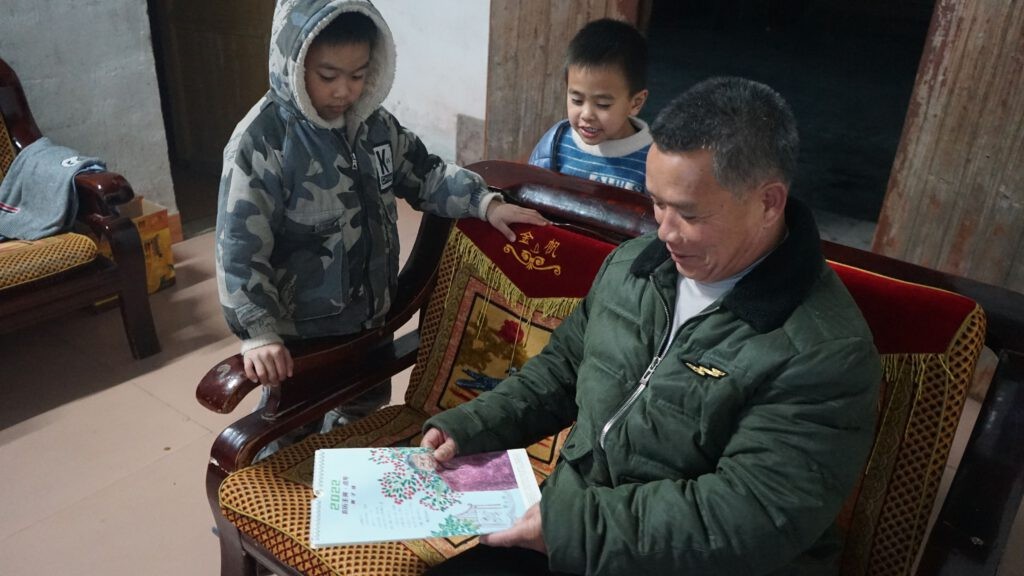
Take Grandma Guo for instance. Although her relatives and friends knew she painted and her family supported her, painting wasn’t considered significant in her village. Regrettably, her spontaneous creations didn’t inspire other villagers.
However, the calendar I made at the end of my residency facilitated its spread outside the village and integrated into the villagers’ daily lives. After the calendar was completed, I, along with the village committee head, went door-to-door to distribute it. To emphasize the status of women in the village and to encourage villagers to recognize their cultural potency, I also planned a small room in the newly built cultural centre, displaying large photos of her artwork and her daily life.
For Sister Qing, painting directly influenced her family dynamics and how others perceived her. After I left the village, I kept sending her materials and stayed in touch via WeChat. She continued her creations. Later, I invited her to Beijing for an exhibition cantered around her illustrated stories. At the exhibit, all the paintings on plastic sheets were stories she painted on the spot. She had never been to Beijing before, and this trip provided free travel, accommodation, and an artist fee. She was thrilled.
The biggest transformation was for Xiao Xi. I introduced her to a school run by a friend through her paintings. Now, she’s studying architecture there and has received scholarships funded by kind-hearted people. For Meng Yu, I once invited her from Beijing to a museum in Shenzhen where I was on a residency. We stayed together, created together, met artists, and discussed meaningful expressions in various places.
5. Diversification of Economic Income:
Last year, Sister Qing’s younger sister was diagnosed with a liver ailment and urgently needed money for treatment. Without the funds, she was prepared to forgo the treatment. On impulse, Sister Qing and I decided to sell some of her paintings to cover the medical costs. A friend of mine, who deals in amateur art, purchased several of Sister Qing’s works, thus helping us address the pressing financial need.
The above details the changes brought about for female workers. But what does this project aim to bring to society by showcasing their creations and our collaboration?
I aim to craft a narrative distinct from the “Touching China” and “Community Recognition in Philanthropy” stories — because, to my understanding, neither of these narratives is necessarily more comprehensive or truthful. The migrant female workers I am familiar with exist in a state of both action and reaction. Their primary concern is addressing immediate material needs, but these needs are not purely materialistic; they are also cognitive and cultural.
I want to offer the broader society, especially those inclined towards art, a “living testimony” of the relationship between art and life. Is every spoken word an expression, and is every expression a creation? I believe not. Creation only truly occurs when you present something infused with individual critical thinking, when you genuinely observe life, and deeply question the relationship between art and life. Economic conditions are a factor, but they can sometimes be counterproductive: some families, being “too wealthy,” send their children to elite training classes which inculcate poor habits and aesthetics. In contrast, other families, overly fascinated by the idea of art, end up idealizing it as a symbol of “elegance and nobility.” Through this project, I not only hope that grassroots women can defy mainstream aesthetics but also that their works challenge these very aesthetics. A genuine creative process should embody the most open, critically engaging, and egalitarian interaction between an individual and the world. Factors like housing, education, and healthcare access can determine an individual’s perceived societal standing, but we can also break down existing barriers by revaluating what information, culture, and aesthetics we choose to accept and believe in.